Razvit povezan seznam | 1. sklop (uvod)
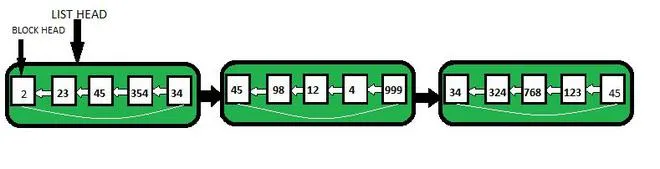
Tako kot niz in povezani seznam je tudi razviti povezani seznam linearna podatkovna struktura in je različica povezanega seznama.
Zakaj potrebujemo razvit povezan seznam?
Ena največjih prednosti povezanih seznamov v primerjavi z nizi je, da vstavljanje elementa na poljubno mesto zahteva samo O(1). Vendar pa je ulov tukaj v tem, da iskanje elementa na povezanem seznamu zahteva O(n). Da bi rešili problem iskanja, tj. skrajšanje časa za iskanje elementa, je bil predstavljen koncept razvitih povezanih seznamov. Odprti povezani seznam pokriva prednosti matričnega in povezanega seznama, saj zmanjša obremenitev pomnilnika v primerjavi s preprostimi povezanimi seznami, tako da shrani več elementov v vsako vozlišče, poleg tega pa ima prednost hitrega vstavljanja in brisanja kot pri povezanem seznamu.

Prednosti:
- Zaradi obnašanja predpomnilnika je linearno iskanje veliko hitrejše v odvitih povezanih seznamih.
- V primerjavi z navadnim povezanim seznamom potrebuje manj prostora za shranjevanje kazalcev/referenc.
- Izvaja operacije, kot sta vstavljanje, brisanje in prehod hitreje kot običajni povezani seznami (ker je iskanje hitrejše).
Slabosti:
- Stroški na vozlišče so sorazmerno visoki kot enojno povezani seznami. Oglejte si primer vozlišča v spodnji kodi
primer: Recimo, da imamo 8 elementov, torej sqrt(8)=2,82, kar zaokroži na 3. Torej bo vsak blok shranil 3 elemente. Zato bodo za shranjevanje 8 elementov ustvarjeni 3 bloki, od katerih bosta prva dva bloka shranila 3 elemente, zadnji blok pa 2 elementa.
Kako postane iskanje boljše v razvitih povezanih seznamih?
Če torej vzamemo zgornji primer, če želimo poiskati sedmi element na seznamu, prečkamo seznam blokov do tistega, ki vsebuje sedmi element. Potrebuje le O(sqrt(n)), saj smo ga našli tako, da ne gre več kot sqrt(n) blokov.
Preprosta izvedba:
Spodnji program ustvari preprost razvit povezan seznam s 3 vozlišči, ki vsebujejo spremenljivo število elementov v vsakem. Prav tako prečka ustvarjen seznam.
C++ // C++ program to implement unrolled linked list // and traversing it. #include using namespace std ; #define maxElements 4 // Unrolled Linked List Node class Node { public : int numElements ; int array [ maxElements ]; Node * next ; }; /* Function to traverse an unrolled linked list and print all the elements*/ void printUnrolledList ( Node * n ) { while ( n != NULL ) { // Print elements in current node for ( int i = 0 ; i < n -> numElements ; i ++ ) cout < < n -> array [ i ] < < ' ' ; // Move to next node n = n -> next ; } } // Program to create an unrolled linked list // with 3 Nodes int main () { Node * head = NULL ; Node * second = NULL ; Node * third = NULL ; // allocate 3 Nodes head = new Node (); second = new Node (); third = new Node (); // Let us put some values in second node (Number // of values must be less than or equal to // maxElement) head -> numElements = 3 ; head -> array [ 0 ] = 1 ; head -> array [ 1 ] = 2 ; head -> array [ 2 ] = 3 ; // Link first Node with the second Node head -> next = second ; // Let us put some values in second node (Number // of values must be less than or equal to // maxElement) second -> numElements = 3 ; second -> array [ 0 ] = 4 ; second -> array [ 1 ] = 5 ; second -> array [ 2 ] = 6 ; // Link second Node with the third Node second -> next = third ; // Let us put some values in third node (Number // of values must be less than or equal to // maxElement) third -> numElements = 3 ; third -> array [ 0 ] = 7 ; third -> array [ 1 ] = 8 ; third -> array [ 2 ] = 9 ; third -> next = NULL ; printUnrolledList ( head ); return 0 ; } // This is code is contributed by rathbhupendra
C // C program to implement unrolled linked list // and traversing it. #include #include #define maxElements 4 // Unrolled Linked List Node struct Node { int numElements ; int array [ maxElements ]; struct Node * next ; }; /* Function to traverse an unrolled linked list and print all the elements*/ void printUnrolledList ( struct Node * n ) { while ( n != NULL ) { // Print elements in current node for ( int i = 0 ; i < n -> numElements ; i ++ ) printf ( '%d ' n -> array [ i ]); // Move to next node n = n -> next ; } } // Program to create an unrolled linked list // with 3 Nodes int main () { struct Node * head = NULL ; struct Node * second = NULL ; struct Node * third = NULL ; // allocate 3 Nodes head = ( struct Node * ) malloc ( sizeof ( struct Node )); second = ( struct Node * ) malloc ( sizeof ( struct Node )); third = ( struct Node * ) malloc ( sizeof ( struct Node )); // Let us put some values in second node (Number // of values must be less than or equal to // maxElement) head -> numElements = 3 ; head -> array [ 0 ] = 1 ; head -> array [ 1 ] = 2 ; head -> array [ 2 ] = 3 ; // Link first Node with the second Node head -> next = second ; // Let us put some values in second node (Number // of values must be less than or equal to // maxElement) second -> numElements = 3 ; second -> array [ 0 ] = 4 ; second -> array [ 1 ] = 5 ; second -> array [ 2 ] = 6 ; // Link second Node with the third Node second -> next = third ; // Let us put some values in third node (Number // of values must be less than or equal to // maxElement) third -> numElements = 3 ; third -> array [ 0 ] = 7 ; third -> array [ 1 ] = 8 ; third -> array [ 2 ] = 9 ; third -> next = NULL ; printUnrolledList ( head ); return 0 ; }
Java // Java program to implement unrolled // linked list and traversing it. import java.util.* ; class GFG { static final int maxElements = 4 ; // Unrolled Linked List Node static class Node { int numElements ; int [] array = new int [ maxElements ] ; Node next ; }; // Function to traverse an unrolled // linked list and print all the elements static void printUnrolledList ( Node n ) { while ( n != null ) { // Print elements in current node for ( int i = 0 ; i < n . numElements ; i ++ ) System . out . print ( n . array [ i ] + ' ' ); // Move to next node n = n . next ; } } // Program to create an unrolled linked list // with 3 Nodes public static void main ( String [] args ) { Node head = null ; Node second = null ; Node third = null ; // Allocate 3 Nodes head = new Node (); second = new Node (); third = new Node (); // Let us put some values in second // node (Number of values must be // less than or equal to maxElement) head . numElements = 3 ; head . array [ 0 ] = 1 ; head . array [ 1 ] = 2 ; head . array [ 2 ] = 3 ; // Link first Node with the // second Node head . next = second ; // Let us put some values in // second node (Number of values // must be less than or equal to // maxElement) second . numElements = 3 ; second . array [ 0 ] = 4 ; second . array [ 1 ] = 5 ; second . array [ 2 ] = 6 ; // Link second Node with the third Node second . next = third ; // Let us put some values in third // node (Number of values must be // less than or equal to maxElement) third . numElements = 3 ; third . array [ 0 ] = 7 ; third . array [ 1 ] = 8 ; third . array [ 2 ] = 9 ; third . next = null ; printUnrolledList ( head ); } } // This code is contributed by amal kumar choubey
Python3 # Python3 program to implement unrolled # linked list and traversing it. maxElements = 4 # Unrolled Linked List Node class Node : def __init__ ( self ): self . numElements = 0 self . array = [ 0 for i in range ( maxElements )] self . next = None # Function to traverse an unrolled linked list # and print all the elements def printUnrolledList ( n ): while ( n != None ): # Print elements in current node for i in range ( n . numElements ): print ( n . array [ i ] end = ' ' ) # Move to next node n = n . next # Driver Code if __name__ == '__main__' : head = None second = None third = None # Allocate 3 Nodes head = Node () second = Node () third = Node () # Let us put some values in second # node (Number of values must be # less than or equal to # maxElement) head . numElements = 3 head . array [ 0 ] = 1 head . array [ 1 ] = 2 head . array [ 2 ] = 3 # Link first Node with the second Node head . next = second # Let us put some values in second node # (Number of values must be less than # or equal to maxElement) second . numElements = 3 second . array [ 0 ] = 4 second . array [ 1 ] = 5 second . array [ 2 ] = 6 # Link second Node with the third Node second . next = third # Let us put some values in third node # (Number of values must be less than # or equal to maxElement) third . numElements = 3 third . array [ 0 ] = 7 third . array [ 1 ] = 8 third . array [ 2 ] = 9 third . next = None printUnrolledList ( head ) # This code is contributed by rutvik_56
C# // C# program to implement unrolled // linked list and traversing it. using System ; class GFG { static readonly int maxElements = 4 ; // Unrolled Linked List Node class Node { public int numElements ; public int [] array = new int [ maxElements ]; public Node next ; }; // Function to traverse an unrolled // linked list and print all the elements static void printUnrolledList ( Node n ) { while ( n != null ) { // Print elements in current node for ( int i = 0 ; i < n . numElements ; i ++ ) Console . Write ( n . array [ i ] + ' ' ); // Move to next node n = n . next ; } } // Program to create an unrolled linked list // with 3 Nodes public static void Main ( String [] args ) { Node head = null ; Node second = null ; Node third = null ; // Allocate 3 Nodes head = new Node (); second = new Node (); third = new Node (); // Let us put some values in second // node (Number of values must be // less than or equal to maxElement) head . numElements = 3 ; head . array [ 0 ] = 1 ; head . array [ 1 ] = 2 ; head . array [ 2 ] = 3 ; // Link first Node with the // second Node head . next = second ; // Let us put some values in // second node (Number of values // must be less than or equal to // maxElement) second . numElements = 3 ; second . array [ 0 ] = 4 ; second . array [ 1 ] = 5 ; second . array [ 2 ] = 6 ; // Link second Node with the third Node second . next = third ; // Let us put some values in third // node (Number of values must be // less than or equal to maxElement) third . numElements = 3 ; third . array [ 0 ] = 7 ; third . array [ 1 ] = 8 ; third . array [ 2 ] = 9 ; third . next = null ; printUnrolledList ( head ); } } // This code is contributed by Rajput-Ji
JavaScript < script > // JavaScript program to implement unrolled // linked list and traversing it. const maxElements = 4 ; // Unrolled Linked List Node class Node { constructor () { this . numElements = 0 ; this . array = new Array ( maxElements ); this . next = null ; } } // Function to traverse an unrolled // linked list and print all the elements function printUnrolledList ( n ) { while ( n != null ) { // Print elements in current node for ( var i = 0 ; i < n . numElements ; i ++ ) document . write ( n . array [ i ] + ' ' ); // Move to next node n = n . next ; } } // Program to create an unrolled linked list // with 3 Nodes var head = null ; var second = null ; var third = null ; // Allocate 3 Nodes head = new Node (); second = new Node (); third = new Node (); // Let us put some values in second // node (Number of values must be // less than or equal to maxElement) head . numElements = 3 ; head . array [ 0 ] = 1 ; head . array [ 1 ] = 2 ; head . array [ 2 ] = 3 ; // Link first Node with the // second Node head . next = second ; // Let us put some values in // second node (Number of values // must be less than or equal to // maxElement) second . numElements = 3 ; second . array [ 0 ] = 4 ; second . array [ 1 ] = 5 ; second . array [ 2 ] = 6 ; // Link second Node with the third Node second . next = third ; // Let us put some values in third // node (Number of values must be // less than or equal to maxElement) third . numElements = 3 ; third . array [ 0 ] = 7 ; third . array [ 1 ] = 8 ; third . array [ 2 ] = 9 ; third . next = null ; printUnrolledList ( head ); < /script>
Izhod
1 2 3 4 5 6 7 8 9
Analiza kompleksnosti:
V tem članku smo predstavili razvit seznam in njegove prednosti. Pokazali smo tudi, kako prečkati seznam. V naslednjem članku bomo podrobno razpravljali o izbrisu vstavljanja in vrednostih maxElements/numElements.
Vstavljanje v razvit povezani seznam
Ustvari kviz
Morda Vam Bo Všeč

Top Članki