무방향 그래프 복제


주어진 연결된 무방향 그래프 인접리스트로 표현 조정목록[][] ~와 함께 N 노드와 중 각 노드가 있는 가장자리 고유 라벨 ~에서 0 ~ n-1 각 adj[i]는 꼭짓점 i에 연결된 꼭짓점 목록을 나타냅니다.
만들기 클론 그래프의 각 노드가 정수를 포함하는 그래프 발 그리고 배열( 이웃 ) 노드의 현재 노드에 인접한 노드를 포함합니다.
클래스 노드 {
값: 정수
이웃: 목록[노드]
}
당신의 임무는 주어진 그래프를 복제하고 복제된 그래프에 대한 참조를 반환하는 것입니다.
메모: 주어진 그래프의 올바른 복사본을 반환하면 출력은 true가 됩니다. 그렇지 않고 복사본이 올바르지 않으면 거짓으로 인쇄됩니다.
예
입력: n = 4 adjList[][] = [[1 2] [0 2] [0 1 3] [2]]
산출: 진실
설명:
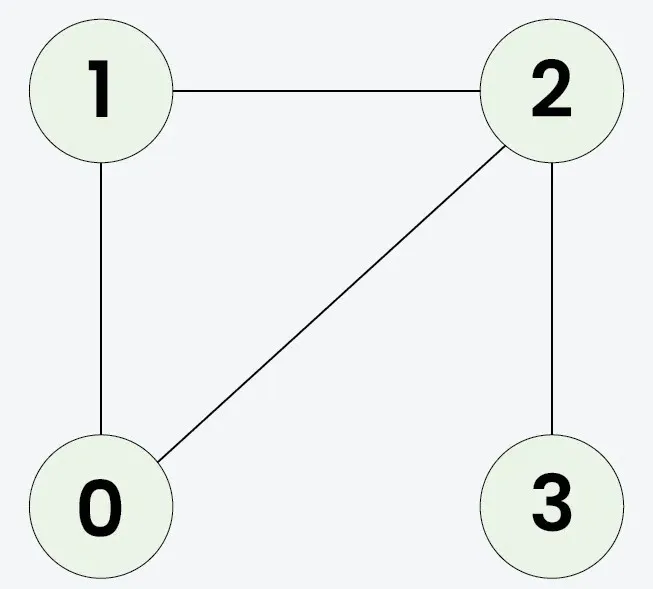
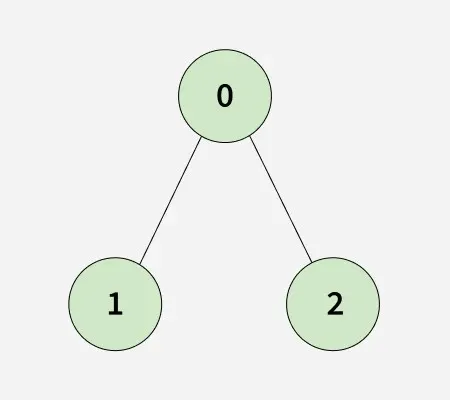
복제된 그래프가 원본과 동일하므로 출력은 true입니다.입력: n = 3 adjList[][] = [[1 2] [0] [0]]
산출: 진실
설명:
복제된 그래프가 원본과 동일하므로 출력은 true입니다.
목차
- 방문/복제된 노드를 추적해야 하는 이유는 무엇입니까?
- 방문/복제된 노드를 추적하는 방법은 무엇입니까?
- 클론 노드를 연결하는 방법은 무엇입니까?
- 복제된 그래프가 올바른지 어떻게 확인하나요?
- [접근 방법 1] BFS 순회 사용 - O(V+E) 시간 및 O(V) 공간
- [접근법 2] DFS 순회 사용 - O(V+E) 시간 및 O(V) 공간
방문/복제된 노드를 추적해야 하는 이유는 무엇입니까?
그래프를 복제할 때 무한 재귀 및 중복 작업을 방지하려면 방문했거나 복제된 노드를 추적해야 합니다. 그래프에는 이미 복제한 노드를 추적하지 않고 주기(노드가 이전에 방문한 노드를 다시 가리킬 수 있음)가 포함될 수 있으므로 복제 기능은 동일한 노드를 끝없이 다시 방문하여 스택 오버플로 또는 잘못된 복제가 발생합니다.
방문/복제된 노드를 추적하는 방법은 무엇입니까?
이미 생성된 모든 노드를 유지하려면 HashMap/Map이 필요합니다. 키 스토어 : 원래 노드의 참조/주소 가치 매장
클론 노드를 연결하는 방법은 무엇입니까?
인접한 꼭지점을 방문하는 동안 마디 ~에 해당 복제를 얻으십시오 마디 당신은 그렇게 부르자 안에 이제 모든 이웃 노드를 방문하여 ~에 각 이웃에 대해 해당 복제 노드를 찾은 다음(찾지 못한 경우 새로 생성) 다음 벡터의 이웃 벡터로 푸시합니다. 안에 마디.
복제된 그래프가 올바른지 어떻게 확인하나요?
복제하기 전에 원본 그래프에서 BFS 순회를 수행한 다음 복제가 완료된 후 복제된 그래프에서 다시 BFS 순회를 수행합니다. 각 순회 중에 주소(또는 참조)와 함께 각 노드의 값을 인쇄합니다. 복제의 정확성을 확인하려면 두 순회에서 방문한 노드의 순서를 비교하십시오. 노드 값이 동일한 순서로 표시되지만 해당 주소(또는 참조)가 다른 경우 그래프가 성공적으로 올바르게 복제되었음을 확인합니다.
방법 알아보기 여러 개의 연결된 구성 요소가 있는 그래프를 포함하여 무방향 그래프 복제 BFS 또는 DFS를 사용하여 모든 노드와 에지의 완전한 전체 복사본을 보장합니다.
[접근 방법 1] BFS 순회 사용 - O(V+E) 시간 및 O(V) 공간
C++BFS 접근 방식에서는 그래프가 큐를 사용하여 반복적으로 복제됩니다. 초기 노드를 복제하여 대기열에 배치하는 것으로 시작합니다. 대기열의 각 노드를 처리하면서 이웃을 방문합니다. 이웃이 아직 복제되지 않은 경우 복제본을 생성하여 맵에 저장하고 나중에 처리하기 위해 대기열에 넣습니다. 그런 다음 이웃의 복제본을 현재 노드의 복제본의 이웃 목록에 추가합니다. 이 프로세스는 모든 노드가 너비 우선 순서로 방문되도록 수준별로 계속됩니다. BFS는 깊은 재귀를 피하고 크거나 넓은 그래프를 효율적으로 처리하는 데 특히 유용합니다.
#include #include #include #include using namespace std ; // Definition for a Node struct Node { int val ; vector < Node *> neighbors ; }; // Clone the graph Node * cloneGraph ( Node * node ) { if ( ! node ) return nullptr ; map < Node * Node *> mp ; queue < Node *> q ; // Clone the source node Node * clone = new Node (); clone -> val = node -> val ; mp [ node ] = clone ; q . push ( node ); while ( ! q . empty ()) { Node * u = q . front (); q . pop (); for ( auto neighbor : u -> neighbors ) { // Clone neighbor if not already cloned if ( mp . find ( neighbor ) == mp . end ()) { Node * neighborClone = new Node (); neighborClone -> val = neighbor -> val ; mp [ neighbor ] = neighborClone ; q . push ( neighbor ); } // Link clone of neighbor to clone of current node mp [ u ] -> neighbors . push_back ( mp [ neighbor ]); } } return mp [ node ]; } // Build graph Node * buildGraph () { Node * node1 = new Node (); node1 -> val = 0 ; Node * node2 = new Node (); node2 -> val = 1 ; Node * node3 = new Node (); node3 -> val = 2 ; Node * node4 = new Node (); node4 -> val = 3 ; node1 -> neighbors = { node2 node3 }; node2 -> neighbors = { node1 node3 }; node3 -> neighbors = { node1 node2 node4 }; node4 -> neighbors = { node3 }; return node1 ; } // Compare two graphs for structural and value equality bool compareGraphs ( Node * node1 Node * node2 map < Node * Node *>& visited ) { if ( ! node1 || ! node2 ) return node1 == node2 ; if ( node1 -> val != node2 -> val || node1 == node2 ) return false ; visited [ node1 ] = node2 ; if ( node1 -> neighbors . size () != node2 -> neighbors . size ()) return false ; for ( size_t i = 0 ; i < node1 -> neighbors . size (); ++ i ) { Node * n1 = node1 -> neighbors [ i ]; Node * n2 = node2 -> neighbors [ i ]; if ( visited . count ( n1 )) { if ( visited [ n1 ] != n2 ) return false ; } else { if ( ! compareGraphs ( n1 n2 visited )) return false ; } } return true ; } // Driver Code int main () { Node * original = buildGraph (); Node * cloned = cloneGraph ( original ); map < Node * Node *> visited ; cout < < ( compareGraphs ( original cloned visited ) ? 'true' : 'false' ) < < endl ; return 0 ; }
Java import java.util.* ; // Definition for a Node class Node { public int val ; public ArrayList < Node > neighbors ; public Node () { neighbors = new ArrayList <> (); } public Node ( int val ) { this . val = val ; neighbors = new ArrayList <> (); } } public class GfG { // Clone the graph public static Node cloneGraph ( Node node ) { if ( node == null ) return null ; Map < Node Node > mp = new HashMap <> (); Queue < Node > q = new LinkedList <> (); // Clone the starting node Node clone = new Node ( node . val ); mp . put ( node clone ); q . offer ( node ); while ( ! q . isEmpty ()) { Node current = q . poll (); for ( Node neighbor : current . neighbors ) { // Clone neighbor if it hasn't been cloned yet if ( ! mp . containsKey ( neighbor )) { mp . put ( neighbor new Node ( neighbor . val )); q . offer ( neighbor ); } // Add the clone of the neighbor to the current node's clone mp . get ( current ). neighbors . add ( mp . get ( neighbor )); } } return mp . get ( node ); } // Build graph public static Node buildGraph () { Node node1 = new Node ( 0 ); Node node2 = new Node ( 1 ); Node node3 = new Node ( 2 ); Node node4 = new Node ( 3 ); node1 . neighbors . addAll ( new ArrayList <> ( Arrays . asList ( node2 node3 ))); node2 . neighbors . addAll ( new ArrayList <> ( Arrays . asList ( node1 node3 ))); node3 . neighbors . addAll ( new ArrayList <> ( Arrays . asList ( node1 node2 node4 ))); node4 . neighbors . addAll ( new ArrayList <> ( Arrays . asList ( node3 ))); return node1 ; } // Compare two graphs for structure and value public static boolean compareGraphs ( Node n1 Node n2 HashMap < Node Node > visited ) { if ( n1 == null || n2 == null ) return n1 == n2 ; if ( n1 . val != n2 . val || n1 == n2 ) return false ; visited . put ( n1 n2 ); if ( n1 . neighbors . size () != n2 . neighbors . size ()) return false ; for ( int i = 0 ; i < n1 . neighbors . size (); i ++ ) { Node neighbor1 = n1 . neighbors . get ( i ); Node neighbor2 = n2 . neighbors . get ( i ); if ( visited . containsKey ( neighbor1 )) { if ( visited . get ( neighbor1 ) != neighbor2 ) return false ; } else { if ( ! compareGraphs ( neighbor1 neighbor2 visited )) return false ; } } return true ; } public static void main ( String [] args ) { Node original = buildGraph (); Node cloned = cloneGraph ( original ); boolean isEqual = compareGraphs ( original cloned new HashMap <> ()); System . out . println ( isEqual ? 'true' : 'false' ); } }
Python from collections import deque # Definition for a Node class Node : def __init__ ( self val = 0 ): self . val = val self . neighbors = [] # Clone the graph def cloneGraph ( node ): if not node : return None # Map to hold original nodes as keys and their clones as values mp = {} # Initialize BFS queue q = deque ([ node ]) # Clone the starting node mp [ node ] = Node ( node . val ) while q : current = q . popleft () for neighbor in current . neighbors : # If neighbor not cloned yet if neighbor not in mp : mp [ neighbor ] = Node ( neighbor . val ) q . append ( neighbor ) # Link clone of neighbor to the clone of the current node mp [ current ] . neighbors . append ( mp [ neighbor ]) return mp [ node ] # Build graph def buildGraph (): node1 = Node ( 0 ) node2 = Node ( 1 ) node3 = Node ( 2 ) node4 = Node ( 3 ) node1 . neighbors = [ node2 node3 ] node2 . neighbors = [ node1 node3 ] node3 . neighbors = [ node1 node2 node4 ] node4 . neighbors = [ node3 ] return node1 # Compare two graphs structurally and by values def compareGraphs ( n1 n2 visited ): if not n1 or not n2 : return n1 == n2 if n1 . val != n2 . val or n1 is n2 : return False visited [ n1 ] = n2 if len ( n1 . neighbors ) != len ( n2 . neighbors ): return False for i in range ( len ( n1 . neighbors )): neighbor1 = n1 . neighbors [ i ] neighbor2 = n2 . neighbors [ i ] if neighbor1 in visited : if visited [ neighbor1 ] != neighbor2 : return False else : if not compareGraphs ( neighbor1 neighbor2 visited ): return False return True # Driver if __name__ == '__main__' : original = buildGraph () cloned = cloneGraph ( original ) result = compareGraphs ( original cloned {}) print ( 'true' if result else 'false' )
C# using System ; using System.Collections.Generic ; // Definition for a Node public class Node { public int val ; public List < Node > neighbors ; public Node () { neighbors = new List < Node > (); } public Node ( int val ) { this . val = val ; neighbors = new List < Node > (); } } class GfG { // Clone the graph public static Node CloneGraph ( Node node ) { if ( node == null ) return null ; var mp = new Dictionary < Node Node > (); var q = new Queue < Node > (); // Clone the starting node var clone = new Node ( node . val ); mp [ node ] = clone ; q . Enqueue ( node ); while ( q . Count > 0 ) { var current = q . Dequeue (); foreach ( var neighbor in current . neighbors ) { // If neighbor not cloned clone it and enqueue if ( ! mp . ContainsKey ( neighbor )) { mp [ neighbor ] = new Node ( neighbor . val ); q . Enqueue ( neighbor ); } // Add clone of neighbor to clone of current mp [ current ]. neighbors . Add ( mp [ neighbor ]); } } return mp [ node ]; } // Build graph public static Node BuildGraph () { var node1 = new Node ( 0 ); var node2 = new Node ( 1 ); var node3 = new Node ( 2 ); var node4 = new Node ( 3 ); node1 . neighbors . AddRange ( new [] { node2 node3 }); node2 . neighbors . AddRange ( new [] { node1 node3 }); node3 . neighbors . AddRange ( new [] { node1 node2 node4 }); node4 . neighbors . AddRange ( new [] { node3 }); return node1 ; } // Compare two graphs for structure and value public static bool CompareGraphs ( Node n1 Node n2 Dictionary < Node Node > visited ) { if ( n1 == null || n2 == null ) return n1 == n2 ; if ( n1 . val != n2 . val || ReferenceEquals ( n1 n2 )) return false ; visited [ n1 ] = n2 ; if ( n1 . neighbors . Count != n2 . neighbors . Count ) return false ; for ( int i = 0 ; i < n1 . neighbors . Count ; i ++ ) { var neighbor1 = n1 . neighbors [ i ]; var neighbor2 = n2 . neighbors [ i ]; if ( visited . ContainsKey ( neighbor1 )) { if ( ! ReferenceEquals ( visited [ neighbor1 ] neighbor2 )) return false ; } else { if ( ! CompareGraphs ( neighbor1 neighbor2 visited )) return false ; } } return true ; } public static void Main () { var original = BuildGraph (); var cloned = CloneGraph ( original ); var visited = new Dictionary < Node Node > (); Console . WriteLine ( CompareGraphs ( original cloned visited ) ? 'true' : 'false' ); } }
JavaScript // Definition for a Node class Node { constructor ( val = 0 ) { this . val = val ; this . neighbors = []; } } // Clone the graph function cloneGraph ( node ) { if ( ! node ) return null ; const mp = new Map (); const q = [ node ]; // Clone the initial node mp . set ( node new Node ( node . val )); while ( q . length > 0 ) { const current = q . shift (); for ( const neighbor of current . neighbors ) { if ( ! mp . has ( neighbor )) { mp . set ( neighbor new Node ( neighbor . val )); q . push ( neighbor ); } // Link clone of neighbor to clone of current mp . get ( current ). neighbors . push ( mp . get ( neighbor )); } } return mp . get ( node ); } // Build graph function buildGraph () { const node1 = new Node ( 0 ); const node2 = new Node ( 1 ); const node3 = new Node ( 2 ); const node4 = new Node ( 3 ); node1 . neighbors = [ node2 node3 ]; node2 . neighbors = [ node1 node3 ]; node3 . neighbors = [ node1 node2 node4 ]; node4 . neighbors = [ node3 ]; return node1 ; } // Compare two graphs structurally and by value function compareGraphs ( n1 n2 visited = new Map ()) { if ( ! n1 || ! n2 ) return n1 === n2 ; if ( n1 . val !== n2 . val || n1 === n2 ) return false ; visited . set ( n1 n2 ); if ( n1 . neighbors . length !== n2 . neighbors . length ) return false ; for ( let i = 0 ; i < n1 . neighbors . length ; i ++ ) { const neighbor1 = n1 . neighbors [ i ]; const neighbor2 = n2 . neighbors [ i ]; if ( visited . has ( neighbor1 )) { if ( visited . get ( neighbor1 ) !== neighbor2 ) return false ; } else { if ( ! compareGraphs ( neighbor1 neighbor2 visited )) return false ; } } return true ; } // Driver const original = buildGraph (); const cloned = cloneGraph ( original ); const result = compareGraphs ( original cloned ); console . log ( result ? 'true' : 'false' );
산출
true
[접근법 2] DFS 순회 사용 - O(V+E) 시간 및 O(V) 공간
C++DFS 접근 방식에서는 그래프가 재귀를 사용하여 복제됩니다. 우리는 주어진 노드에서 시작하여 역추적하기 전에 각 분기를 따라 가능한 한 멀리 탐색합니다. 맵(또는 사전)은 동일한 노드를 여러 번 처리하는 것을 방지하고 주기를 처리하기 위해 이미 복제된 노드를 추적하는 데 사용됩니다. 처음으로 노드를 만나면 해당 노드의 복제본을 생성하고 이를 맵에 저장합니다. 그런 다음 해당 노드의 각 이웃에 대해 이를 재귀적으로 복제하고 복제된 이웃을 현재 노드의 복제본에 추가합니다. 이렇게 하면 반환하기 전에 모든 노드를 깊이 방문하고 그래프 구조가 충실하게 복사됩니다.
#include #include #include #include using namespace std ; // Definition for a Node struct Node { int val ; vector < Node *> neighbors ; }; // Map to hold original node to its copy unordered_map < Node * Node *> copies ; // Function to clone the graph Node * cloneGraph ( Node * node ) { // If the node is NULL return NULL if ( ! node ) return NULL ; // If node is not yet cloned clone it if ( copies . find ( node ) == copies . end ()) { Node * clone = new Node (); clone -> val = node -> val ; copies [ node ] = clone ; // Recursively clone neighbors for ( Node * neighbor : node -> neighbors ) { clone -> neighbors . push_back ( cloneGraph ( neighbor )); } } // Return the clone return copies [ node ]; } // Build graph Node * buildGraph () { Node * node1 = new Node (); node1 -> val = 0 ; Node * node2 = new Node (); node2 -> val = 1 ; Node * node3 = new Node (); node3 -> val = 2 ; Node * node4 = new Node (); node4 -> val = 3 ; node1 -> neighbors = { node2 node3 }; node2 -> neighbors = { node1 node3 }; node3 -> neighbors = { node1 node2 node4 }; node4 -> neighbors = { node3 }; return node1 ; } // Compare two graphs for structural and value equality bool compareGraphs ( Node * node1 Node * node2 map < Node * Node *>& visited ) { if ( ! node1 || ! node2 ) return node1 == node2 ; if ( node1 -> val != node2 -> val || node1 == node2 ) return false ; visited [ node1 ] = node2 ; if ( node1 -> neighbors . size () != node2 -> neighbors . size ()) return false ; for ( size_t i = 0 ; i < node1 -> neighbors . size (); ++ i ) { Node * n1 = node1 -> neighbors [ i ]; Node * n2 = node2 -> neighbors [ i ]; if ( visited . count ( n1 )) { if ( visited [ n1 ] != n2 ) return false ; } else { if ( ! compareGraphs ( n1 n2 visited )) return false ; } } return true ; } // Driver Code int main () { Node * original = buildGraph (); // Clone the graph Node * cloned = cloneGraph ( original ); // Compare original and cloned graph map < Node * Node *> visited ; cout < < ( compareGraphs ( original cloned visited ) ? 'true' : 'false' ) < < endl ; return 0 ; }
Java import java.util.* ; // Definition for a Node class Node { int val ; ArrayList < Node > neighbors ; Node () { neighbors = new ArrayList <> (); } Node ( int val ) { this . val = val ; neighbors = new ArrayList <> (); } } public class GfG { // Map to hold original node to its copy static HashMap < Node Node > copies = new HashMap <> (); // Function to clone the graph using DFS public static Node cloneGraph ( Node node ) { // If the node is NULL return NULL if ( node == null ) return null ; // If node is not yet cloned clone it if ( ! copies . containsKey ( node )) { Node clone = new Node ( node . val ); copies . put ( node clone ); // Recursively clone neighbors for ( Node neighbor : node . neighbors ) { clone . neighbors . add ( cloneGraph ( neighbor )); } } // Return the clone return copies . get ( node ); } // Build graph public static Node buildGraph () { Node node1 = new Node ( 0 ); Node node2 = new Node ( 1 ); Node node3 = new Node ( 2 ); Node node4 = new Node ( 3 ); node1 . neighbors . addAll ( Arrays . asList ( node2 node3 )); node2 . neighbors . addAll ( Arrays . asList ( node1 node3 )); node3 . neighbors . addAll ( Arrays . asList ( node1 node2 node4 )); node4 . neighbors . addAll ( Arrays . asList ( node3 )); return node1 ; } // Compare two graphs for structural and value equality public static boolean compareGraphs ( Node node1 Node node2 HashMap < Node Node > visited ) { if ( node1 == null || node2 == null ) return node1 == node2 ; if ( node1 . val != node2 . val || node1 == node2 ) return false ; visited . put ( node1 node2 ); if ( node1 . neighbors . size () != node2 . neighbors . size ()) return false ; for ( int i = 0 ; i < node1 . neighbors . size (); i ++ ) { Node n1 = node1 . neighbors . get ( i ); Node n2 = node2 . neighbors . get ( i ); if ( visited . containsKey ( n1 )) { if ( visited . get ( n1 ) != n2 ) return false ; } else { if ( ! compareGraphs ( n1 n2 visited )) return false ; } } return true ; } // Driver Code public static void main ( String [] args ) { Node original = buildGraph (); // Clone the graph Node cloned = cloneGraph ( original ); // Compare original and cloned graph boolean result = compareGraphs ( original cloned new HashMap <> ()); System . out . println ( result ? 'true' : 'false' ); } }
Python # Definition for a Node class Node : def __init__ ( self val = 0 neighbors = None ): self . val = val self . neighbors = neighbors if neighbors is not None else [] # Map to hold original node to its copy copies = {} # Function to clone the graph def cloneGraph ( node ): # If the node is None return None if not node : return None # If node is not yet cloned clone it if node not in copies : # Create a clone of the node clone = Node ( node . val ) copies [ node ] = clone # Recursively clone neighbors for neighbor in node . neighbors : clone . neighbors . append ( cloneGraph ( neighbor )) # Return the clone return copies [ node ] def buildGraph (): node1 = Node ( 0 ) node2 = Node ( 1 ) node3 = Node ( 2 ) node4 = Node ( 3 ) node1 . neighbors = [ node2 node3 ] node2 . neighbors = [ node1 node3 ] node3 . neighbors = [ node1 node2 node4 ] node4 . neighbors = [ node3 ] return node1 # Compare two graphs for structural and value equality def compareGraphs ( node1 node2 visited ): if not node1 or not node2 : return node1 == node2 if node1 . val != node2 . val or node1 is node2 : return False visited [ node1 ] = node2 if len ( node1 . neighbors ) != len ( node2 . neighbors ): return False for i in range ( len ( node1 . neighbors )): n1 = node1 . neighbors [ i ] n2 = node2 . neighbors [ i ] if n1 in visited : if visited [ n1 ] != n2 : return False else : if not compareGraphs ( n1 n2 visited ): return False return True # Driver Code if __name__ == '__main__' : original = buildGraph () # Clone the graph using DFS cloned = cloneGraph ( original ) # Compare original and cloned graph visited = {} print ( 'true' if compareGraphs ( original cloned visited ) else 'false' )
C# using System ; using System.Collections.Generic ; public class Node { public int val ; public List < Node > neighbors ; public Node () { val = 0 ; neighbors = new List < Node > (); } public Node ( int _val ) { val = _val ; neighbors = new List < Node > (); } } class GfG { // Dictionary to hold original node to its copy static Dictionary < Node Node > copies = new Dictionary < Node Node > (); // Function to clone the graph using DFS public static Node CloneGraph ( Node node ) { // If the node is NULL return NULL if ( node == null ) return null ; // If node is not yet cloned clone it if ( ! copies . ContainsKey ( node )) { Node clone = new Node ( node . val ); copies [ node ] = clone ; // Recursively clone neighbors foreach ( Node neighbor in node . neighbors ) { clone . neighbors . Add ( CloneGraph ( neighbor )); } } // Return the clone return copies [ node ]; } // Build graph public static Node BuildGraph () { Node node1 = new Node ( 0 ); Node node2 = new Node ( 1 ); Node node3 = new Node ( 2 ); Node node4 = new Node ( 3 ); node1 . neighbors . Add ( node2 ); node1 . neighbors . Add ( node3 ); node2 . neighbors . Add ( node1 ); node2 . neighbors . Add ( node3 ); node3 . neighbors . Add ( node1 ); node3 . neighbors . Add ( node2 ); node3 . neighbors . Add ( node4 ); node4 . neighbors . Add ( node3 ); return node1 ; } // Compare two graphs for structural and value equality public static bool CompareGraphs ( Node node1 Node node2 Dictionary < Node Node > visited ) { if ( node1 == null || node2 == null ) return node1 == node2 ; if ( node1 . val != node2 . val || node1 == node2 ) return false ; visited [ node1 ] = node2 ; if ( node1 . neighbors . Count != node2 . neighbors . Count ) return false ; for ( int i = 0 ; i < node1 . neighbors . Count ; i ++ ) { Node n1 = node1 . neighbors [ i ]; Node n2 = node2 . neighbors [ i ]; if ( visited . ContainsKey ( n1 )) { if ( visited [ n1 ] != n2 ) return false ; } else { if ( ! CompareGraphs ( n1 n2 visited )) return false ; } } return true ; } // Driver Code public static void Main () { Node original = BuildGraph (); // Clone the graph using DFS Node cloned = CloneGraph ( original ); // Compare original and cloned graph bool isEqual = CompareGraphs ( original cloned new Dictionary < Node Node > ()); Console . WriteLine ( isEqual ? 'true' : 'false' ); } }
JavaScript // Definition for a Node class Node { constructor ( val = 0 ) { this . val = val ; this . neighbors = []; } } // Map to hold original node to its copy const copies = new Map (); // Function to clone the graph using DFS function cloneGraph ( node ) { // If the node is NULL return NULL if ( node === null ) return null ; // If node is not yet cloned clone it if ( ! copies . has ( node )) { const clone = new Node ( node . val ); copies . set ( node clone ); // Recursively clone neighbors for ( let neighbor of node . neighbors ) { clone . neighbors . push ( cloneGraph ( neighbor )); } } // Return the clone return copies . get ( node ); } // Build graph function buildGraph () { const node1 = new Node ( 0 ); const node2 = new Node ( 1 ); const node3 = new Node ( 2 ); const node4 = new Node ( 3 ); node1 . neighbors . push ( node2 node3 ); node2 . neighbors . push ( node1 node3 ); node3 . neighbors . push ( node1 node2 node4 ); node4 . neighbors . push ( node3 ); return node1 ; } // Compare two graphs for structural and value equality function compareGraphs ( node1 node2 visited = new Map ()) { if ( ! node1 || ! node2 ) return node1 === node2 ; if ( node1 . val !== node2 . val || node1 === node2 ) return false ; visited . set ( node1 node2 ); if ( node1 . neighbors . length !== node2 . neighbors . length ) return false ; for ( let i = 0 ; i < node1 . neighbors . length ; i ++ ) { const n1 = node1 . neighbors [ i ]; const n2 = node2 . neighbors [ i ]; if ( visited . has ( n1 )) { if ( visited . get ( n1 ) !== n2 ) return false ; } else { if ( ! compareGraphs ( n1 n2 visited )) return false ; } } return true ; } // Driver Code const original = buildGraph (); // Clone the graph using DFS const cloned = cloneGraph ( original ); // Compare original and cloned graph console . log ( compareGraphs ( original cloned ) ? 'true' : 'false' );
산출
true