Python の最大ヒープ
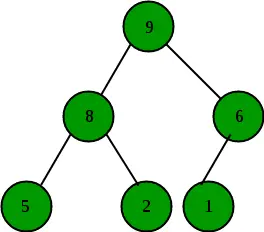
あ 最大ヒープ は、各内部ノードの値がそのノードの子の値以上である完全なバイナリ ツリーです。ヒープの要素を配列にマッピングすることは簡単です。ノードがインデックス k に格納されている場合、その左側の子はインデックスに格納されます。 2k+1 インデックスにあるその右の子 2k+2 。
最大ヒープの例:
最大ヒープはどのように表されますか?
最大ヒープは完全なバイナリ ツリーです。最大ヒープは通常、配列として表されます。ルート要素は Arr[0] にあります。以下の表は、i 番目のノード、つまり Arr[i] の他のノードのインデックスを示しています。
- Arr[(i-1)/2] 親ノードを返します。
- Arr[(2*i)+1] 左側の子ノードを返します。
- Arr[(2*i)+2] 右の子ノードを返します。
最大ヒープに対する操作:
- getMax() : Max Heap のルート要素を返します。この操作の時間計算量は次のとおりです。 ○(1) 。
- extractMax() : MaxHeap から最大要素を削除します。この操作の時間計算量は O(log n) この操作では、ルートを削除した後に (heapify() を呼び出して) ヒープ プロパティを維持する必要があるためです。
- 入れる() : 新しいキーを挿入するには、 O(log n) 時間。ツリーの最後に新しいキーを追加します。新しいキーが親キーよりも小さい場合は、何もする必要はありません。それ以外の場合は、上に向かってトラバースして、違反したヒープ プロパティを修正する必要があります。
注記: 以下の実装では、実装を簡素化するためにインデックス 1 からインデックスを作成します。
パイソン
# Python3 implementation of Max Heap> import> sys> class> MaxHeap:> > def> __init__(> self> , maxsize):> > > self> .maxsize> => maxsize> > self> .size> => 0> > self> .Heap> => [> 0> ]> *> (> self> .maxsize> +> 1> )> > self> .Heap[> 0> ]> => sys.maxsize> > self> .FRONT> => 1> > # Function to return the position of> > # parent for the node currently> > # at pos> > def> parent(> self> , pos):> > > return> pos> /> /> 2> > # Function to return the position of> > # the left child for the node currently> > # at pos> > def> leftChild(> self> , pos):> > > return> 2> *> pos> > # Function to return the position of> > # the right child for the node currently> > # at pos> > def> rightChild(> self> , pos):> > > return> (> 2> *> pos)> +> 1> > # Function that returns true if the passed> > # node is a leaf node> > def> isLeaf(> self> , pos):> > > if> pos>>> => (> self> .size> /> /> 2> )> and> pos <> => self> .size:> > return> True> > return> False> > # Function to swap two nodes of the heap> > def> swap(> self> , fpos, spos):> > > self> .Heap[fpos],> self> .Heap[spos]> => (> self> .Heap[spos],> > self> .Heap[fpos])> > # Function to heapify the node at pos> > def> maxHeapify(> self> , pos):> > # If the node is a non-leaf node and smaller> > # than any of its child> > if> not> self> .isLeaf(pos):> > if> (> self> .Heap[pos] <> self> .Heap[> self> .leftChild(pos)]> or> > self> .Heap[pos] <> self> .Heap[> self> .rightChild(pos)]):> > # Swap with the left child and heapify> > # the left child> > if> (> self> .Heap[> self> .leftChild(pos)]>>> > self> .Heap[> self> .rightChild(pos)]):> > self> .swap(pos,> self> .leftChild(pos))> > self> .maxHeapify(> self> .leftChild(pos))> > # Swap with the right child and heapify> > # the right child> > else> :> > self> .swap(pos,> self> .rightChild(pos))> > self> .maxHeapify(> self> .rightChild(pos))> > # Function to insert a node into the heap> > def> insert(> self> , element):> > > if> self> .size>>> => self> .maxsize:> > return> > self> .size> +> => 1> > self> .Heap[> self> .size]> => element> > current> => self> .size> > while> (> self> .Heap[current]>>> > self> .Heap[> self> .parent(current)]):> > self> .swap(current,> self> .parent(current))> > current> => self> .parent(current)> > # Function to print the contents of the heap> > def> Print> (> self> ):> > > for> i> in> range> (> 1> , (> self> .size> /> /> 2> )> +> 1> ):> > print> (> 'PARENT : '> +> str> (> self> .Heap[i])> +> > 'LEFT CHILD : '> +> str> (> self> .Heap[> 2> *> i])> +> > 'RIGHT CHILD : '> +> str> (> self> .Heap[> 2> *> i> +> 1> ]))> > # Function to remove and return the maximum> > # element from the heap> > def> extractMax(> self> ):> > popped> => self> .Heap[> self> .FRONT]> > self> .Heap[> self> .FRONT]> => self> .Heap[> self> .size]> > self> .size> -> => 1> > self> .maxHeapify(> self> .FRONT)> > > return> popped> # Driver Code> if> __name__> => => '__main__'> :> > > print> (> 'The maxHeap is '> )> > > maxHeap> => MaxHeap(> 15> )> > maxHeap.insert(> 5> )> > maxHeap.insert(> 3> )> > maxHeap.insert(> 17> )> > maxHeap.insert(> 10> )> > maxHeap.insert(> 84> )> > maxHeap.insert(> 19> )> > maxHeap.insert(> 6> )> > maxHeap.insert(> 22> )> > maxHeap.insert(> 9> )> > maxHeap.> Print> ()> > > print> (> 'The Max val is '> +> str> (maxHeap.extractMax()))> |
出力
The maxHeap is PARENT : 84LEFT CHILD : 22RIGHT CHILD : 19 PARENT : 22LEFT CHILD : 17RIGHT CHILD : 10 PARENT : 19LEFT CHILD : 5RIGHT CHILD : 6 PARENT : 17LEFT CHILD : 3RIGHT CHILD : 9 The Max val is 84
ライブラリ関数の使用:
を使用しております ヒープク Python でヒープを実装するためのクラス。デフォルトでは、最小ヒープはこのクラスによって実装されます。ただし、MaxHeap として使用できるように、各値に -1 を掛けます。
Python3
# Python3 program to demonstrate working of heapq> from> heapq> import> heappop, heappush, heapify> # Creating empty heap> heap> => []> heapify(heap)> # Adding items to the heap using heappush> # function by multiplying them with -1> heappush(heap,> -> 1> *> 10> )> heappush(heap,> -> 1> *> 30> )> heappush(heap,> -> 1> *> 20> )> heappush(heap,> -> 1> *> 400> )> # printing the value of maximum element> print> (> 'Head value of heap : '> +> str> (> -> 1> *> heap[> 0> ]))> # printing the elements of the heap> print> (> 'The heap elements : '> )> for> i> in> heap:> > print> ((> -> 1> *> i), end> => ' '> )> print> (> '
'> )> element> => heappop(heap)> # printing the elements of the heap> print> (> 'The heap elements : '> )> for> i> in> heap:> > print> (> -> 1> *> i, end> => ' '> )> |
出力
Head value of heap : 400 The heap elements : 400 30 20 10 The heap elements : 30 10 20
数値、文字列、タプル、オブジェクトなどの dunder メソッドでライブラリ関数を使用する
を使用しております ヒープク Python でヒープを実装するためのクラス。デフォルトでは、最小ヒープはこのクラスによって実装されます。
MaxHeap を実装するには、数値だけでなくあらゆる種類のオブジェクト (文字列、タプル、オブジェクトなど) を実装する必要があります。
- リスト内の項目の Wrapper クラスを作成します。
- オーバーライド __lt__ 逆の結果を与える dunder メソッド。
以下は、ここで説明したメソッドの実装です。
Python3
'''> Python3 program to implement MaxHeap Operation> with built-in module heapq> for String, Numbers, Objects> '''> from> functools> import> total_ordering> import> heapq> |_+_| |