Größte Zahl in BST, die kleiner oder gleich k ist
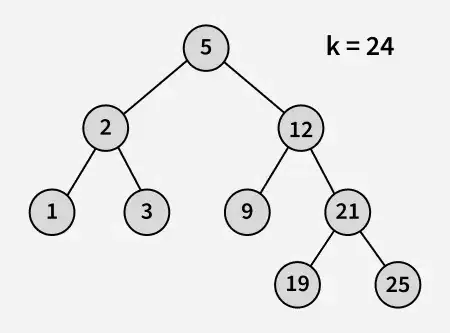
Angesichts der Wurzel von a Binärer Suchbaum und eine ganze Zahl k . Die Aufgabe besteht darin, das zu finden größte Zahl im binären Suchbaum weniger als oder gleich zu k, wenn kein solches Element existiert, print -1.
Beispiele:
Eingang:

Ausgabe : 21
Erläuterung : 19 und 25 sind zwei Zahlen, die 21 am nächsten kommen, und 19 ist die größte Zahl mit einem Wert kleiner oder gleich 21.
Eingang: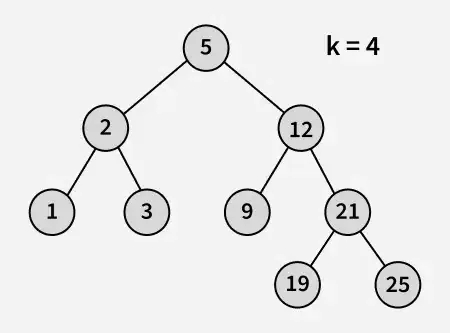
Ausgabe : 3
Erläuterung : 3 und 5 sind zwei Zahlen, die 4 am nächsten kommen, und 3 ist die größte Zahl mit einem Wert kleiner oder gleich 4.
Inhaltsverzeichnis
- [Naiver Ansatz] Rekursion verwenden – O(h)-Zeit und O(h)-Raum
- [Erwarteter Ansatz] Verwendung von Iteration – O(h)-Zeit und O(1)-Raum
[Naiver Ansatz] Rekursion verwenden – O(h)-Zeit und O(h)-Raum
C++Die Idee ist, mit dem zu beginnen Wurzel und vergleiche seinen Wert mit k. Wenn der Wert des Knotens größer als k ist, wechseln Sie zum linken Teilbaum. Andernfalls ermitteln Sie den Wert der größten Zahl, die kleiner als k ist rechter Teilbaum . Wenn der rechte Teilbaum -1 zurückgibt (was bedeutet, dass kein solcher Wert vorhanden ist), wird der Wert des aktuellen Knotens zurückgegeben. Andernfalls wird der vom rechten Teilbaum zurückgegebene Wert zurückgegeben (da er größer als der Wert des aktuellen Knotens, aber kleiner als gleich k ist).
// C++ code to find the largest value // smaller than or equal to k using recursion #include using namespace std ; class Node { public : int data ; Node * left * right ; Node ( int val ){ data = val ; left = nullptr ; right = nullptr ; } }; // function to find max value less than k int findMaxFork ( Node * root int k ) { // Base cases if ( root == nullptr ) return -1 ; if ( root -> data == k ) return k ; // If root's value is smaller // try in right subtree else if ( root -> data < k ) { int x = findMaxFork ( root -> right k ); if ( x == -1 ) return root -> data ; else return x ; } // If root's data is greater // return value from left subtree. return findMaxFork ( root -> left k ); } int main () { int k = 24 ; // creating following BST // // 5 // / // 2 12 // / / // 1 3 9 21 // / // 19 25 Node * root = new Node ( 5 ); root -> left = new Node ( 2 ); root -> left -> left = new Node ( 1 ); root -> left -> right = new Node ( 3 ); root -> right = new Node ( 12 ); root -> right -> left = new Node ( 9 ); root -> right -> right = new Node ( 21 ); root -> right -> right -> left = new Node ( 19 ); root -> right -> right -> right = new Node ( 25 ); cout < < findMaxFork ( root k ); return 0 ; }
Java // Java code to find the largest value // smaller than or equal to k using recursion class Node { int data ; Node left right ; Node ( int val ) { data = val ; left = null ; right = null ; } } class GfG { // function to find max value less than k static int findMaxFork ( Node root int k ) { // Base cases if ( root == null ) return - 1 ; if ( root . data == k ) return k ; // If root's value is smaller // try in right subtree else if ( root . data < k ) { int x = findMaxFork ( root . right k ); if ( x == - 1 ) return root . data ; else return x ; } // If root's data is greater // return value from left subtree. return findMaxFork ( root . left k ); } public static void main ( String [] args ) { int k = 24 ; // creating following BST // // 5 // / // 2 12 // / / // 1 3 9 21 // / // 19 25 Node root = new Node ( 5 ); root . left = new Node ( 2 ); root . left . left = new Node ( 1 ); root . left . right = new Node ( 3 ); root . right = new Node ( 12 ); root . right . left = new Node ( 9 ); root . right . right = new Node ( 21 ); root . right . right . left = new Node ( 19 ); root . right . right . right = new Node ( 25 ); System . out . println ( findMaxFork ( root k )); } }
Python # Python code to find the largest value # smaller than or equal to k using recursion class Node : def __init__ ( self val ): self . data = val self . left = None self . right = None # function to find max value less than k def findMaxFork ( root k ): # Base cases if root is None : return - 1 if root . data == k : return k # If root's value is smaller # try in right subtree elif root . data < k : x = findMaxFork ( root . right k ) if x == - 1 : return root . data else : return x # If root's data is greater # return value from left subtree. return findMaxFork ( root . left k ) if __name__ == '__main__' : k = 24 # creating following BST # # 5 # / # 2 12 # / / # 1 3 9 21 # / # 19 25 root = Node ( 5 ) root . left = Node ( 2 ) root . left . left = Node ( 1 ) root . left . right = Node ( 3 ) root . right = Node ( 12 ) root . right . left = Node ( 9 ) root . right . right = Node ( 21 ) root . right . right . left = Node ( 19 ) root . right . right . right = Node ( 25 ) print ( findMaxFork ( root k ))
C# // C# code to find the largest value // smaller than or equal to k using recursion using System ; class Node { public int data ; public Node left right ; public Node ( int val ) { data = val ; left = null ; right = null ; } } class GfG { // function to find max value less than k static int FindMaxFork ( Node root int k ) { // Base cases if ( root == null ) return - 1 ; if ( root . data == k ) return k ; // If root's value is smaller // try in right subtree else if ( root . data < k ) { int x = FindMaxFork ( root . right k ); if ( x == - 1 ) return root . data ; else return x ; } // If root's data is greater // return value from left subtree. return FindMaxFork ( root . left k ); } static void Main () { int k = 24 ; // creating following BST // // 5 // / // 2 12 // / / // 1 3 9 21 // / // 19 25 Node root = new Node ( 5 ); root . left = new Node ( 2 ); root . left . left = new Node ( 1 ); root . left . right = new Node ( 3 ); root . right = new Node ( 12 ); root . right . left = new Node ( 9 ); root . right . right = new Node ( 21 ); root . right . right . left = new Node ( 19 ); root . right . right . right = new Node ( 25 ); Console . WriteLine ( FindMaxFork ( root k )); } }
JavaScript // JavaScript code to find the largest value // smaller than or equal to k using recursion class Node { constructor ( val ) { this . data = val ; this . left = null ; this . right = null ; } } // function to find max value less than k function findMaxFork ( root k ) { // Base cases if ( root === null ) return - 1 ; if ( root . data === k ) return k ; // If root's value is smaller // try in right subtree else if ( root . data < k ) { let x = findMaxFork ( root . right k ); if ( x === - 1 ) return root . data ; else return x ; } // If root's data is greater // return value from left subtree. return findMaxFork ( root . left k ); } let k = 24 ; // creating following BST // // 5 // / // 2 12 // / / // 1 3 9 21 // / // 19 25 let root = new Node ( 5 ); root . left = new Node ( 2 ); root . left . left = new Node ( 1 ); root . left . right = new Node ( 3 ); root . right = new Node ( 12 ); root . right . left = new Node ( 9 ); root . right . right = new Node ( 21 ); root . right . right . left = new Node ( 19 ); root . right . right . right = new Node ( 25 ); console . log ( findMaxFork ( root k ));
Ausgabe
21
[Erwarteter Ansatz] Verwendung von Iteration – O(h)-Zeit und O(1)-Raum
C++Die Idee ist, mit dem zu beginnen Wurzel und vergleiche seinen Wert mit k . Wenn der Wert des Knotens ist <= k Aktualisieren Sie den Ergebniswert auf den Root-Wert und wechseln Sie zu Rechts Unterbaum sonst in den verschieben links Teilbaum. Von iterativ Durch die Anwendung dieser Operation auf alle Knoten können wir den dafür benötigten Platz minimieren Rekursion Stapel.
// C++ code to find the largest value // smaller than or equal to k using recursion #include using namespace std ; class Node { public : int data ; Node * left * right ; Node ( int val ){ data = val ; left = nullptr ; right = nullptr ; } }; // function to find max value less than k int findMaxFork ( Node * root int k ) { int result = -1 ; // Start from root and keep looking for larger while ( root != nullptr ) { // If root is smaller go to right side if ( root -> data <= k ){ result = root -> data ; root = root -> right ; } // If root is greater go to left side else root = root -> left ; } return result ; } int main () { int k = 24 ; // creating following BST // // 5 // / // 2 12 // / / // 1 3 9 21 // / // 19 25 Node * root = new Node ( 5 ); root -> left = new Node ( 2 ); root -> left -> left = new Node ( 1 ); root -> left -> right = new Node ( 3 ); root -> right = new Node ( 12 ); root -> right -> left = new Node ( 9 ); root -> right -> right = new Node ( 21 ); root -> right -> right -> left = new Node ( 19 ); root -> right -> right -> right = new Node ( 25 ); cout < < findMaxFork ( root k ); return 0 ; }
Java // Java code to find the largest value // smaller than or equal to k using recursion class Node { int data ; Node left right ; Node ( int val ) { data = val ; left = null ; right = null ; } } class GfG { // function to find max value less than k static int findMaxFork ( Node root int k ) { int result = - 1 ; // Start from root and keep looking for larger while ( root != null ) { // If root is smaller go to right side if ( root . data <= k ) { result = root . data ; root = root . right ; } // If root is greater go to left side else { root = root . left ; } } return result ; } public static void main ( String [] args ) { int k = 24 ; // creating following BST // // 5 // / // 2 12 // / / // 1 3 9 21 // / // 19 25 Node root = new Node ( 5 ); root . left = new Node ( 2 ); root . left . left = new Node ( 1 ); root . left . right = new Node ( 3 ); root . right = new Node ( 12 ); root . right . left = new Node ( 9 ); root . right . right = new Node ( 21 ); root . right . right . left = new Node ( 19 ); root . right . right . right = new Node ( 25 ); System . out . println ( findMaxFork ( root k )); } }
Python # Python code to find the largest value # smaller than or equal to k using recursion class Node : def __init__ ( self val ): self . data = val self . left = None self . right = None # function to find max value less than k def findMaxFork ( root k ): result = - 1 # Start from root and keep looking for larger while root is not None : # If root is smaller go to right side if root . data <= k : result = root . data root = root . right # If root is greater go to left side else : root = root . left return result if __name__ == '__main__' : k = 24 # creating following BST # # 5 # / # 2 12 # / / # 1 3 9 21 # / # 19 25 root = Node ( 5 ) root . left = Node ( 2 ) root . left . left = Node ( 1 ) root . left . right = Node ( 3 ) root . right = Node ( 12 ) root . right . left = Node ( 9 ) root . right . right = Node ( 21 ) root . right . right . left = Node ( 19 ) root . right . right . right = Node ( 25 ) print ( findMaxFork ( root k ))
C# // C# code to find the largest value // smaller than or equal to k using recursion using System ; class Node { public int data ; public Node left right ; public Node ( int val ) { data = val ; left = null ; right = null ; } } class GfG { // function to find max value less than k static int FindMaxFork ( Node root int k ) { int result = - 1 ; // Start from root and keep looking for larger while ( root != null ) { // If root is smaller go to right side if ( root . data <= k ) { result = root . data ; root = root . right ; } // If root is greater go to left side else { root = root . left ; } } return result ; } static void Main () { int k = 24 ; // creating following BST // // 5 // / // 2 12 // / / // 1 3 9 21 // / // 19 25 Node root = new Node ( 5 ); root . left = new Node ( 2 ); root . left . left = new Node ( 1 ); root . left . right = new Node ( 3 ); root . right = new Node ( 12 ); root . right . left = new Node ( 9 ); root . right . right = new Node ( 21 ); root . right . right . left = new Node ( 19 ); root . right . right . right = new Node ( 25 ); Console . WriteLine ( FindMaxFork ( root k )); } }
JavaScript // JavaScript code to find the largest value // smaller than or equal to k using recursion class Node { constructor ( val ) { this . data = val ; this . left = null ; this . right = null ; } } // function to find max value less than k function findMaxFork ( root k ) { let result = - 1 ; // Start from root and keep looking for larger while ( root !== null ) { // If root is smaller go to right side if ( root . data <= k ) { result = root . data ; root = root . right ; } // If root is greater go to left side else { root = root . left ; } } return result ; } let k = 24 ; // creating following BST // // 5 // / // 2 12 // / / // 1 3 9 21 // / // 19 25 let root = new Node ( 5 ); root . left = new Node ( 2 ); root . left . left = new Node ( 1 ); root . left . right = new Node ( 3 ); root . right = new Node ( 12 ); root . right . left = new Node ( 9 ); root . right . right = new Node ( 21 ); root . right . right . left = new Node ( 19 ); root . right . right . right = new Node ( 25 ); console . log ( findMaxFork ( root k ));
Ausgabe
21Quiz erstellen