Aplaneu una llista enllaçada de diversos nivells (en profunditat)
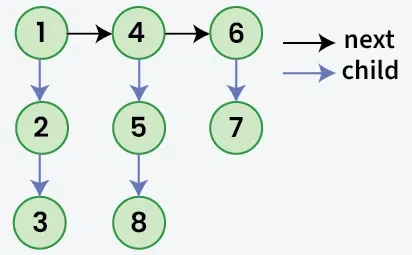
Donada una llista enllaçada on a més de la següent punter cada node té un nen punter que pot apuntar o no a una llista separada. Aquestes llistes infantils poden tenir un o més fills propis per produir a multinivell llista enllaçada. Donat el cap de la primer nivell de la llista. La tasca és fer aplanar la llista perquè tots els nodes apareguin en a d'un sol nivell llista enllaçada. Aplaneu la llista de manera que tots els nodes del primer nivell hauria de venir primer llavors els nodes del segon nivell i així successivament.
Exemples:
Entrada:

Sortida: 1->4->6->2->5->7->3->8
Explicació: La llista enllaçada multinivell s'aplana ja que no té punters secundaris.
Hem discutit aplanament d'una llista enllaçada de diversos nivells on els nodes tenen dos punters cap avall i següent. En el post anterior vam aplanat la llista enllaçada a nivell. Com aplanar una llista enllaçada quan sempre hem de processar el punter cap avall abans del següent a cada node.
Taula de continguts
- [Enfocament esperat] Ús de la recursència: O(n) Temps i O(n) Espai
- [Enfocament alternatiu] Utilitzant Stack - O(n) Temps i O(n) Espai
[Enfocament esperat] Ús de la recursència: O(n) Temps i O(n) Espai
C++L'enfocament és recursivament aplanar a enllaçat a diversos nivells llista travessant cada node i els seus nodes fills. Primer aplanar la llista infantil utilitzant la recursivitat. Un cop aplanada la llista infantil, aneu a següent node en la seqüència. Durant el recorregut mantenir a referència al node visitat anteriorment i enllaçar-lo amb el node actual. Aquest procés garanteix que tots els nodes de diferents nivells estiguin connectats en a llista lineal única tot conservant el ordre en profunditat.
// A C++ program to flatten a multi- // linked list depth-wise #include using namespace std ; class Node { public : int data ; Node * next ; Node * down ; Node ( int x ) { data = x ; next = down = nullptr ; } }; void flattenList ( Node * curr Node *& prev ) { if ( curr == nullptr ) return ; // Add the current element to the list. if ( prev != nullptr ) prev -> next = curr ; prev = curr ; // Store the next pointer Node * next = curr -> next ; // Recursively add the bottom list flattenList ( curr -> down prev ); // Recursively add the next list flattenList ( next prev ); } void printList ( Node * head ) { Node * curr = head ; while ( curr != nullptr ) { cout < < curr -> data < < ' ' ; curr = curr -> next ; } cout < < endl ; } int main () { // Create a hard coded multi-linked list. // 5 -> 10 -> 19 -> 28 // | | // 7 22 // | | // 8 50 // | // 30 Node * head = new Node ( 5 ); head -> down = new Node ( 7 ); head -> down -> down = new Node ( 8 ); head -> down -> down -> down = new Node ( 30 ); head -> next = new Node ( 10 ); head -> next -> next = new Node ( 19 ); head -> next -> next -> down = new Node ( 22 ); head -> next -> next -> down -> down = new Node ( 50 ); head -> next -> next -> next = new Node ( 28 ); Node * prev = nullptr ; flattenList ( head prev ); printList ( head ); return 0 ; }
Java // A Java program to flatten a multi- // linked list depth-wise class Node { int data ; Node next down ; Node ( int x ) { data = x ; next = down = null ; } } class GfG { static void flattenList ( Node curr Node [] prev ) { if ( curr == null ) return ; // Add the current element to the list. if ( prev [ 0 ] != null ) prev [ 0 ] . next = curr ; prev [ 0 ] = curr ; // Store the next pointer Node next = curr . next ; // Recursively add the bottom list flattenList ( curr . down prev ); // Recursively add the next list flattenList ( next prev ); } static void printList ( Node head ) { Node curr = head ; while ( curr != null ) { System . out . print ( curr . data + ' ' ); curr = curr . next ; } System . out . println (); } public static void main ( String [] args ) { // Create a hard coded multi-linked list. // 5 -> 10 -> 19 -> 28 // | | // 7 22 // | | // 8 50 // | // 30 Node head = new Node ( 5 ); head . down = new Node ( 7 ); head . down . down = new Node ( 8 ); head . down . down . down = new Node ( 30 ); head . next = new Node ( 10 ); head . next . next = new Node ( 19 ); head . next . next . down = new Node ( 22 ); head . next . next . down . down = new Node ( 50 ); head . next . next . next = new Node ( 28 ); Node [] prev = new Node [ 1 ] ; flattenList ( head prev ); printList ( head ); } }
Python # A Python program to flatten a multi- # linked list depth-wise class Node : def __init__ ( self x ): self . data = x self . next = None self . down = None def flatten_list ( curr prev ): if curr is None : return # Add the current element to the list. if prev [ 0 ] is not None : prev [ 0 ] . next = curr prev [ 0 ] = curr # Store the next pointer next_node = curr . next # Recursively add the bottom list flatten_list ( curr . down prev ) # Recursively add the next list flatten_list ( next_node prev ) def print_list ( head ): curr = head while curr is not None : print ( curr . data end = ' ' ) curr = curr . next print () if __name__ == '__main__' : # Create a hard coded multi-linked list. # 5 -> 10 -> 19 -> 28 # | | # 7 22 # | | # 8 50 # | # 30 head = Node ( 5 ) head . down = Node ( 7 ) head . down . down = Node ( 8 ) head . down . down . down = Node ( 30 ) head . next = Node ( 10 ) head . next . next = Node ( 19 ) head . next . next . down = Node ( 22 ) head . next . next . down . down = Node ( 50 ) head . next . next . next = Node ( 28 ) prev = [ None ] flatten_list ( head prev ) print_list ( head )
C# // A C# program to flatten a multi- // linked list depth-wise using System ; class Node { public int data ; public Node next down ; public Node ( int x ) { data = x ; next = down = null ; } } class GfG { static void FlattenList ( Node curr ref Node prev ) { if ( curr == null ) return ; // Add the current element to the list. if ( prev != null ) prev . next = curr ; prev = curr ; // Store the next pointer Node next = curr . next ; // Recursively add the bottom list FlattenList ( curr . down ref prev ); // Recursively add the next list FlattenList ( next ref prev ); } static void PrintList ( Node head ) { Node curr = head ; while ( curr != null ) { Console . Write ( curr . data + ' ' ); curr = curr . next ; } Console . WriteLine (); } static void Main ( string [] args ) { // Create a hard coded multi-linked list. // 5 -> 10 -> 19 -> 28 // | | // 7 22 // | | // 8 50 // | // 30 Node head = new Node ( 5 ); head . down = new Node ( 7 ); head . down . down = new Node ( 8 ); head . down . down . down = new Node ( 30 ); head . next = new Node ( 10 ); head . next . next = new Node ( 19 ); head . next . next . down = new Node ( 22 ); head . next . next . down . down = new Node ( 50 ); head . next . next . next = new Node ( 28 ); Node prev = null ; FlattenList ( head ref prev ); PrintList ( head ); } }
JavaScript // A Javascript program to flatten a multi- // linked list depth-wise class Node { constructor ( x ) { this . data = x ; this . next = null ; this . down = null ; } } function flattenList ( curr prev ) { if ( curr === null ) return ; // Add the current element to the list. if ( prev [ 0 ] !== null ) prev [ 0 ]. next = curr ; prev [ 0 ] = curr ; // Store the next pointer let next = curr . next ; // Recursively add the bottom list flattenList ( curr . down prev ); // Recursively add the next list flattenList ( next prev ); } function printList ( head ) { let curr = head ; while ( curr !== null ) { console . log ( curr . data ); curr = curr . next ; } } // Create a hard coded multi-linked list. // 5 -> 10 -> 19 -> 28 // | | // 7 22 // | | // 8 50 // | // 30 let head = new Node ( 5 ); head . down = new Node ( 7 ); head . down . down = new Node ( 8 ); head . down . down . down = new Node ( 30 ); head . next = new Node ( 10 ); head . next . next = new Node ( 19 ); head . next . next . down = new Node ( 22 ); head . next . next . down . down = new Node ( 50 ); head . next . next . next = new Node ( 28 ); let prev = [ null ]; flattenList ( head prev ); printList ( head );
Sortida
5 7 8 30 10 19 22 50 28
[Enfocament alternatiu] Utilitzant Stack - O(n) Temps i O(n) Espai
C++L'enfocament és recórrer el llista enllaçada de diversos nivells utilitzant a pila . Comença per empenyent el node principal a la pila. Llavors mentre el la pila no està buida pop el node superior i processar-lo. Per a cada node empènyer la seva punters següent i avall (si existeixen) a la pila. Durant aquest procés enllaça el node actual amb el node anterior mantenint la llista en forma aplanada. El recorregut assegura que els nodes de tots els nivells estiguin connectats en a llista enllaçada d'un sol nivell preservant l'ordre de profunditat.
// A C++ program to flatten a multi- // linked list depth-wise using stack #include using namespace std ; class Node { public : int data ; Node * next ; Node * down ; Node ( int x ) { data = x ; next = down = nullptr ; } }; void flattenList ( Node * head ) { if ( head == nullptr ) return ; stack < Node *> st ; st . push ( head ); Node * prev = nullptr ; while ( ! st . empty ()) { Node * curr = st . top (); st . pop (); // Push the next node first if ( curr -> next != nullptr ) st . push ( curr -> next ); // Push the bottom node into stack if ( curr -> down != nullptr ) st . push ( curr -> down ); // Add the current element to the list if ( prev != nullptr ) prev -> next = curr ; prev = curr ; } } void printList ( Node * head ) { Node * curr = head ; while ( curr != nullptr ) { cout < < curr -> data < < ' ' ; curr = curr -> next ; } cout < < endl ; } int main () { // Create a hard coded multi-linked list. // 5 -> 10 -> 19 -> 28 // | | // 7 22 // | | // 8 50 // | // 30 Node * head = new Node ( 5 ); head -> down = new Node ( 7 ); head -> down -> down = new Node ( 8 ); head -> down -> down -> down = new Node ( 30 ); head -> next = new Node ( 10 ); head -> next -> next = new Node ( 19 ); head -> next -> next -> down = new Node ( 22 ); head -> next -> next -> down -> down = new Node ( 50 ); head -> next -> next -> next = new Node ( 28 ); flattenList ( head ); printList ( head ); return 0 ; }
Java // A Java program to flatten a multi- // linked list depth-wise using stack import java.util.Stack ; class Node { int data ; Node next down ; Node ( int x ) { data = x ; next = down = null ; } } class GfG { static void flattenList ( Node head ) { if ( head == null ) return ; Stack < Node > stack = new Stack <> (); stack . push ( head ); Node prev = null ; while ( ! stack . isEmpty ()) { Node curr = stack . pop (); // Push the next node first if ( curr . next != null ) stack . push ( curr . next ); // Push the bottom node into stack if ( curr . down != null ) stack . push ( curr . down ); // Add the current element to the list if ( prev != null ) prev . next = curr ; prev = curr ; } } static void printList ( Node head ) { Node curr = head ; while ( curr != null ) { System . out . print ( curr . data + ' ' ); curr = curr . next ; } System . out . println (); } public static void main ( String [] args ) { // Create a hard coded multi-linked list. // 5 -> 10 -> 19 -> 28 // | | // 7 22 // | | // 8 50 // | // 30 Node head = new Node ( 5 ); head . down = new Node ( 7 ); head . down . down = new Node ( 8 ); head . down . down . down = new Node ( 30 ); head . next = new Node ( 10 ); head . next . next = new Node ( 19 ); head . next . next . down = new Node ( 22 ); head . next . next . down . down = new Node ( 50 ); head . next . next . next = new Node ( 28 ); flattenList ( head ); printList ( head ); } }
Python # A Python program to flatten a multi- # linked list depth-wise using stack class Node : def __init__ ( self x ): self . data = x self . next = None self . down = None def flatten_list ( head ): if head is None : return stack = [ head ] prev = None while stack : curr = stack . pop () # Push the next node first if curr . next : stack . append ( curr . next ) # Push the bottom node into stack if curr . down : stack . append ( curr . down ) # Add the current element to the list if prev : prev . next = curr prev = curr def print_list ( head ): curr = head while curr : print ( curr . data end = ' ' ) curr = curr . next print () if __name__ == '__main__' : # Create a hard coded multi-linked list. # 5 -> 10 -> 19 -> 28 # | | # 7 22 # | | # 8 50 # | # 30 head = Node ( 5 ) head . down = Node ( 7 ) head . down . down = Node ( 8 ) head . down . down . down = Node ( 30 ) head . next = Node ( 10 ) head . next . next = Node ( 19 ) head . next . next . down = Node ( 22 ) head . next . next . down . down = Node ( 50 ) head . next . next . next = Node ( 28 ) flatten_list ( head ) print_list ( head )
C# // A C# program to flatten a multi- // linked list depth-wise using stack using System ; using System.Collections.Generic ; class Node { public int data ; public Node next down ; public Node ( int x ) { data = x ; next = down = null ; } } class GfG { static void FlattenList ( Node head ) { if ( head == null ) return ; Stack < Node > stack = new Stack < Node > (); stack . Push ( head ); Node prev = null ; while ( stack . Count > 0 ) { Node curr = stack . Pop (); // Push the next node first if ( curr . next != null ) stack . Push ( curr . next ); // Push the bottom node into stack if ( curr . down != null ) stack . Push ( curr . down ); // Add the current element to the list if ( prev != null ) prev . next = curr ; prev = curr ; } } static void PrintList ( Node head ) { Node curr = head ; while ( curr != null ) { Console . Write ( curr . data + ' ' ); curr = curr . next ; } Console . WriteLine (); } static void Main ( string [] args ) { // Create a hard coded multi-linked list. // 5 -> 10 -> 19 -> 28 // | | // 7 22 // | | // 8 50 // | // 30 Node head = new Node ( 5 ); head . down = new Node ( 7 ); head . down . down = new Node ( 8 ); head . down . down . down = new Node ( 30 ); head . next = new Node ( 10 ); head . next . next = new Node ( 19 ); head . next . next . down = new Node ( 22 ); head . next . next . down . down = new Node ( 50 ); head . next . next . next = new Node ( 28 ); FlattenList ( head ); PrintList ( head ); } }
JavaScript // A Javascript program to flatten a multi- // linked list depth-wise using stack class Node { constructor ( x ) { this . data = x ; this . next = null ; this . down = null ; } } function flattenList ( head ) { if ( head === null ) return ; let stack = [ head ]; let prev = null ; while ( stack . length > 0 ) { let curr = stack . pop (); // Push the next node first if ( curr . next !== null ) stack . push ( curr . next ); // Push the bottom node into stack if ( curr . down !== null ) stack . push ( curr . down ); // Add the current element to the list if ( prev !== null ) prev . next = curr ; prev = curr ; } } function printList ( head ) { let curr = head ; while ( curr !== null ) { console . log ( curr . data ); curr = curr . next ; } } // Create a hard coded multi-linked list. // 5 -> 10 -> 19 -> 28 // | | // 7 22 // | | // 8 50 // | // 30 let head = new Node ( 5 ); head . down = new Node ( 7 ); head . down . down = new Node ( 8 ); head . down . down . down = new Node ( 30 ); head . next = new Node ( 10 ); head . next . next = new Node ( 19 ); head . next . next . down = new Node ( 22 ); head . next . next . down . down = new Node ( 50 ); head . next . next . next = new Node ( 28 ); flattenList ( head ); printList ( head );
Sortida
5 7 8 30 10 19 22 50 28