C/C++'da Modül Operatörü
Modülü anlamadan önce Şebeke , terim hakkında bilgi sahibi olmamız gerekiyor Şebeke . Programlamada operatör sembolü, derleyiciye, geçirilen işleme bağlı olarak belirli bir sayıda belirli bir işlemi gerçekleştirmesini söyler.
Sayılar üzerinde farklı işlemleri (+, -, *, /) gerçekleştirmek için kullanılır. Programdaki çeşitli operatörleri kullanarak programcının mantıksal ve matematiksel yeteneğini geliştirmeye yardımcı olur. Bu dört temel operatörün dışında aşağıdaki gibi başka operatörler de vardır: modül operatörü (%), kapsam çözümleme operatörü (::), vb.
Bu bölümde şu konulara odaklanacağız: modül operatörü.
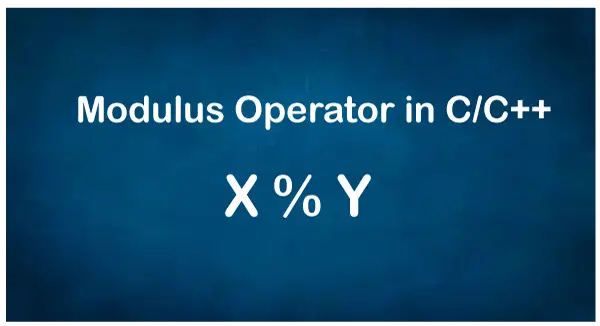
C ve C++'daki modül operatörü nedir?
modül operatörü çeşitli programlama dillerinde kullanılan bir semboldür. Yüzde sembolüyle gösterilir ( % ). Aritmetik operatörde kullanılan bir modül operatörüdür. Geri kalanı belirler. Bazı durumlarda kalan 0 olabilir, bu sayının bölene tamamen bölünebildiği anlamına gelir.
Sözdizimi:
rem = a % b
Yukarıdaki Sözdiziminde a ve b iki tam sayıdır ve % (Yüzde) sembolü a'yı b'ye bölen ve kalanı veren bir modül operatörüdür.
Modül Operatörünün Geri Dönüş Olanakları
Yalnızca bir kalan değer döndürmek için ilk sayının ikinci sayıya bölünmesiyle ilgili olasılıklar aşağıda verilmiştir.
- A değişkeni ikinci sayıya (b) tamamen bölünebiliyorsa sıfır (0) döndürür veya kalan 0 olur.
- a değişkeni ikinci sayıya (b) tam olarak bölünemiyorsa, [1, a - 1] aralığında sayısal bir değer döndürür. Veya kalanı sıfırdan farklı bir tamsayı değerine döndürdüğünü söyleyebiliriz.
- İlk sayı (a) sıfırdan farklı ve ikinci sayı 0 ise derleme zamanında hata verir.
Modül Operatörü C/C++'da nasıl çalışır?
Modül operatörü, son kullanıcı tarafından alınan iki işlenenle çalışır. Daha sonra birinci sayıyı ikinci sayıya bölerek kalanı bulur. Modül operatörünün işlevselliğini gösteren aşağıdaki örneği anlayalım.
Örnek : 8 ile 5 arasında modül operatörü yaptığımızda yani %8 5 kalan 3 değerini verir çünkü 8 5'e bölündüğünde bölüm olarak 1, kalan olarak 3 verir.
Benzer şekilde %7 2, kalan olarak 1 sonucunu verir, çünkü 7, 2'ye bölündüğünde bölüm olarak 3, kalan olarak da 1 verir.
Örnek 1: C'de Modül Operatörünü uygulayacak bir program yazın.
Mod.c
 #include #include void main() { int a, b; int res; // store the resultant of modulus expression a = 5; b = 2; res = a % b; // define modulus expression printf(' Modulus returns a remainder: %d', res); res = b % a; // define modulus expression printf('
 Modulus returns a remainder: %d', res); a = 10; b = 5; res = a % b; // define modulus expression printf('
 Modulus returns a remainder: %d', res); getch(); }
Çıktı:
Modulus returns a remainder: 1 Modulus returns a remainder: 2 Modulus returns a remainder: 0
Not: Bir kayan sayıyı başka bir sayıya böldüğümüzde, derlenmiş zamanlayıcı hatasını geçersiz bir işlenen olarak döndürür. Dolayısıyla float sayı ile çalışmadığını söyleyebiliriz.
C++'ta modül operatörünü uygulayan program.
Mod3.cpp
#include using namespace std; int main(void) { int a, b; int res; // store the resultant of modulus expression a = 5; b = 2; res = a % b; // modulus expression cout <<' modulus returns a remainder: ' << res; res="b" % a; expression cout <<'
b="5;" b; return 0; } < pre> <p> <strong>Output:</strong> </p> <pre> Modulus returns a remainder: 1 Modulus returns a remainder: 2 Modulus returns a remainder: 0 </pre> <h2>Modulus Operator in C++</h2> <p> <strong>Mode4.cpp</strong> </p> <pre> #include using namespace std; int main(void) { int a, b; int res; // store the result of modulus expression a = -5; b = 2; res = a % b; // modulus expression cout <<' modulus returns a remainder: ' << res; b="-3;" res="a" % b; expression cout <<'
return 0; } < pre> <p> <strong>Output:</strong> </p> <pre> Modulus returns a remainder: -1 Modulus returns a remainder: 2 Modulus returns a remainder: -1 </pre> <h3>Chaining of Modulus Operator</h3> <p>We can use the Chaining of Modulus Operator to perform modular division on more than two operands in a single statement. Following is the pseudo-code for the chaining of modulus operator, as given below.</p> <pre> res = operand1 % operand2 % operand3 % .... % operand_n </pre> <p>Let's consider the program of Chaining of Modulus Operator to take more than two operands.</p> <p> <strong>Mode5.cpp</strong> </p> <pre> #include using namespace std; int main() { // Use of modulus operator in C++ int x = 14; int y = 6; int z = 3; int modulo = x % y % z; // x % y returns 2, and 2 % z returns 2 cout << 'Modulus is : '<< modulo; } </pre> <p> <strong>Output:</strong> </p> <pre> Modulus is: 2 </pre> <hr></'></pre></'> C++'da Modül Operatörü
Mod4.cpp
#include using namespace std; int main(void) { int a, b; int res; // store the result of modulus expression a = -5; b = 2; res = a % b; // modulus expression cout <<\' modulus returns a remainder: \' << res; b="-3;" res="a" % b; expression cout <<\'
return 0; } < pre> <p> <strong>Output:</strong> </p> <pre> Modulus returns a remainder: -1 Modulus returns a remainder: 2 Modulus returns a remainder: -1 </pre> <h3>Chaining of Modulus Operator</h3> <p>We can use the Chaining of Modulus Operator to perform modular division on more than two operands in a single statement. Following is the pseudo-code for the chaining of modulus operator, as given below.</p> <pre> res = operand1 % operand2 % operand3 % .... % operand_n </pre> <p>Let's consider the program of Chaining of Modulus Operator to take more than two operands.</p> <p> <strong>Mode5.cpp</strong> </p> <pre> #include using namespace std; int main() { // Use of modulus operator in C++ int x = 14; int y = 6; int z = 3; int modulo = x % y % z; // x % y returns 2, and 2 % z returns 2 cout << 'Modulus is : '<< modulo; } </pre> <p> <strong>Output:</strong> </p> <pre> Modulus is: 2 </pre> <hr></\'> Modül Operatörünün Zincirlenmesi
Tek bir ifadede ikiden fazla işlenen üzerinde modüler bölme işlemi gerçekleştirmek için Modül Operatör Zincirlemesini kullanabiliriz. Aşağıda modül operatörünün zincirlenmesine yönelik sözde kod verilmiştir.
res = operand1 % operand2 % operand3 % .... % operand_n
İkiden fazla işlenen alacak şekilde Modül Operatörü Zincirleme programını ele alalım.
Mod5.cpp
#include using namespace std; int main() { // Use of modulus operator in C++ int x = 14; int y = 6; int z = 3; int modulo = x % y % z; // x % y returns 2, and 2 % z returns 2 cout << 'Modulus is : '<< modulo; } Çıktı:
Modulus is: 2