Głębokość drzewa N-ary
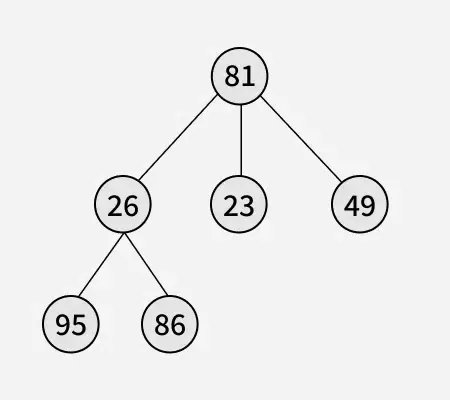
Biorąc pod uwagę drzewo n-arne zawierające dodatnie wartości węzłów, zadaniem jest znalezienie głębokość drzewa.
Notatka: Jakiś drzewo n-arne to drzewo, w którym może znajdować się każdy węzeł zero Lub więcej węzły potomne. W przeciwieństwie do drzewa binarnego, które ma co najwyżej dwoje dzieci na węzeł (lewy i prawy) pozwala na to drzewo n-ary wiele oddziałów lub dzieci dla każdego węzła.
Przykłady:
Wejście:

Wyjście: 3
Wyjaśnienie: Najdłuższa ścieżka od korzenia (węzeł 81) do liścia to 81 -> 26 -> 95 lub 81 -> 26 -> 86, co daje maksymalną głębokość 3.Wejście:
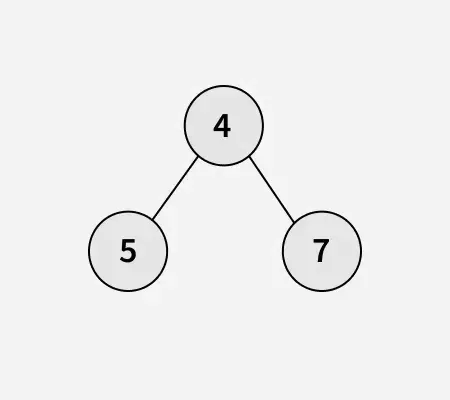
Wyjście: 2
Wyjaśnienie: Najdłuższa ścieżka od korzenia (węzeł 4) do dowolnego liścia (węzły 5 lub 7) to 2, ponieważ wymaga tylko dwóch poziomów przejścia.
Zbliżać się:
Pomysł jest taki, aby obliczyć głębokość drzewa N-ary rekurencyjnie zainicjować maksymalna głębokość jako 0, następnie rekurencyjnie oblicz głębokość dla każdego dziecka i śledź największa głębokość napotkane. Na koniec dodaj 1 na maksymalną głębokość (dla bieżącego węzła) i zwróć plik wynik . Takie podejście gwarantuje, że znajdziemy najdłuższa ścieżka od korzenia do dowolnego węzła liścia.
Drzewo N-Ary można przemierzać tak samo jak zwykłe drzewo. Musimy po prostu wziąć pod uwagę wszystkie dzieci danego węzła i rekurencyjnie wywołać tę funkcję w każdym węźle.
C++ // C++ Code to find the depth of an N-ary tree #include using namespace std ; class Node { public : int data ; vector < Node *> children ; Node ( int val ) { data = val ; } }; // Recursive function to calculate maximum depth int maxDepth ( Node * root ) { // If the node is null depth is 0 if ( ! root ) { return 0 ; } int depth = 0 ; // Recur for all children and find the maximum depth for ( auto child : root -> children ) { depth = max ( depth maxDepth ( child )); } // Add 1 to include the current node // in the depth count return depth + 1 ; } int main () { // Representation of given N-ary tree // 1 // / | // 2 3 4 // / // 5 6 Node * root = new Node ( 1 ); root -> children . push_back ( new Node ( 2 )); root -> children . push_back ( new Node ( 3 )); root -> children . push_back ( new Node ( 4 )); root -> children [ 0 ] -> children . push_back ( new Node ( 5 )); root -> children [ 2 ] -> children . push_back ( new Node ( 6 )); cout < < maxDepth ( root ); return 0 ; }
Java // Java Code to find the depth of an N-ary tree import java.util.* ; class Node { int data ; List < Node > children ; Node ( int val ) { data = val ; children = new ArrayList <> (); } } // Recursive function to calculate // maximum depth class GfG { static int maxDepth ( Node root ) { // If the node is null depth is 0 if ( root == null ) { return 0 ; } int depth = 0 ; // Recur for all children and find // the maximum depth for ( Node child : root . children ) { depth = Math . max ( depth maxDepth ( child )); } // Add 1 to include the current node // in the depth count return depth + 1 ; } public static void main ( String [] args ) { // Representation of given N-ary tree // 1 // / | // 2 3 4 // / // 5 6 Node root = new Node ( 1 ); root . children . add ( new Node ( 2 )); root . children . add ( new Node ( 3 )); root . children . add ( new Node ( 4 )); root . children . get ( 0 ). children . add ( new Node ( 5 )); root . children . get ( 2 ). children . add ( new Node ( 6 )); System . out . println ( maxDepth ( root )); } }
Python # Python Code to find the depth # of an N-ary tree class Node : def __init__ ( self val ): self . data = val self . children = [] # Recursive function to calculate # maximum depth def max_depth ( root ): # If the node is None depth is 0 if not root : return 0 depth = 0 # Recur for all children and # find the maximum depth for child in root . children : depth = max ( depth max_depth ( child )) # Add 1 to include the current # node in the depth count return depth + 1 if __name__ == '__main__' : # Representation of given N-ary tree # 1 # / | # 2 3 4 # / # 5 6 root = Node ( 1 ) root . children . append ( Node ( 2 )) root . children . append ( Node ( 3 )) root . children . append ( Node ( 4 )) root . children [ 0 ] . children . append ( Node ( 5 )) root . children [ 2 ] . children . append ( Node ( 6 )) print ( max_depth ( root ))
C# // C# Code to find the depth of an N-ary tree using System ; using System.Collections.Generic ; class Node { public int data ; public List < Node > children ; public Node ( int val ) { data = val ; children = new List < Node > (); } } // Recursive function to calculate // maximum depth class GfG { static int MaxDepth ( Node root ) { // If the node is null depth is 0 if ( root == null ) { return 0 ; } int depth = 0 ; // Recur for all children and find the maximum depth foreach ( Node child in root . children ) { depth = Math . Max ( depth MaxDepth ( child )); } // Add 1 to include the current // node in the depth count return depth + 1 ; } static void Main ( string [] args ) { // Representation of given N-ary tree // 1 // / | // 2 3 4 // / // 5 6 Node root = new Node ( 1 ); root . children . Add ( new Node ( 2 )); root . children . Add ( new Node ( 3 )); root . children . Add ( new Node ( 4 )); root . children [ 0 ]. children . Add ( new Node ( 5 )); root . children [ 2 ]. children . Add ( new Node ( 6 )); Console . WriteLine ( MaxDepth ( root )); } }
JavaScript // JavaScript Code to find the depth // of an N-ary tree class Node { constructor ( val ) { this . data = val ; this . children = []; } } // Recursive function to calculate // maximum depth function maxDepth ( root ) { // If the node is null depth is 0 if ( ! root ) { return 0 ; } let depth = 0 ; // Recur for all children and find // the maximum depth for ( let child of root . children ) { depth = Math . max ( depth maxDepth ( child )); } // Add 1 to include the current node // in the depth count return depth + 1 ; } // Representation of given N-ary tree // 1 // / | // 2 3 4 // / // 5 6 const root = new Node ( 1 ); root . children . push ( new Node ( 2 )); root . children . push ( new Node ( 3 )); root . children . push ( new Node ( 4 )); root . children [ 0 ]. children . push ( new Node ( 5 )); root . children [ 2 ]. children . push ( new Node ( 6 )); console . log ( maxDepth ( root ));
Wyjście
3
Złożoność czasowa: O(n), ponieważ każdy węzeł jest odwiedzany raz, gdzie n jest całkowitą liczbą węzłów w drzewie N-arnym.
Przestrzeń pomocnicza: O(h) gdzie h jest wysokością drzewa wynikającą z użycia stosu wywołań rekurencyjnych.