Étapes minimales pour atteindre la fin du tableau sous contraintes
Étant donné un tableau contenant des nombres à un chiffre, en supposant que nous nous trouvons au premier index, nous devons atteindre la fin du tableau en utilisant un nombre minimum d'étapes où, en une seule étape, nous pouvons passer aux indices voisins ou passer à une position avec la même valeur.
En d'autres termes, si nous sommes à l'index i, alors en une seule étape, vous pouvez atteindre arr[i-1] ou arr[i+1] ou arr[K] tel que arr[K] = arr[i] (la valeur de arr[K] est la même que celle de arr[i])
Exemples :
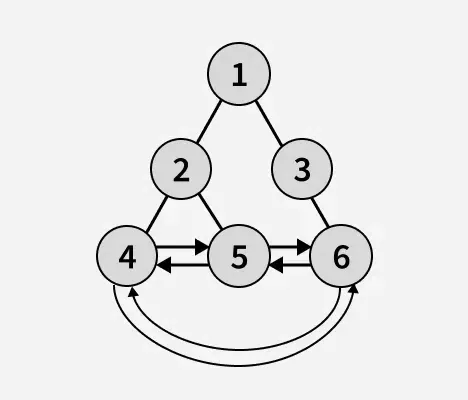
Input : arr[] = {5 4 2 5 0} Output : 2 Explanation : Total 2 step required. We start from 5(0) in first step jump to next 5 and in second step we move to value 0 (End of arr[]). Input : arr[] = [0 1 2 3 4 5 6 7 5 4 3 6 0 1 2 3 4 5 7] Output : 5 Explanation : Total 5 step required. 0(0) -> 0(12) -> 6(11) -> 6(6) -> 7(7) -> (18) (inside parenthesis indices are shown) Ce problème peut être résolu en utilisant BFS . Nous pouvons considérer le tableau donné comme un graphe non pondéré où chaque sommet a deux arêtes vers les éléments du tableau suivants et précédents et plus d'arêtes vers les éléments du tableau avec les mêmes valeurs. Maintenant, pour un traitement rapide du troisième type d'arêtes, nous gardons 10 vecteurs qui stocke tous les indices où les chiffres 0 à 9 sont présents. Dans l'exemple ci-dessus, le vecteur correspondant à 0 stockera [0 12] 2 indices où 0 s'est produit dans le tableau donné.
Un autre tableau booléen est utilisé afin que nous ne visitions pas le même index plus d'une fois. Comme nous utilisons BFS et BFS procède niveau par niveau, des étapes minimales optimales sont garanties.
Mise en œuvre:
C++ // C++ program to find minimum jumps to reach end // of array #include using namespace std ; // Method returns minimum step to reach end of array int getMinStepToReachEnd ( int arr [] int N ) { // visit boolean array checks whether current index // is previously visited bool visit [ N ]; // distance array stores distance of current // index from starting index int distance [ N ]; // digit vector stores indices where a // particular number resides vector < int > digit [ 10 ]; // In starting all index are unvisited memset ( visit false sizeof ( visit )); // storing indices of each number in digit vector for ( int i = 1 ; i < N ; i ++ ) digit [ arr [ i ]]. push_back ( i ); // for starting index distance will be zero distance [ 0 ] = 0 ; visit [ 0 ] = true ; // Creating a queue and inserting index 0. queue < int > q ; q . push ( 0 ); // loop until queue in not empty while ( ! q . empty ()) { // Get an item from queue q. int idx = q . front (); q . pop (); // If we reached to last index break from loop if ( idx == N -1 ) break ; // Find value of dequeued index int d = arr [ idx ]; // looping for all indices with value as d. for ( int i = 0 ; i < digit [ d ]. size (); i ++ ) { int nextidx = digit [ d ][ i ]; if ( ! visit [ nextidx ]) { visit [ nextidx ] = true ; q . push ( nextidx ); // update the distance of this nextidx distance [ nextidx ] = distance [ idx ] + 1 ; } } // clear all indices for digit d because all // of them are processed digit [ d ]. clear (); // checking condition for previous index if ( idx -1 >= 0 && ! visit [ idx - 1 ]) { visit [ idx - 1 ] = true ; q . push ( idx - 1 ); distance [ idx - 1 ] = distance [ idx ] + 1 ; } // checking condition for next index if ( idx + 1 < N && ! visit [ idx + 1 ]) { visit [ idx + 1 ] = true ; q . push ( idx + 1 ); distance [ idx + 1 ] = distance [ idx ] + 1 ; } } // N-1th position has the final result return distance [ N - 1 ]; } // driver code to test above methods int main () { int arr [] = { 0 1 2 3 4 5 6 7 5 4 3 6 0 1 2 3 4 5 7 }; int N = sizeof ( arr ) / sizeof ( int ); cout < < getMinStepToReachEnd ( arr N ); return 0 ; }
Java // Java program to find minimum jumps // to reach end of array import java.util.* ; class GFG { // Method returns minimum step // to reach end of array static int getMinStepToReachEnd ( int arr [] int N ) { // visit boolean array checks whether // current index is previously visited boolean [] visit = new boolean [ N ] ; // distance array stores distance of // current index from starting index int [] distance = new int [ N ] ; // digit vector stores indices where a // particular number resides Vector < Integer > [] digit = new Vector [ 10 ] ; for ( int i = 0 ; i < 10 ; i ++ ) digit [ i ] = new Vector <> (); // In starting all index are unvisited for ( int i = 0 ; i < N ; i ++ ) visit [ i ] = false ; // storing indices of each number // in digit vector for ( int i = 1 ; i < N ; i ++ ) digit [ arr [ i ]] . add ( i ); // for starting index distance will be zero distance [ 0 ] = 0 ; visit [ 0 ] = true ; // Creating a queue and inserting index 0. Queue < Integer > q = new LinkedList <> (); q . add ( 0 ); // loop until queue in not empty while ( ! q . isEmpty ()) { // Get an item from queue q. int idx = q . peek (); q . remove (); // If we reached to last // index break from loop if ( idx == N - 1 ) break ; // Find value of dequeued index int d = arr [ idx ] ; // looping for all indices with value as d. for ( int i = 0 ; i < digit [ d ] . size (); i ++ ) { int nextidx = digit [ d ] . get ( i ); if ( ! visit [ nextidx ] ) { visit [ nextidx ] = true ; q . add ( nextidx ); // update the distance of this nextidx distance [ nextidx ] = distance [ idx ] + 1 ; } } // clear all indices for digit d // because all of them are processed digit [ d ] . clear (); // checking condition for previous index if ( idx - 1 >= 0 && ! visit [ idx - 1 ] ) { visit [ idx - 1 ] = true ; q . add ( idx - 1 ); distance [ idx - 1 ] = distance [ idx ] + 1 ; } // checking condition for next index if ( idx + 1 < N && ! visit [ idx + 1 ] ) { visit [ idx + 1 ] = true ; q . add ( idx + 1 ); distance [ idx + 1 ] = distance [ idx ] + 1 ; } } // N-1th position has the final result return distance [ N - 1 ] ; } // Driver Code public static void main ( String [] args ) { int arr [] = { 0 1 2 3 4 5 6 7 5 4 3 6 0 1 2 3 4 5 7 }; int N = arr . length ; System . out . println ( getMinStepToReachEnd ( arr N )); } } // This code is contributed by 29AjayKumar
Python3 # Python 3 program to find minimum jumps to reach end# of array # Method returns minimum step to reach end of array def getMinStepToReachEnd ( arr N ): # visit boolean array checks whether current index # is previously visited visit = [ False for i in range ( N )] # distance array stores distance of current # index from starting index distance = [ 0 for i in range ( N )] # digit vector stores indices where a # particular number resides digit = [[ 0 for i in range ( N )] for j in range ( 10 )] # storing indices of each number in digit vector for i in range ( 1 N ): digit [ arr [ i ]] . append ( i ) # for starting index distance will be zero distance [ 0 ] = 0 visit [ 0 ] = True # Creating a queue and inserting index 0. q = [] q . append ( 0 ) # loop until queue in not empty while ( len ( q ) > 0 ): # Get an item from queue q. idx = q [ 0 ] q . remove ( q [ 0 ]) # If we reached to last index break from loop if ( idx == N - 1 ): break # Find value of dequeued index d = arr [ idx ] # looping for all indices with value as d. for i in range ( len ( digit [ d ])): nextidx = digit [ d ][ i ] if ( visit [ nextidx ] == False ): visit [ nextidx ] = True q . append ( nextidx ) # update the distance of this nextidx distance [ nextidx ] = distance [ idx ] + 1 # clear all indices for digit d because all # of them are processed # checking condition for previous index if ( idx - 1 >= 0 and visit [ idx - 1 ] == False ): visit [ idx - 1 ] = True q . append ( idx - 1 ) distance [ idx - 1 ] = distance [ idx ] + 1 # checking condition for next index if ( idx + 1 < N and visit [ idx + 1 ] == False ): visit [ idx + 1 ] = True q . append ( idx + 1 ) distance [ idx + 1 ] = distance [ idx ] + 1 # N-1th position has the final result return distance [ N - 1 ] # driver code to test above methods if __name__ == '__main__' : arr = [ 0 1 2 3 4 5 6 7 5 4 3 6 0 1 2 3 4 5 7 ] N = len ( arr ) print ( getMinStepToReachEnd ( arr N )) # This code is contributed by # Surendra_Gangwar
C# // C# program to find minimum jumps // to reach end of array using System ; using System.Collections.Generic ; class GFG { // Method returns minimum step // to reach end of array static int getMinStepToReachEnd ( int [] arr int N ) { // visit boolean array checks whether // current index is previously visited bool [] visit = new bool [ N ]; // distance array stores distance of // current index from starting index int [] distance = new int [ N ]; // digit vector stores indices where a // particular number resides List < int > [] digit = new List < int > [ 10 ]; for ( int i = 0 ; i < 10 ; i ++ ) digit [ i ] = new List < int > (); // In starting all index are unvisited for ( int i = 0 ; i < N ; i ++ ) visit [ i ] = false ; // storing indices of each number // in digit vector for ( int i = 1 ; i < N ; i ++ ) digit [ arr [ i ]]. Add ( i ); // for starting index distance will be zero distance [ 0 ] = 0 ; visit [ 0 ] = true ; // Creating a queue and inserting index 0. Queue < int > q = new Queue < int > (); q . Enqueue ( 0 ); // loop until queue in not empty while ( q . Count != 0 ) { // Get an item from queue q. int idx = q . Peek (); q . Dequeue (); // If we reached to last // index break from loop if ( idx == N - 1 ) break ; // Find value of dequeued index int d = arr [ idx ]; // looping for all indices with value as d. for ( int i = 0 ; i < digit [ d ]. Count ; i ++ ) { int nextidx = digit [ d ][ i ]; if ( ! visit [ nextidx ]) { visit [ nextidx ] = true ; q . Enqueue ( nextidx ); // update the distance of this nextidx distance [ nextidx ] = distance [ idx ] + 1 ; } } // clear all indices for digit d // because all of them are processed digit [ d ]. Clear (); // checking condition for previous index if ( idx - 1 >= 0 && ! visit [ idx - 1 ]) { visit [ idx - 1 ] = true ; q . Enqueue ( idx - 1 ); distance [ idx - 1 ] = distance [ idx ] + 1 ; } // checking condition for next index if ( idx + 1 < N && ! visit [ idx + 1 ]) { visit [ idx + 1 ] = true ; q . Enqueue ( idx + 1 ); distance [ idx + 1 ] = distance [ idx ] + 1 ; } } // N-1th position has the final result return distance [ N - 1 ]; } // Driver Code public static void Main ( String [] args ) { int [] arr = { 0 1 2 3 4 5 6 7 5 4 3 6 0 1 2 3 4 5 7 }; int N = arr . Length ; Console . WriteLine ( getMinStepToReachEnd ( arr N )); } } // This code is contributed by PrinciRaj1992
JavaScript < script > // Javascript program to find minimum jumps // to reach end of array // Method returns minimum step // to reach end of array function getMinStepToReachEnd ( arr N ) { // visit boolean array checks whether // current index is previously visited let visit = new Array ( N ); // distance array stores distance of // current index from starting index let distance = new Array ( N ); // digit vector stores indices where a // particular number resides let digit = new Array ( 10 ); for ( let i = 0 ; i < 10 ; i ++ ) digit [ i ] = []; // In starting all index are unvisited for ( let i = 0 ; i < N ; i ++ ) visit [ i ] = false ; // storing indices of each number // in digit vector for ( let i = 1 ; i < N ; i ++ ) digit [ arr [ i ]]. push ( i ); // for starting index distance will be zero distance [ 0 ] = 0 ; visit [ 0 ] = true ; // Creating a queue and inserting index 0. let q = []; q . push ( 0 ); // loop until queue in not empty while ( q . length != 0 ) { // Get an item from queue q. let idx = q . shift (); // If we reached to last // index break from loop if ( idx == N - 1 ) break ; // Find value of dequeued index let d = arr [ idx ]; // looping for all indices with value as d. for ( let i = 0 ; i < digit [ d ]. length ; i ++ ) { let nextidx = digit [ d ][ i ]; if ( ! visit [ nextidx ]) { visit [ nextidx ] = true ; q . push ( nextidx ); // update the distance of this nextidx distance [ nextidx ] = distance [ idx ] + 1 ; } } // clear all indices for digit d // because all of them are processed digit [ d ] = []; // checking condition for previous index if ( idx - 1 >= 0 && ! visit [ idx - 1 ]) { visit [ idx - 1 ] = true ; q . push ( idx - 1 ); distance [ idx - 1 ] = distance [ idx ] + 1 ; } // checking condition for next index if ( idx + 1 < N && ! visit [ idx + 1 ]) { visit [ idx + 1 ] = true ; q . push ( idx + 1 ); distance [ idx + 1 ] = distance [ idx ] + 1 ; } } // N-1th position has the final result return distance [ N - 1 ]; } // Driver Code let arr = [ 0 1 2 3 4 5 6 7 5 4 3 6 0 1 2 3 4 5 7 ]; let N = arr . length ; document . write ( getMinStepToReachEnd ( arr N )); // This code is contributed by rag2127 < /script>
Sortir
5
Complexité temporelle : O(N) où N est le nombre d'éléments dans le tableau.
Complexité spatiale : O(N) où N est le nombre d'éléments dans le tableau. Nous utilisons un tableau de distance et de visite de taille N et une file d'attente de taille N pour stocker les indices du tableau.