N-Ary medžio gylis
Atsižvelgiant į an n-arinis medis kuriose yra teigiamų mazgų verčių, užduotis yra rasti gylis medžio.
Pastaba: An n-arinis medis yra medis, kuriame gali turėti kiekvienas mazgas nulis arba daugiau vaikų mazgai. Skirtingai nuo dvejetainio medžio, kurio viename mazge yra daugiausia du vaikai (kairėje ir dešinėje) n-arinis medis leidžia kelios šakos arba vaikai kiekvienam mazgui.
Pavyzdžiai:
Įvestis:

Išvestis: 3
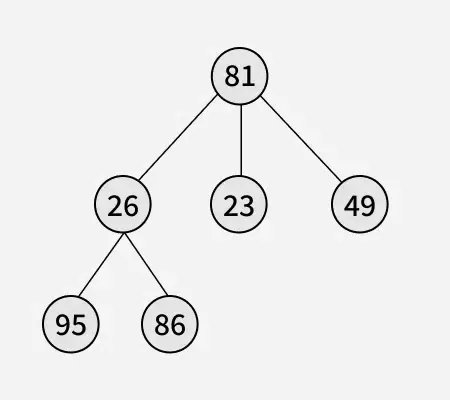
Paaiškinimas: Ilgiausias kelias nuo šaknies (81 mazgo) iki lapo yra 81 -> 26 -> 95 arba 81 -> 26 -> 86, o didžiausias gylis yra 3.Įvestis:
Išvestis: 2
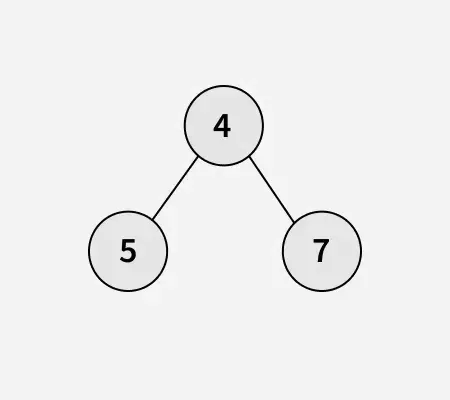
Paaiškinimas: Ilgiausias kelias nuo šaknies (4 mazgo) iki bet kurio lapo (5 arba 7 mazgai) yra 2, nes tam reikia tik dviejų lygių.
Prieiga:
Idėja yra apskaičiuoti N ilgio medžio gylis rekursyviai inicijuoti maksimalus gylis kaip 0, tada rekursyviai apskaičiuokite gylis kiekvienam vaikui ir sekite didžiausias gylis susidūrė. Galiausiai pridėkite 1 iki didžiausio gylio (dabartiniam mazgui) ir grąžinkite rezultatas . Šis požiūris užtikrina, kad rasime ilgiausias kelias nuo šaknies iki bet kurio lapo mazgo.
N-Ary medį galima kirsti kaip ir įprastą medį. Mes tiesiog turime atsižvelgti į visus tam tikro mazgo vaikus ir rekursyviai iškviesti šią funkciją kiekviename mazge.
C++ // C++ Code to find the depth of an N-ary tree #include using namespace std ; class Node { public : int data ; vector < Node *> children ; Node ( int val ) { data = val ; } }; // Recursive function to calculate maximum depth int maxDepth ( Node * root ) { // If the node is null depth is 0 if ( ! root ) { return 0 ; } int depth = 0 ; // Recur for all children and find the maximum depth for ( auto child : root -> children ) { depth = max ( depth maxDepth ( child )); } // Add 1 to include the current node // in the depth count return depth + 1 ; } int main () { // Representation of given N-ary tree // 1 // / | // 2 3 4 // / // 5 6 Node * root = new Node ( 1 ); root -> children . push_back ( new Node ( 2 )); root -> children . push_back ( new Node ( 3 )); root -> children . push_back ( new Node ( 4 )); root -> children [ 0 ] -> children . push_back ( new Node ( 5 )); root -> children [ 2 ] -> children . push_back ( new Node ( 6 )); cout < < maxDepth ( root ); return 0 ; }
Java // Java Code to find the depth of an N-ary tree import java.util.* ; class Node { int data ; List < Node > children ; Node ( int val ) { data = val ; children = new ArrayList <> (); } } // Recursive function to calculate // maximum depth class GfG { static int maxDepth ( Node root ) { // If the node is null depth is 0 if ( root == null ) { return 0 ; } int depth = 0 ; // Recur for all children and find // the maximum depth for ( Node child : root . children ) { depth = Math . max ( depth maxDepth ( child )); } // Add 1 to include the current node // in the depth count return depth + 1 ; } public static void main ( String [] args ) { // Representation of given N-ary tree // 1 // / | // 2 3 4 // / // 5 6 Node root = new Node ( 1 ); root . children . add ( new Node ( 2 )); root . children . add ( new Node ( 3 )); root . children . add ( new Node ( 4 )); root . children . get ( 0 ). children . add ( new Node ( 5 )); root . children . get ( 2 ). children . add ( new Node ( 6 )); System . out . println ( maxDepth ( root )); } }
Python # Python Code to find the depth # of an N-ary tree class Node : def __init__ ( self val ): self . data = val self . children = [] # Recursive function to calculate # maximum depth def max_depth ( root ): # If the node is None depth is 0 if not root : return 0 depth = 0 # Recur for all children and # find the maximum depth for child in root . children : depth = max ( depth max_depth ( child )) # Add 1 to include the current # node in the depth count return depth + 1 if __name__ == '__main__' : # Representation of given N-ary tree # 1 # / | # 2 3 4 # / # 5 6 root = Node ( 1 ) root . children . append ( Node ( 2 )) root . children . append ( Node ( 3 )) root . children . append ( Node ( 4 )) root . children [ 0 ] . children . append ( Node ( 5 )) root . children [ 2 ] . children . append ( Node ( 6 )) print ( max_depth ( root ))
C# // C# Code to find the depth of an N-ary tree using System ; using System.Collections.Generic ; class Node { public int data ; public List < Node > children ; public Node ( int val ) { data = val ; children = new List < Node > (); } } // Recursive function to calculate // maximum depth class GfG { static int MaxDepth ( Node root ) { // If the node is null depth is 0 if ( root == null ) { return 0 ; } int depth = 0 ; // Recur for all children and find the maximum depth foreach ( Node child in root . children ) { depth = Math . Max ( depth MaxDepth ( child )); } // Add 1 to include the current // node in the depth count return depth + 1 ; } static void Main ( string [] args ) { // Representation of given N-ary tree // 1 // / | // 2 3 4 // / // 5 6 Node root = new Node ( 1 ); root . children . Add ( new Node ( 2 )); root . children . Add ( new Node ( 3 )); root . children . Add ( new Node ( 4 )); root . children [ 0 ]. children . Add ( new Node ( 5 )); root . children [ 2 ]. children . Add ( new Node ( 6 )); Console . WriteLine ( MaxDepth ( root )); } }
JavaScript // JavaScript Code to find the depth // of an N-ary tree class Node { constructor ( val ) { this . data = val ; this . children = []; } } // Recursive function to calculate // maximum depth function maxDepth ( root ) { // If the node is null depth is 0 if ( ! root ) { return 0 ; } let depth = 0 ; // Recur for all children and find // the maximum depth for ( let child of root . children ) { depth = Math . max ( depth maxDepth ( child )); } // Add 1 to include the current node // in the depth count return depth + 1 ; } // Representation of given N-ary tree // 1 // / | // 2 3 4 // / // 5 6 const root = new Node ( 1 ); root . children . push ( new Node ( 2 )); root . children . push ( new Node ( 3 )); root . children . push ( new Node ( 4 )); root . children [ 0 ]. children . push ( new Node ( 5 )); root . children [ 2 ]. children . push ( new Node ( 6 )); console . log ( maxDepth ( root ));
Išvestis
3
Laiko sudėtingumas: O(n), nes kiekvienas mazgas aplankomas vieną kartą, kur n yra bendras mazgų skaičius N-ame medyje.
Pagalbinė erdvė: O(h) čia h yra medžio aukštis dėl rekursyvaus skambučių krūvos naudojimo.