複数レベルのリンク リストを平坦化する (深さ方向)
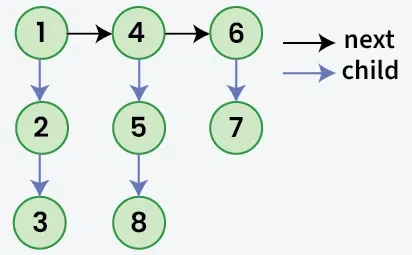
リンクされたリストが与えられると、 次 各ノードが持つポインタ 子供 別のリストを指す場合もそうでない場合もあるポインター。これらの子リストには次のものがある可能性があります 1 つ以上の 自分の子供たちが マルチレベル リンクされたリスト。与えられた 頭 の 最初のレベル リストの。課題は次のとおりです 平らにする すべてのノードが 1 つのリストに表示されるようにリストを作成します。 単一レベル リンクされたリスト。すべてのノードが同じになるようにリストを平坦化します。 最初のレベル 来るべきだ 初め 次に、のノード 2番 レベルなど。
例:
入力:

出力: 1->4->6->2->5->7->3->8
説明: マルチレベルのリンク リストには子ポインターがないため、フラット化されます。
私たちは話し合いました マルチレベルリンクリストのフラット化 ここで、ノードには down と next の 2 つのポインターがあります。 In the previous post we 平らになった リンクされたリスト レベル的に。 常に処理する必要がある場合にリンクリストをフラット化する方法 ダウンポインタ すべてのノードで次の前に。
目次
[想定されるアプローチ] 再帰を使用する - O(n) 時間と O(n) 空間
C++アプローチは次のとおりです 再帰的に 平らにする マルチレベルリンク 各ノードとその子ノードを走査してリストを作成します。初め 子リストをフラット化する 再帰を使用します。子リストがフラット化されたら、次の手順に進みます。 次のノード シーケンスで。トラバース中に、 参照 に 以前に訪問したノード そしてそれを現在のノードにリンクします。このプロセスにより、さまざまなレベルのすべてのノードが確実に接続されます。 単一の線形リスト を保存しながら、 深さ方向の順序。
// A C++ program to flatten a multi- // linked list depth-wise #include using namespace std ; class Node { public : int data ; Node * next ; Node * down ; Node ( int x ) { data = x ; next = down = nullptr ; } }; void flattenList ( Node * curr Node *& prev ) { if ( curr == nullptr ) return ; // Add the current element to the list. if ( prev != nullptr ) prev -> next = curr ; prev = curr ; // Store the next pointer Node * next = curr -> next ; // Recursively add the bottom list flattenList ( curr -> down prev ); // Recursively add the next list flattenList ( next prev ); } void printList ( Node * head ) { Node * curr = head ; while ( curr != nullptr ) { cout < < curr -> data < < ' ' ; curr = curr -> next ; } cout < < endl ; } int main () { // Create a hard coded multi-linked list. // 5 -> 10 -> 19 -> 28 // | | // 7 22 // | | // 8 50 // | // 30 Node * head = new Node ( 5 ); head -> down = new Node ( 7 ); head -> down -> down = new Node ( 8 ); head -> down -> down -> down = new Node ( 30 ); head -> next = new Node ( 10 ); head -> next -> next = new Node ( 19 ); head -> next -> next -> down = new Node ( 22 ); head -> next -> next -> down -> down = new Node ( 50 ); head -> next -> next -> next = new Node ( 28 ); Node * prev = nullptr ; flattenList ( head prev ); printList ( head ); return 0 ; }
Java // A Java program to flatten a multi- // linked list depth-wise class Node { int data ; Node next down ; Node ( int x ) { data = x ; next = down = null ; } } class GfG { static void flattenList ( Node curr Node [] prev ) { if ( curr == null ) return ; // Add the current element to the list. if ( prev [ 0 ] != null ) prev [ 0 ] . next = curr ; prev [ 0 ] = curr ; // Store the next pointer Node next = curr . next ; // Recursively add the bottom list flattenList ( curr . down prev ); // Recursively add the next list flattenList ( next prev ); } static void printList ( Node head ) { Node curr = head ; while ( curr != null ) { System . out . print ( curr . data + ' ' ); curr = curr . next ; } System . out . println (); } public static void main ( String [] args ) { // Create a hard coded multi-linked list. // 5 -> 10 -> 19 -> 28 // | | // 7 22 // | | // 8 50 // | // 30 Node head = new Node ( 5 ); head . down = new Node ( 7 ); head . down . down = new Node ( 8 ); head . down . down . down = new Node ( 30 ); head . next = new Node ( 10 ); head . next . next = new Node ( 19 ); head . next . next . down = new Node ( 22 ); head . next . next . down . down = new Node ( 50 ); head . next . next . next = new Node ( 28 ); Node [] prev = new Node [ 1 ] ; flattenList ( head prev ); printList ( head ); } }
Python # A Python program to flatten a multi- # linked list depth-wise class Node : def __init__ ( self x ): self . data = x self . next = None self . down = None def flatten_list ( curr prev ): if curr is None : return # Add the current element to the list. if prev [ 0 ] is not None : prev [ 0 ] . next = curr prev [ 0 ] = curr # Store the next pointer next_node = curr . next # Recursively add the bottom list flatten_list ( curr . down prev ) # Recursively add the next list flatten_list ( next_node prev ) def print_list ( head ): curr = head while curr is not None : print ( curr . data end = ' ' ) curr = curr . next print () if __name__ == '__main__' : # Create a hard coded multi-linked list. # 5 -> 10 -> 19 -> 28 # | | # 7 22 # | | # 8 50 # | # 30 head = Node ( 5 ) head . down = Node ( 7 ) head . down . down = Node ( 8 ) head . down . down . down = Node ( 30 ) head . next = Node ( 10 ) head . next . next = Node ( 19 ) head . next . next . down = Node ( 22 ) head . next . next . down . down = Node ( 50 ) head . next . next . next = Node ( 28 ) prev = [ None ] flatten_list ( head prev ) print_list ( head )
C# // A C# program to flatten a multi- // linked list depth-wise using System ; class Node { public int data ; public Node next down ; public Node ( int x ) { data = x ; next = down = null ; } } class GfG { static void FlattenList ( Node curr ref Node prev ) { if ( curr == null ) return ; // Add the current element to the list. if ( prev != null ) prev . next = curr ; prev = curr ; // Store the next pointer Node next = curr . next ; // Recursively add the bottom list FlattenList ( curr . down ref prev ); // Recursively add the next list FlattenList ( next ref prev ); } static void PrintList ( Node head ) { Node curr = head ; while ( curr != null ) { Console . Write ( curr . data + ' ' ); curr = curr . next ; } Console . WriteLine (); } static void Main ( string [] args ) { // Create a hard coded multi-linked list. // 5 -> 10 -> 19 -> 28 // | | // 7 22 // | | // 8 50 // | // 30 Node head = new Node ( 5 ); head . down = new Node ( 7 ); head . down . down = new Node ( 8 ); head . down . down . down = new Node ( 30 ); head . next = new Node ( 10 ); head . next . next = new Node ( 19 ); head . next . next . down = new Node ( 22 ); head . next . next . down . down = new Node ( 50 ); head . next . next . next = new Node ( 28 ); Node prev = null ; FlattenList ( head ref prev ); PrintList ( head ); } }
JavaScript // A Javascript program to flatten a multi- // linked list depth-wise class Node { constructor ( x ) { this . data = x ; this . next = null ; this . down = null ; } } function flattenList ( curr prev ) { if ( curr === null ) return ; // Add the current element to the list. if ( prev [ 0 ] !== null ) prev [ 0 ]. next = curr ; prev [ 0 ] = curr ; // Store the next pointer let next = curr . next ; // Recursively add the bottom list flattenList ( curr . down prev ); // Recursively add the next list flattenList ( next prev ); } function printList ( head ) { let curr = head ; while ( curr !== null ) { console . log ( curr . data ); curr = curr . next ; } } // Create a hard coded multi-linked list. // 5 -> 10 -> 19 -> 28 // | | // 7 22 // | | // 8 50 // | // 30 let head = new Node ( 5 ); head . down = new Node ( 7 ); head . down . down = new Node ( 8 ); head . down . down . down = new Node ( 30 ); head . next = new Node ( 10 ); head . next . next = new Node ( 19 ); head . next . next . down = new Node ( 22 ); head . next . next . down . down = new Node ( 50 ); head . next . next . next = new Node ( 28 ); let prev = [ null ]; flattenList ( head prev ); printList ( head );
出力
5 7 8 30 10 19 22 50 28
[代替アプローチ] スタックの使用 - O(n) 時間と O(n) スペース
C++アプローチは、 を使用して スタック 。開始方法 押す の ヘッドノード スタックに。それから、 スタックが空ではありません ポップ 最上位ノードを削除して処理します。各ノードについて 押す その 次へおよび下へのポインター (存在する場合) スタックに追加します。このプロセス中に 現在のノードを前のノードにリンクします リストをフラット化された形式で維持します。トラバーサルにより、すべてのレベルのノードが確実に接続されます。 単一レベルのリンクされたリスト 深さ方向の順序を維持します。
// A C++ program to flatten a multi- // linked list depth-wise using stack #include using namespace std ; class Node { public : int data ; Node * next ; Node * down ; Node ( int x ) { data = x ; next = down = nullptr ; } }; void flattenList ( Node * head ) { if ( head == nullptr ) return ; stack < Node *> st ; st . push ( head ); Node * prev = nullptr ; while ( ! st . empty ()) { Node * curr = st . top (); st . pop (); // Push the next node first if ( curr -> next != nullptr ) st . push ( curr -> next ); // Push the bottom node into stack if ( curr -> down != nullptr ) st . push ( curr -> down ); // Add the current element to the list if ( prev != nullptr ) prev -> next = curr ; prev = curr ; } } void printList ( Node * head ) { Node * curr = head ; while ( curr != nullptr ) { cout < < curr -> data < < ' ' ; curr = curr -> next ; } cout < < endl ; } int main () { // Create a hard coded multi-linked list. // 5 -> 10 -> 19 -> 28 // | | // 7 22 // | | // 8 50 // | // 30 Node * head = new Node ( 5 ); head -> down = new Node ( 7 ); head -> down -> down = new Node ( 8 ); head -> down -> down -> down = new Node ( 30 ); head -> next = new Node ( 10 ); head -> next -> next = new Node ( 19 ); head -> next -> next -> down = new Node ( 22 ); head -> next -> next -> down -> down = new Node ( 50 ); head -> next -> next -> next = new Node ( 28 ); flattenList ( head ); printList ( head ); return 0 ; }
Java // A Java program to flatten a multi- // linked list depth-wise using stack import java.util.Stack ; class Node { int data ; Node next down ; Node ( int x ) { data = x ; next = down = null ; } } class GfG { static void flattenList ( Node head ) { if ( head == null ) return ; Stack < Node > stack = new Stack <> (); stack . push ( head ); Node prev = null ; while ( ! stack . isEmpty ()) { Node curr = stack . pop (); // Push the next node first if ( curr . next != null ) stack . push ( curr . next ); // Push the bottom node into stack if ( curr . down != null ) stack . push ( curr . down ); // Add the current element to the list if ( prev != null ) prev . next = curr ; prev = curr ; } } static void printList ( Node head ) { Node curr = head ; while ( curr != null ) { System . out . print ( curr . data + ' ' ); curr = curr . next ; } System . out . println (); } public static void main ( String [] args ) { // Create a hard coded multi-linked list. // 5 -> 10 -> 19 -> 28 // | | // 7 22 // | | // 8 50 // | // 30 Node head = new Node ( 5 ); head . down = new Node ( 7 ); head . down . down = new Node ( 8 ); head . down . down . down = new Node ( 30 ); head . next = new Node ( 10 ); head . next . next = new Node ( 19 ); head . next . next . down = new Node ( 22 ); head . next . next . down . down = new Node ( 50 ); head . next . next . next = new Node ( 28 ); flattenList ( head ); printList ( head ); } }
Python # A Python program to flatten a multi- # linked list depth-wise using stack class Node : def __init__ ( self x ): self . data = x self . next = None self . down = None def flatten_list ( head ): if head is None : return stack = [ head ] prev = None while stack : curr = stack . pop () # Push the next node first if curr . next : stack . append ( curr . next ) # Push the bottom node into stack if curr . down : stack . append ( curr . down ) # Add the current element to the list if prev : prev . next = curr prev = curr def print_list ( head ): curr = head while curr : print ( curr . data end = ' ' ) curr = curr . next print () if __name__ == '__main__' : # Create a hard coded multi-linked list. # 5 -> 10 -> 19 -> 28 # | | # 7 22 # | | # 8 50 # | # 30 head = Node ( 5 ) head . down = Node ( 7 ) head . down . down = Node ( 8 ) head . down . down . down = Node ( 30 ) head . next = Node ( 10 ) head . next . next = Node ( 19 ) head . next . next . down = Node ( 22 ) head . next . next . down . down = Node ( 50 ) head . next . next . next = Node ( 28 ) flatten_list ( head ) print_list ( head )
C# // A C# program to flatten a multi- // linked list depth-wise using stack using System ; using System.Collections.Generic ; class Node { public int data ; public Node next down ; public Node ( int x ) { data = x ; next = down = null ; } } class GfG { static void FlattenList ( Node head ) { if ( head == null ) return ; Stack < Node > stack = new Stack < Node > (); stack . Push ( head ); Node prev = null ; while ( stack . Count > 0 ) { Node curr = stack . Pop (); // Push the next node first if ( curr . next != null ) stack . Push ( curr . next ); // Push the bottom node into stack if ( curr . down != null ) stack . Push ( curr . down ); // Add the current element to the list if ( prev != null ) prev . next = curr ; prev = curr ; } } static void PrintList ( Node head ) { Node curr = head ; while ( curr != null ) { Console . Write ( curr . data + ' ' ); curr = curr . next ; } Console . WriteLine (); } static void Main ( string [] args ) { // Create a hard coded multi-linked list. // 5 -> 10 -> 19 -> 28 // | | // 7 22 // | | // 8 50 // | // 30 Node head = new Node ( 5 ); head . down = new Node ( 7 ); head . down . down = new Node ( 8 ); head . down . down . down = new Node ( 30 ); head . next = new Node ( 10 ); head . next . next = new Node ( 19 ); head . next . next . down = new Node ( 22 ); head . next . next . down . down = new Node ( 50 ); head . next . next . next = new Node ( 28 ); FlattenList ( head ); PrintList ( head ); } }
JavaScript // A Javascript program to flatten a multi- // linked list depth-wise using stack class Node { constructor ( x ) { this . data = x ; this . next = null ; this . down = null ; } } function flattenList ( head ) { if ( head === null ) return ; let stack = [ head ]; let prev = null ; while ( stack . length > 0 ) { let curr = stack . pop (); // Push the next node first if ( curr . next !== null ) stack . push ( curr . next ); // Push the bottom node into stack if ( curr . down !== null ) stack . push ( curr . down ); // Add the current element to the list if ( prev !== null ) prev . next = curr ; prev = curr ; } } function printList ( head ) { let curr = head ; while ( curr !== null ) { console . log ( curr . data ); curr = curr . next ; } } // Create a hard coded multi-linked list. // 5 -> 10 -> 19 -> 28 // | | // 7 22 // | | // 8 50 // | // 30 let head = new Node ( 5 ); head . down = new Node ( 7 ); head . down . down = new Node ( 8 ); head . down . down . down = new Node ( 30 ); head . next = new Node ( 10 ); head . next . next = new Node ( 19 ); head . next . next . down = new Node ( 22 ); head . next . next . down . down = new Node ( 50 ); head . next . next . next = new Node ( 28 ); flattenList ( head ); printList ( head );
出力
5 7 8 30 10 19 22 50 28