האלגוריתם של קליי (אורך האיחוד של מקטעי קו)
בהינתן עמדות התחלה וסיום של קטעים על קו, המשימה היא לקחת את האיחוד של כל הקטעים הנתונים ולמצוא אורך המכוסה על ידי קטעים אלה.
דוגמאות:
Input : segments[] = {{2 5} {4 8} {9 12}} Output : 9 Explanation: segment 1 = {2 5} segment 2 = {4 8} segment 3 = {9 12} If we take the union of all the line segments we cover distances [2 8] and [9 12]. Sum of these two distances is 9 (6 + 3) גִישָׁה:
האלגוריתם הוצע על ידי Klee בשנת 1977. מורכבות הזמן של האלגוריתם היא O (N log N). הוכח שאלגוריתם זה הוא המהיר ביותר (אסימפטוטי) ולא ניתן לפתור בעיה זו במורכבות טובה יותר.
תיאור:
1) שים את כל הקואורדינטות של כל הקטעים במערך עזר נקודות[].
2) מיין אותו לפי ערך הקואורדינטות.
3) תנאי נוסף למיון - אם יש קואורדינטות שוות הכנס את זו שהיא הקואורדינטה השמאלית של כל קטע במקום ימין.
4) כעת עברו על כל המערך עם 'ספירת' המונה של קטעים חופפים.
5) אם הספירה גדולה מאפס אז התוצאה מתווספת להפרש בין הנקודות[i] - נקודות[i-1].
6) אם האלמנט הנוכחי שייך לקצה השמאלי אנו מגדילים 'ספירה' אחרת מצמצמים אותו.
אִיוּר:
Lets take the example : segment 1 : (25) segment 2 : (48) segment 3 : (912) Counter = result = 0; n = number of segments = 3; for i=0 points[0] = {2 false} points[1] = {5 true} for i=1 points[2] = {4 false} points[3] = {8 true} for i=2 points[4] = {9 false} points[5] = {12 true} Therefore : points = {2 5 4 8 9 12} {f t f t f t} after applying sorting : points = {2 4 5 8 9 12} {f f t t f t} Now for i=0 result = 0; Counter = 1; for i=1 result = 2; Counter = 2; for i=2 result = 3; Counter = 1; for i=3 result = 6; Counter = 0; for i=4 result = 6; Counter = 1; for i=5 result = 9; Counter = 0; Final answer = 9; C++ // C++ program to implement Klee's algorithm #include using namespace std ; // Returns sum of lengths covered by union of given // segments int segmentUnionLength ( const vector < pair < int int > > & seg ) { int n = seg . size (); // Create a vector to store starting and ending // points vector < pair < int bool > > points ( n * 2 ); for ( int i = 0 ; i < n ; i ++ ) { points [ i * 2 ] = make_pair ( seg [ i ]. first false ); points [ i * 2 + 1 ] = make_pair ( seg [ i ]. second true ); } // Sorting all points by point value sort ( points . begin () points . end ()); int result = 0 ; // Initialize result // To keep track of counts of // current open segments // (Starting point is processed // but ending point // is not) int Counter = 0 ; // Traverse through all points for ( unsigned i = 0 ; i < n * 2 ; i ++ ) { // If there are open points then we add the // difference between previous and current point. // This is interesting as we don't check whether // current point is opening or closing if ( Counter ) result += ( points [ i ]. first - points [ i -1 ]. first ); // If this is an ending point reduce count of // open points. ( points [ i ]. second ) ? Counter -- : Counter ++ ; } return result ; } // Driver program for the above code int main () { vector < pair < int int > > segments ; segments . push_back ( make_pair ( 2 5 )); segments . push_back ( make_pair ( 4 8 )); segments . push_back ( make_pair ( 9 12 )); cout < < segmentUnionLength ( segments ) < < endl ; return 0 ; }
Java // Java program to implement Klee's algorithm import java.io.* ; import java.util.* ; class GFG { // to use create a pair of segments static class SegmentPair { int x y ; SegmentPair ( int xx int yy ){ this . x = xx ; this . y = yy ; } } //to create a pair of points static class PointPair { int x ; boolean isEnding ; PointPair ( int xx boolean end ){ this . x = xx ; this . isEnding = end ; } } // creates the comparator for comparing objects of PointPair class static class Comp implements Comparator < PointPair > { // override the compare() method public int compare ( PointPair p1 PointPair p2 ) { if ( p1 . x < p2 . x ) { return - 1 ; } else { if ( p1 . x == p2 . x ){ return 0 ; } else { return 1 ; } } } } public static int segmentUnionLength ( List < SegmentPair > segments ){ int n = segments . size (); // Create a list to store // starting and ending points List < PointPair > points = new ArrayList <> (); for ( int i = 0 ; i < n ; i ++ ){ points . add ( new PointPair ( segments . get ( i ). x false )); points . add ( new PointPair ( segments . get ( i ). y true )); } // Sorting all points by point value Collections . sort ( points new Comp ()); int result = 0 ; // Initialize result // To keep track of counts of // current open segments // (Starting point is processed // but ending point // is not) int Counter = 0 ; // Traverse through all points for ( int i = 0 ; i < 2 * n ; i ++ ) { // If there are open points then we add the // difference between previous and current point. // This is interesting as we don't check whether // current point is opening or closing if ( Counter != 0 ) { result += ( points . get ( i ). x - points . get ( i - 1 ). x ); } // If this is an ending point reduce count of // open points. if ( points . get ( i ). isEnding ) { Counter -- ; } else { Counter ++ ; } } return result ; } // Driver Code public static void main ( String [] args ) { List < SegmentPair > segments = new ArrayList <> (); segments . add ( new SegmentPair ( 2 5 )); segments . add ( new SegmentPair ( 4 8 )); segments . add ( new SegmentPair ( 9 12 )); System . out . println ( segmentUnionLength ( segments )); } } // This code is contributed by shruti456rawal
Python3 # Python program for the above approach def segmentUnionLength ( segments ): # Size of given segments list n = len ( segments ) # Initialize empty points container points = [ None ] * ( n * 2 ) # Create a vector to store starting # and ending points for i in range ( n ): points [ i * 2 ] = ( segments [ i ][ 0 ] False ) points [ i * 2 + 1 ] = ( segments [ i ][ 1 ] True ) # Sorting all points by point value points = sorted ( points key = lambda x : x [ 0 ]) # Initialize result as 0 result = 0 # To keep track of counts of current open segments # (Starting point is processed but ending point # is not) Counter = 0 # Traverse through all points for i in range ( 0 n * 2 ): # If there are open points then we add the # difference between previous and current point. if ( i > 0 ) & ( points [ i ][ 0 ] > points [ i - 1 ][ 0 ]) & ( Counter > 0 ): result += ( points [ i ][ 0 ] - points [ i - 1 ][ 0 ]) # If this is an ending point reduce count of # open points. if points [ i ][ 1 ]: Counter -= 1 else : Counter += 1 return result # Driver code if __name__ == '__main__' : segments = [( 2 5 ) ( 4 8 ) ( 9 12 )] print ( segmentUnionLength ( segments ))
C# using System ; using System.Collections ; using System.Collections.Generic ; using System.Linq ; // C# program to implement Klee's algorithm class HelloWorld { class GFG : IComparer < KeyValuePair < int bool >> { public int Compare ( KeyValuePair < int bool > x KeyValuePair < int bool > y ) { // CompareTo() method return x . Key . CompareTo ( y . Key ); } } // Returns sum of lengths covered by union of given // segments public static int segmentUnionLength ( List < KeyValuePair < int int >> seg ) { int n = seg . Count ; // Create a vector to store starting and ending // points List < KeyValuePair < int bool >> points = new List < KeyValuePair < int bool >> (); for ( int i = 0 ; i < 2 * n ; i ++ ){ points . Add ( new KeyValuePair < int bool > ( 0 true )); } for ( int i = 0 ; i < n ; i ++ ) { points [ i * 2 ] = new KeyValuePair < int bool > ( seg [ i ]. Key false ); points [ i * 2 + 1 ] = new KeyValuePair < int bool > ( seg [ i ]. Value true ); } // Sorting all points by point value GFG gg = new GFG (); points . Sort ( gg ); int result = 0 ; // Initialize result // To keep track of counts of // current open segments // (Starting point is processed // but ending point // is not) int Counter = 0 ; // Traverse through all points for ( int i = 0 ; i < n * 2 ; i ++ ) { // If there are open points then we add the // difference between previous and current point. // This is interesting as we don't check whether // current point is opening or closing if ( Counter != 0 ) result += ( points [ i ]. Key - points [ i - 1 ]. Key ); // If this is an ending point reduce count of // open points. if ( points [ i ]. Value != false ){ Counter -- ; } else { Counter ++ ; } } return result ; } static void Main () { List < KeyValuePair < int int >> segments = new List < KeyValuePair < int int >> (); segments . Add ( new KeyValuePair < int int > ( 2 5 )); segments . Add ( new KeyValuePair < int int > ( 4 8 )); segments . Add ( new KeyValuePair < int int > ( 9 12 )); Console . WriteLine ( segmentUnionLength ( segments )); } } // The code is contributed by Nidhi goel.
JavaScript // JavaScript program to implement Klee's algorithm // Returns sum of lengths covered by union of given // segments function segmentUnionLength ( seg ) { let n = seg . length ; // Create a vector to store starting and ending // points let points = new Array ( 2 * n ); for ( let i = 0 ; i < n ; i ++ ) { points [ i * 2 ] = [ seg [ i ][ 0 ] false ]; points [ i * 2 + 1 ] = [ seg [ i ][ 1 ] true ]; } // Sorting all points by point value points . sort ( function ( a b ){ return a [ 0 ] - b [ 0 ]; }); let result = 0 ; // Initialize result // To keep track of counts of // current open segments // (Starting point is processed // but ending point // is not) let Counter = 0 ; // Traverse through all points for ( let i = 0 ; i < n * 2 ; i ++ ) { // If there are open points then we add the // difference between previous and current point. // This is interesting as we don't check whether // current point is opening or closing if ( Counter ) result += ( points [ i ][ 0 ] - points [ i - 1 ][ 0 ]); // If this is an ending point reduce count of // open points. if ( points [ i ][ 1 ]){ Counter = Counter - 1 ; } else { Counter = Counter + 1 ; } } return result ; } let segments = new Array (); segments . push ([ 2 5 ]); segments . push ([ 4 8 ]); segments . push ([ 9 12 ]); console . log ( segmentUnionLength ( segments )); // The code is contributed by Gautam goel (gautamgoel962)
תְפוּקָה
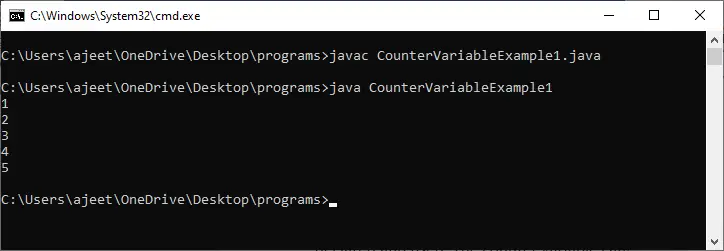
9
מורכבות זמן: O(n * log n)
מרחב עזר: עַל)