Carta tagliata in un numero minimo di quadrati
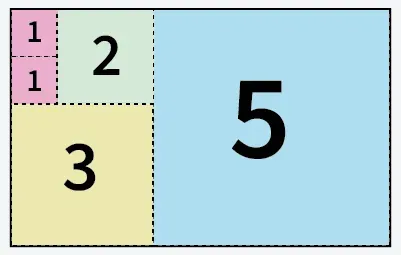
Data una carta rettangolare di dimensioni unxb . Il compito è tagliare l'intero foglio nel formato minimo numero di piazza pezzi. Possiamo scegliere pezzi quadrati di qualsiasi dimensione ma devono essere tagliati senza sovrapporsi o lasciare spazio aggiuntivo .
Esempi:
Ingresso: a = 5 b = 8
5 quadrati ritagliati da carta di formato 5 X 8
Produzione: 5
Spiegazione: Possiamo tagliare la carta in 5 quadrati: 1 quadrato di misura 5x5 1 quadrato di misura 3x3 1 quadrato di misura 2x2 e 2 quadrati di misura 1x1.Ingresso: a = 13 b = 11
6 quadrati ritagliati da carta di formato 13 X 11
Produzione: 6
Spiegazione: Possiamo tagliare la carta in 6 quadrati: 1 quadrato di misura 7x7 1 quadrato di misura 6x6 1 quadrato di misura 5x5 2 quadrati di misura 4x4 e 1 quadrato di misura 1x1.Ingresso: a = 6 b = 7
5 quadrati ritagliati da carta di formato 6 X 7
Produzione: 5
Spiegazione: Possiamo tagliare la carta in 5 quadrati: 1 quadrato di misura 4x4 2 quadrati di misura 3x3 e 2 quadrati di misura 3x3.
 5 quadrati ritagliati da carta di formato 5 X 8
  6 quadrati ritagliati da carta di formato 13 X 11
  5 quadrati ritagliati da carta di formato 6 X 7
 Sommario
- [Approccio Errato 1] Usare la Tecnica Greedy
- [Approccio Errato 2] Utilizzo della Programmazione Dinamica
- [Approccio corretto] Utilizzo di DFS e programmazione dinamica
[Approccio Errato 1] Usare la Tecnica Greedy
A prima vista potrebbe sembrare che il problema possa essere facilmente risolto tagliando prima il quadrato più grande possibile dalla carta, poi tagliando il quadrato più grande dalla carta rimanente e così via fino a tagliare l'intera carta. Ma questa soluzione non è corretta.
Perché l'approccio goloso non funziona?
Considera un foglio di formato 6x7 poi se proviamo a tagliare avidamente la carta otterremo 7 quadrati: 1 quadrato di dimensione 6x6 e 6 quadrati di dimensione 1x1 mentre la soluzione corretta è: 5. Quindi l'approccio avido non funzionerà.
[Approccio Errato 2] Utilizzo della Programmazione Dinamica
Programmazione dinamica con tagli verticali o orizzontali: Un'altra soluzione che potrebbe sembrare corretta è l'utilizzo Programmazione dinamica . Possiamo mantenere una tabella dp[][] tale che dp[i][j] = numero minimo di quadrati ritagliabili dalla carta di formato io x j . Quindi per la carta di formato axb
- Possiamo provare a tagliarlo lungo ogni riga: dp[i][j] = min(dp[i][j] 1 + dp[i - k][j] + dp[k][j]) dove k può essere compreso nell'intervallo [1 i - 1].
- Possiamo provare a tagliarlo lungo ciascuna colonna: dp[i][j] = min(dp[i][j] 1 + dp[i][j - k] + dp[i][k]) dove k può essere compreso nell'intervallo [1 j - 1].
Alla fine la risposta sarà il minimo dei tagli. Ma anche questa soluzione è sbagliata.
Perché tagliare verticalmente o orizzontalmente con l'approccio di programmazione dinamica non funziona?
Questo non funzionerà perché presupponiamo che un taglio verticale o orizzontale dividerà sempre il rettangolo in due parti. Considera un foglio di formato 13x11 quindi se proviamo a tagliare la carta utilizzando l'approccio DP otterremo 8 quadrati ma la risposta corretta (come mostrato negli esempi) è 6. Quindi la programmazione dinamica non funzionerà.
[Approccio corretto] Utilizzo di DFS e programmazione dinamica
C++IL idea è tagliare l'intera carta usando DFS In dal basso verso l'alto maniera. Ad ogni passaggio, trova l'angolo in basso a sinistra del foglio e prova a tagliare quadrati di tutte le dimensioni possibili da quell'angolo. Dopo aver tagliato nuovamente un quadrato, trova l'angolo inferiore sinistro della carta rimanente per tagliare quadrati di tutte le dimensioni possibili e così via. Ma se provassimo tutti i possibili tagli dall'angolo inferiore sinistro di ogni possibile formato carta, sarebbe del tutto inefficiente. Possiamo ottimizzarlo utilizzando Programmazione dinamica per memorizzare i tagli minimi per ogni possibile formato carta.
Per identificare in modo univoco qualsiasi dimensione del foglio possiamo mantenere un array remSq[] tale che remSq[i] memorizzi il numero di quadrati rimanenti di dimensione 1x1 nell'i-esima colonna del foglio. Quindi per un foglio di dimensioni 6x7 remSq[] = {6 6 6 6 6 6 6}. Anche per trovare l'angolo in basso a sinistra troveremo il primo indice avente il massimo dei quadrati rimanenti. Quindi possiamo eseguire l'hashing del valore dell'array remSq[] per trovare una chiave univoca per tutti i possibili valori dell'array remSq[].
// C++ Program to find minimum number of squares to cut // from a paper of size axb #include using namespace std ; // function to get the hash key for remSq array int getKey ( vector < int > & remSq int b ) { int base = 1 ; int key = 0 ; for ( int i = 0 ; i < b ; i ++ ) { key += ( remSq [ i ] * base ); base = base * ( b + 1 ); } return key ; } // Recursive function to find the minimum number of square cuts // for a given remSq array int minCutUtil ( vector < int > & remSq int a int b map < int int > & memo ) { // pointers to mark the start and end of range // with maximum remaining squares int start end ; // Check if we have previously calculated the answer // for the same state int key = getKey ( remSq b ); if ( memo . find ( key ) != memo . end ()) return memo [ key ]; int maxRemSq = 0 ; // Find the starting point of min height for ( int i = 0 ; i < b ; i ++ ) { if ( remSq [ i ] > maxRemSq ) { maxRemSq = remSq [ i ]; start = i ; } } // If max remaining squares = 0 then we have already // cut the entire paper if ( maxRemSq == 0 ) return 0 ; end = start ; vector < int > newRemSq = remSq ; int ans = INT_MAX ; // Find the ending point of min height while ( end < b ) { // length of edge of square from start till current end int squareEdge = end - start + 1 ; // If the current column does not have maximum remaining // squares or if it's impossible to cut a square of // size squareEdge then break out of the loop if ( newRemSq [ end ] != maxRemSq || newRemSq [ end ] - squareEdge < 0 ) break ; // If we can cut a square of size squareEdge // update the remainingSquares for ( int i = start ; i <= end ; i ++ ) newRemSq [ i ] = maxRemSq - squareEdge ; // Find the solution for new remainingSquares ans = min ( ans 1 + minCutUtil ( newRemSq a b memo )); end += 1 ; } return memo [ key ] = ans ; } // Function to find the minimum number of squares we can cut // using paper of size a X b int minCut ( int a int b ) { // if the given rectangle is a square if ( a == b ) return 1 ; // Initialize remaining squares = a for all the b columns vector < int > remSq ( b a ); map < int int > memo ; return minCutUtil ( remSq a b memo ); } int main () { // Sample Input int a = 13 b = 11 ; // Function call to get minimum number // of squares for axb cout < < minCut ( a b ); return 0 ; }
Java // Java Program to find minimum number of squares to cut // from a paper of size axb import java.util.* ; class GfG { // function to get the hash key for remSq array static int getKey ( int [] remSq int b ) { int base = 1 ; int key = 0 ; for ( int i = 0 ; i < b ; i ++ ) { key += ( remSq [ i ] * base ); base = base * ( b + 1 ); } return key ; } // Recursive function to find the minimum number of square cuts // for a given remSq array static int minCutUtil ( int [] remSq int a int b Map < Integer Integer > memo ) { // pointers to mark the start and end of range // with maximum remaining squares int start = 0 end ; // Check if we have previously calculated the answer // for the same state int key = getKey ( remSq b ); if ( memo . containsKey ( key )) return memo . get ( key ); int maxRemSq = 0 ; // Find the starting point of min height for ( int i = 0 ; i < b ; i ++ ) { if ( remSq [ i ] > maxRemSq ) { maxRemSq = remSq [ i ] ; start = i ; } } // If max remaining squares = 0 then we have already // cut the entire paper if ( maxRemSq == 0 ) return 0 ; end = start ; int [] newRemSq = Arrays . copyOf ( remSq b ); int ans = Integer . MAX_VALUE ; // Find the ending point of min height while ( end < b ) { // length of edge of square from start till current end int squareEdge = end - start + 1 ; // If the current column does not have maximum remaining // squares or if it's impossible to cut a square of // size squareEdge then break out of the loop if ( newRemSq [ end ] != maxRemSq || newRemSq [ end ] - squareEdge < 0 ) break ; // If we can cut a square of size squareEdge // update the remainingSquares for ( int i = start ; i <= end ; i ++ ) newRemSq [ i ] = maxRemSq - squareEdge ; // Find the solution for new remainingSquares ans = Math . min ( ans 1 + minCutUtil ( newRemSq a b memo )); end += 1 ; } memo . put ( key ans ); return ans ; } // Function to find the minimum number of squares we can cut // using paper of size a X b static int minCut ( int a int b ) { // if the given rectangle is a square if ( a == b ) return 1 ; // Initialize remaining squares = a for all the b columns int [] remSq = new int [ b ] ; Arrays . fill ( remSq a ); Map < Integer Integer > memo = new HashMap <> (); return minCutUtil ( remSq a b memo ); } public static void main ( String [] args ) { // Sample Input int a = 13 b = 11 ; // Function call to get minimum number // of squares for axb System . out . println ( minCut ( a b )); } }
Python # Python Program to find minimum number of squares to cut # from a paper of size axb # function to get the hash key for remSq array def getKey ( remSq b ): base = 1 key = 0 for i in range ( b ): key += remSq [ i ] * base base = base * ( b + 1 ) return key # Recursive function to find the minimum number of square cuts # for a given remSq array def minCutUtil ( remSq a b memo ): # pointers to mark the start and end of range # with maximum remaining squares start = 0 # Check if we have previously calculated the answer # for the same state key = getKey ( remSq b ) if key in memo : return memo [ key ] maxRemSq = 0 # Find the starting point of min height for i in range ( b ): if remSq [ i ] > maxRemSq : maxRemSq = remSq [ i ] start = i # If max remaining squares = 0 then we have already # cut the entire paper if maxRemSq == 0 : return 0 end = start newRemSq = remSq [:] ans = float ( 'inf' ) # Find the ending point of min height while end < b : # length of edge of square from start till current end squareEdge = end - start + 1 # If the current column does not have maximum remaining # squares or if it's impossible to cut a square of # size squareEdge then break out of the loop if newRemSq [ end ] != maxRemSq or newRemSq [ end ] - squareEdge < 0 : break # If we can cut a square of size squareEdge # update the remainingSquares for i in range ( start end + 1 ): newRemSq [ i ] = maxRemSq - squareEdge # Find the solution for new remainingSquares ans = min ( ans 1 + minCutUtil ( newRemSq a b memo )) end += 1 memo [ key ] = ans return ans # Function to find the minimum number of squares we can cut # using paper of size a X b def minCut ( a b ): # if the given rectangle is a square if a == b : return 1 # Initialize remaining squares = a for all the b columns remSq = [ a ] * b memo = {} return minCutUtil ( remSq a b memo ) if __name__ == '__main__' : # Sample Input a = 13 b = 11 # Function call to get minimum number # of squares for axb print ( minCut ( a b ))
C# // C# Program to find minimum number of squares to cut // from a paper of size axb using System ; using System.Collections.Generic ; class GfG { // function to get the hash key for remSq array static int getKey ( int [] remSq int b ) { int baseVal = 1 ; int key = 0 ; for ( int i = 0 ; i < b ; i ++ ) { key += ( remSq [ i ] * baseVal ); baseVal = baseVal * ( b + 1 ); } return key ; } // Recursive function to find the minimum number of square cuts // for a given remSq array static int minCutUtil ( int [] remSq int a int b Dictionary < int int > memo ) { // pointers to mark the start and end of range // with maximum remaining squares int start = 0 end ; // Check if we have previously calculated the answer // for the same state int key = getKey ( remSq b ); if ( memo . ContainsKey ( key )) return memo [ key ]; int maxRemSq = 0 ; // Find the starting point of min height for ( int i = 0 ; i < b ; i ++ ) { if ( remSq [ i ] > maxRemSq ) { maxRemSq = remSq [ i ]; start = i ; } } // If max remaining squares = 0 then we have already // cut the entire paper if ( maxRemSq == 0 ) return 0 ; end = start ; int [] newRemSq = ( int []) remSq . Clone (); int ans = int . MaxValue ; // Find the ending point of min height while ( end < b ) { // length of edge of square from start till current end int squareEdge = end - start + 1 ; // If the current column does not have maximum remaining // squares or if it's impossible to cut a square of // size squareEdge then break out of the loop if ( newRemSq [ end ] != maxRemSq || newRemSq [ end ] - squareEdge < 0 ) break ; // If we can cut a square of size squareEdge // update the remainingSquares for ( int i = start ; i <= end ; i ++ ) newRemSq [ i ] = maxRemSq - squareEdge ; // Find the solution for new remainingSquares ans = Math . Min ( ans 1 + minCutUtil ( newRemSq a b memo )); end += 1 ; } memo [ key ] = ans ; return ans ; } // Function to find the minimum number of squares we can cut // using paper of size a X b static int minCut ( int a int b ) { // if the given rectangle is a square if ( a == b ) return 1 ; // Initialize remaining squares = a for all the b columns int [] remSq = new int [ b ]; for ( int i = 0 ; i < b ; i ++ ) remSq [ i ] = a ; Dictionary < int int > memo = new Dictionary < int int > (); return minCutUtil ( remSq a b memo ); } static void Main () { int a = 13 b = 11 ; // Function call to get minimum number // of squares for axb Console . WriteLine ( minCut ( a b )); } }
JavaScript // JavaScript Program to find minimum number of squares to cut // from a paper of size axb // function to get the hash key for remSq array function getKey ( remSq b ) { let base = 1 ; let key = 0 ; for ( let i = 0 ; i < b ; i ++ ) { key += ( remSq [ i ] * base ); base = base * ( b + 1 ); } return key ; } // Recursive function to find the minimum number of square cuts // for a given remSq array function minCutUtil ( remSq a b memo ) { // pointers to mark the start and end of range // with maximum remaining squares let start = 0 end ; // Check if we have previously calculated the answer // for the same state let key = getKey ( remSq b ); if ( key in memo ) return memo [ key ]; let maxRemSq = 0 ; // Find the starting point of min height for ( let i = 0 ; i < b ; i ++ ) { if ( remSq [ i ] > maxRemSq ) { maxRemSq = remSq [ i ]; start = i ; } } // If max remaining squares = 0 then we have already // cut the entire paper if ( maxRemSq === 0 ) return 0 ; end = start ; let newRemSq = remSq . slice (); let ans = Infinity ; // Find the ending point of min height while ( end < b ) { // length of edge of square from start till current end let squareEdge = end - start + 1 ; // If the current column does not have maximum remaining // squares or if it's impossible to cut a square of // size squareEdge then break out of the loop if ( newRemSq [ end ] !== maxRemSq || newRemSq [ end ] - squareEdge < 0 ) break ; // If we can cut a square of size squareEdge // update the remainingSquares for ( let i = start ; i <= end ; i ++ ) newRemSq [ i ] = maxRemSq - squareEdge ; // Find the solution for new remainingSquares ans = Math . min ( ans 1 + minCutUtil ( newRemSq a b memo )); end += 1 ; } memo [ key ] = ans ; return ans ; } // Function to find the minimum number of squares we can cut // using paper of size a X b function minCut ( a b ) { // if the given rectangle is a square if ( a === b ) return 1 ; // Initialize remaining squares = a for all the b columns let remSq = new Array ( b ). fill ( a ); let memo = {}; return minCutUtil ( remSq a b memo ); } // Driver Code let a = 13 b = 11 ; // Function call to get minimum number // of squares for axb console . log ( minCut ( a b ));
Produzione
6
Complessità temporale: O(a^b) per ciascuna delle b colonne possiamo avere un quadrato.
Spazio ausiliario: O(a^b) grazie alla memorizzazione di ogni stato univoco.