Il numero più grande in BST che è inferiore o uguale a k
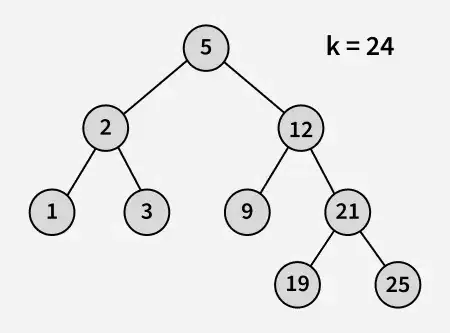
Data la radice di a Albero di ricerca binaria e un numero intero k . Il compito è trovare il numero maggiore nell'albero di ricerca binario cioè meno di O pari to k se tale elemento non esiste print -1.
Esempi:
Ingresso:

Produzione : 21
Spiegazione: 19 e 25 sono i due numeri più vicini a 21 e 19 è il numero più grande avente valore inferiore o uguale a 21.
Ingresso: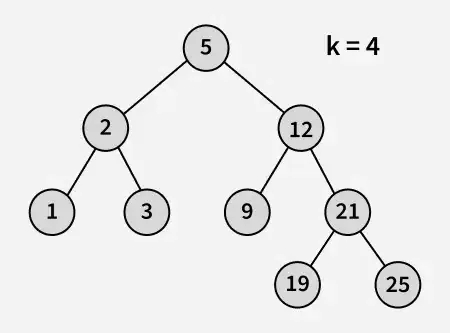
Produzione : 3
Spiegazione: 3 e 5 sono i due numeri più vicini a 4 e 3 è il numero più grande avente valore inferiore o uguale a 4.
Sommario
- [Approccio ingenuo] Utilizzo della ricorsione - O(h) Tempo e O(h) Spazio
- [Approccio previsto] Utilizzo dell'iterazione - O(h) Tempo e O(1) Spazio
[Approccio ingenuo] Utilizzo della ricorsione - O(h) Tempo e O(h) Spazio
C++L'idea è di iniziare da radice e confrontiamo il suo valore con k. Se il valore del nodo è maggiore di k spostati al sottoalbero di sinistra. Altrimenti trova il valore del numero più grande minore di uguale a k nel sottoalbero destro . Se la sottostruttura destra restituisce -1 (il che significa che tale valore non esiste), restituisce il valore del nodo corrente. Altrimenti restituisce il valore restituito dal sottoalbero destro (poiché sarà maggiore del valore del nodo corrente ma inferiore a k).
// C++ code to find the largest value // smaller than or equal to k using recursion #include using namespace std ; class Node { public : int data ; Node * left * right ; Node ( int val ){ data = val ; left = nullptr ; right = nullptr ; } }; // function to find max value less than k int findMaxFork ( Node * root int k ) { // Base cases if ( root == nullptr ) return -1 ; if ( root -> data == k ) return k ; // If root's value is smaller // try in right subtree else if ( root -> data < k ) { int x = findMaxFork ( root -> right k ); if ( x == -1 ) return root -> data ; else return x ; } // If root's data is greater // return value from left subtree. return findMaxFork ( root -> left k ); } int main () { int k = 24 ; // creating following BST // // 5 // / // 2 12 // / / // 1 3 9 21 // / // 19 25 Node * root = new Node ( 5 ); root -> left = new Node ( 2 ); root -> left -> left = new Node ( 1 ); root -> left -> right = new Node ( 3 ); root -> right = new Node ( 12 ); root -> right -> left = new Node ( 9 ); root -> right -> right = new Node ( 21 ); root -> right -> right -> left = new Node ( 19 ); root -> right -> right -> right = new Node ( 25 ); cout < < findMaxFork ( root k ); return 0 ; }
Java // Java code to find the largest value // smaller than or equal to k using recursion class Node { int data ; Node left right ; Node ( int val ) { data = val ; left = null ; right = null ; } } class GfG { // function to find max value less than k static int findMaxFork ( Node root int k ) { // Base cases if ( root == null ) return - 1 ; if ( root . data == k ) return k ; // If root's value is smaller // try in right subtree else if ( root . data < k ) { int x = findMaxFork ( root . right k ); if ( x == - 1 ) return root . data ; else return x ; } // If root's data is greater // return value from left subtree. return findMaxFork ( root . left k ); } public static void main ( String [] args ) { int k = 24 ; // creating following BST // // 5 // / // 2 12 // / / // 1 3 9 21 // / // 19 25 Node root = new Node ( 5 ); root . left = new Node ( 2 ); root . left . left = new Node ( 1 ); root . left . right = new Node ( 3 ); root . right = new Node ( 12 ); root . right . left = new Node ( 9 ); root . right . right = new Node ( 21 ); root . right . right . left = new Node ( 19 ); root . right . right . right = new Node ( 25 ); System . out . println ( findMaxFork ( root k )); } }
Python # Python code to find the largest value # smaller than or equal to k using recursion class Node : def __init__ ( self val ): self . data = val self . left = None self . right = None # function to find max value less than k def findMaxFork ( root k ): # Base cases if root is None : return - 1 if root . data == k : return k # If root's value is smaller # try in right subtree elif root . data < k : x = findMaxFork ( root . right k ) if x == - 1 : return root . data else : return x # If root's data is greater # return value from left subtree. return findMaxFork ( root . left k ) if __name__ == '__main__' : k = 24 # creating following BST # # 5 # / # 2 12 # / / # 1 3 9 21 # / # 19 25 root = Node ( 5 ) root . left = Node ( 2 ) root . left . left = Node ( 1 ) root . left . right = Node ( 3 ) root . right = Node ( 12 ) root . right . left = Node ( 9 ) root . right . right = Node ( 21 ) root . right . right . left = Node ( 19 ) root . right . right . right = Node ( 25 ) print ( findMaxFork ( root k ))
C# // C# code to find the largest value // smaller than or equal to k using recursion using System ; class Node { public int data ; public Node left right ; public Node ( int val ) { data = val ; left = null ; right = null ; } } class GfG { // function to find max value less than k static int FindMaxFork ( Node root int k ) { // Base cases if ( root == null ) return - 1 ; if ( root . data == k ) return k ; // If root's value is smaller // try in right subtree else if ( root . data < k ) { int x = FindMaxFork ( root . right k ); if ( x == - 1 ) return root . data ; else return x ; } // If root's data is greater // return value from left subtree. return FindMaxFork ( root . left k ); } static void Main () { int k = 24 ; // creating following BST // // 5 // / // 2 12 // / / // 1 3 9 21 // / // 19 25 Node root = new Node ( 5 ); root . left = new Node ( 2 ); root . left . left = new Node ( 1 ); root . left . right = new Node ( 3 ); root . right = new Node ( 12 ); root . right . left = new Node ( 9 ); root . right . right = new Node ( 21 ); root . right . right . left = new Node ( 19 ); root . right . right . right = new Node ( 25 ); Console . WriteLine ( FindMaxFork ( root k )); } }
JavaScript // JavaScript code to find the largest value // smaller than or equal to k using recursion class Node { constructor ( val ) { this . data = val ; this . left = null ; this . right = null ; } } // function to find max value less than k function findMaxFork ( root k ) { // Base cases if ( root === null ) return - 1 ; if ( root . data === k ) return k ; // If root's value is smaller // try in right subtree else if ( root . data < k ) { let x = findMaxFork ( root . right k ); if ( x === - 1 ) return root . data ; else return x ; } // If root's data is greater // return value from left subtree. return findMaxFork ( root . left k ); } let k = 24 ; // creating following BST // // 5 // / // 2 12 // / / // 1 3 9 21 // / // 19 25 let root = new Node ( 5 ); root . left = new Node ( 2 ); root . left . left = new Node ( 1 ); root . left . right = new Node ( 3 ); root . right = new Node ( 12 ); root . right . left = new Node ( 9 ); root . right . right = new Node ( 21 ); root . right . right . left = new Node ( 19 ); root . right . right . right = new Node ( 25 ); console . log ( findMaxFork ( root k ));
Produzione
21
[Approccio previsto] Utilizzo dell'iterazione - O(h) Tempo e O(1) Spazio
C++L'idea è di iniziare da radice e confrontare il suo valore con k . Se il valore del nodo è <= k aggiorna il valore del risultato al valore di root e passa a Giusto sottoalbero altrimenti spostati in Sinistra sottoalbero. Di iterativamente applicando questa operazione su tutti i nodi possiamo ridurre al minimo lo spazio necessario per il file ricorsione pila.
// C++ code to find the largest value // smaller than or equal to k using recursion #include using namespace std ; class Node { public : int data ; Node * left * right ; Node ( int val ){ data = val ; left = nullptr ; right = nullptr ; } }; // function to find max value less than k int findMaxFork ( Node * root int k ) { int result = -1 ; // Start from root and keep looking for larger while ( root != nullptr ) { // If root is smaller go to right side if ( root -> data <= k ){ result = root -> data ; root = root -> right ; } // If root is greater go to left side else root = root -> left ; } return result ; } int main () { int k = 24 ; // creating following BST // // 5 // / // 2 12 // / / // 1 3 9 21 // / // 19 25 Node * root = new Node ( 5 ); root -> left = new Node ( 2 ); root -> left -> left = new Node ( 1 ); root -> left -> right = new Node ( 3 ); root -> right = new Node ( 12 ); root -> right -> left = new Node ( 9 ); root -> right -> right = new Node ( 21 ); root -> right -> right -> left = new Node ( 19 ); root -> right -> right -> right = new Node ( 25 ); cout < < findMaxFork ( root k ); return 0 ; }
Java // Java code to find the largest value // smaller than or equal to k using recursion class Node { int data ; Node left right ; Node ( int val ) { data = val ; left = null ; right = null ; } } class GfG { // function to find max value less than k static int findMaxFork ( Node root int k ) { int result = - 1 ; // Start from root and keep looking for larger while ( root != null ) { // If root is smaller go to right side if ( root . data <= k ) { result = root . data ; root = root . right ; } // If root is greater go to left side else { root = root . left ; } } return result ; } public static void main ( String [] args ) { int k = 24 ; // creating following BST // // 5 // / // 2 12 // / / // 1 3 9 21 // / // 19 25 Node root = new Node ( 5 ); root . left = new Node ( 2 ); root . left . left = new Node ( 1 ); root . left . right = new Node ( 3 ); root . right = new Node ( 12 ); root . right . left = new Node ( 9 ); root . right . right = new Node ( 21 ); root . right . right . left = new Node ( 19 ); root . right . right . right = new Node ( 25 ); System . out . println ( findMaxFork ( root k )); } }
Python # Python code to find the largest value # smaller than or equal to k using recursion class Node : def __init__ ( self val ): self . data = val self . left = None self . right = None # function to find max value less than k def findMaxFork ( root k ): result = - 1 # Start from root and keep looking for larger while root is not None : # If root is smaller go to right side if root . data <= k : result = root . data root = root . right # If root is greater go to left side else : root = root . left return result if __name__ == '__main__' : k = 24 # creating following BST # # 5 # / # 2 12 # / / # 1 3 9 21 # / # 19 25 root = Node ( 5 ) root . left = Node ( 2 ) root . left . left = Node ( 1 ) root . left . right = Node ( 3 ) root . right = Node ( 12 ) root . right . left = Node ( 9 ) root . right . right = Node ( 21 ) root . right . right . left = Node ( 19 ) root . right . right . right = Node ( 25 ) print ( findMaxFork ( root k ))
C# // C# code to find the largest value // smaller than or equal to k using recursion using System ; class Node { public int data ; public Node left right ; public Node ( int val ) { data = val ; left = null ; right = null ; } } class GfG { // function to find max value less than k static int FindMaxFork ( Node root int k ) { int result = - 1 ; // Start from root and keep looking for larger while ( root != null ) { // If root is smaller go to right side if ( root . data <= k ) { result = root . data ; root = root . right ; } // If root is greater go to left side else { root = root . left ; } } return result ; } static void Main () { int k = 24 ; // creating following BST // // 5 // / // 2 12 // / / // 1 3 9 21 // / // 19 25 Node root = new Node ( 5 ); root . left = new Node ( 2 ); root . left . left = new Node ( 1 ); root . left . right = new Node ( 3 ); root . right = new Node ( 12 ); root . right . left = new Node ( 9 ); root . right . right = new Node ( 21 ); root . right . right . left = new Node ( 19 ); root . right . right . right = new Node ( 25 ); Console . WriteLine ( FindMaxFork ( root k )); } }
JavaScript // JavaScript code to find the largest value // smaller than or equal to k using recursion class Node { constructor ( val ) { this . data = val ; this . left = null ; this . right = null ; } } // function to find max value less than k function findMaxFork ( root k ) { let result = - 1 ; // Start from root and keep looking for larger while ( root !== null ) { // If root is smaller go to right side if ( root . data <= k ) { result = root . data ; root = root . right ; } // If root is greater go to left side else { root = root . left ; } } return result ; } let k = 24 ; // creating following BST // // 5 // / // 2 12 // / / // 1 3 9 21 // / // 19 25 let root = new Node ( 5 ); root . left = new Node ( 2 ); root . left . left = new Node ( 1 ); root . left . right = new Node ( 3 ); root . right = new Node ( 12 ); root . right . left = new Node ( 9 ); root . right . right = new Node ( 21 ); root . right . right . left = new Node ( 19 ); root . right . right . right = new Node ( 25 ); console . log ( findMaxFork ( root k ));
Produzione
21Crea quiz