Vähimmäiskustannuspolku vasemmalle, oikealle, alas ja ylös sallituilla siirroilla


Annettu 2D-ruudukon koko n*n jossa jokainen solu edustaa solun läpi kulkemisen kustannuksia, tehtävänä on löytää vähimmäiskustannukset siirtyä pois vasemmassa yläkulmassa soluun alhaalla oikealla solu. Tietystä solusta voimme siirtyä sisään 4 suuntaa : vasen oikea ylös alas.
Huomautus: Oletetaan, että syöttömatriisissa ei ole negatiivisia kustannussyklejä.
Esimerkki:
Syöte: ruudukko = {{9 4 9 9}
{6 7 6 4}
{8 3 3 7}
{7 4 9 10}}
Tulos: 43
Selitys: Minimikustannuspolku on 9 + 4 + 7 + 3 + 3 + 7 + 10.
Lähestyä:
Ideana on käyttää Dijkstran algoritmi löytääksesi minimikustannuspolun ruudukon läpi. Tämä lähestymistapa käsittelee ruudukkoa kaaviona, jossa jokainen solu on solmu ja algoritmi tutkii dynaamisesti kustannustehokkaimman polun oikeaan alakulmaan laajentamalla aina halvimmat reitit ensin.
Askel askeleelta lähestymistapa:
- Käytä min-kasaa käsitelläksesi aina edullisimman polun ensin ja työnnä vasen ylempi solu siihen.
- Alusta kustannusmatriisi maksimiarvoilla asettamalla aloitussolun kustannukset sen ruudukkoarvoon.
- Tarkista jokaisen solun kaikki 4 vierekkäistä solua
- Jos alhaisempi kustannuspolku löytyy, päivitä solun hinta ja työnnä se kasaan.
- Palauta vähimmäishinta päästäksesi oikeaan alakulmaan.
Alla on yllä olevan lähestymistavan toteutus:
C++ // C++ program to find minimum Cost Path with // Left Right Bottom and Up moves allowed #include using namespace std ; // Function to check if cell is valid. bool isValidCell ( int i int j int n ) { return i >= 0 && i < n && j >= 0 && j < n ; } int minimumCostPath ( vector < vector < int >> & grid ) { int n = grid . size (); // Min heap to implement dijkstra priority_queue < vector < int > vector < vector < int >> greater < vector < int >>> pq ; // 2d grid to store minimum cost // to reach every cell. vector < vector < int >> cost ( n vector < int > ( n INT_MAX )); cost [ 0 ][ 0 ] = grid [ 0 ][ 0 ]; // Direction vector to move in 4 directions vector < vector < int >> dir = {{ -1 0 } { 1 0 } { 0 -1 } { 0 1 }}; pq . push ({ grid [ 0 ][ 0 ] 0 0 }); while ( ! pq . empty ()) { vector < int > top = pq . top (); pq . pop (); int c = top [ 0 ] i = top [ 1 ] j = top [ 2 ]; // Check for all 4 neighbouring cells. for ( auto d : dir ) { int x = i + d [ 0 ]; int y = j + d [ 1 ]; // If cell is valid and cost to reach this cell // from current cell is less if ( isValidCell ( x y n ) && cost [ i ][ j ] + grid [ x ][ y ] < cost [ x ][ y ]) { // Update cost to reach this cell. cost [ x ][ y ] = cost [ i ][ j ] + grid [ x ][ y ]; // Push the cell into heap. pq . push ({ cost [ x ][ y ] x y }); } } } // Return minimum cost to // reach bottom right cell. return cost [ n -1 ][ n -1 ]; } int main () { vector < vector < int >> grid = {{ 9 4 9 9 }{ 6 7 6 4 }{ 8 3 3 7 }{ 7 4 9 10 }}; cout < < minimumCostPath ( grid ) < < endl ; return 0 ; }
Java // Java program to find minimum Cost Path with // Left Right Bottom and Up moves allowed import java.util.PriorityQueue ; import java.util.Arrays ; class GfG { // Function to check if cell is valid. static boolean isValidCell ( int i int j int n ) { return i >= 0 && i < n && j >= 0 && j < n ; } static int minimumCostPath ( int [][] grid ) { int n = grid . length ; // Min heap to implement Dijkstra PriorityQueue < int []> pq = new PriorityQueue <> (( a b ) -> Integer . compare ( a [ 0 ] b [ 0 ] )); // 2D grid to store minimum cost // to reach every cell. int [][] cost = new int [ n ][ n ] ; for ( int [] row : cost ) { Arrays . fill ( row Integer . MAX_VALUE ); } cost [ 0 ][ 0 ] = grid [ 0 ][ 0 ] ; // Direction vector to move in 4 directions int [][] dir = {{ - 1 0 } { 1 0 } { 0 - 1 } { 0 1 }}; pq . offer ( new int [] { grid [ 0 ][ 0 ] 0 0 }); while ( ! pq . isEmpty ()) { int [] top = pq . poll (); int c = top [ 0 ] i = top [ 1 ] j = top [ 2 ] ; // Check for all 4 neighbouring cells. for ( int [] d : dir ) { int x = i + d [ 0 ] ; int y = j + d [ 1 ] ; // If cell is valid and cost to reach this cell // from current cell is less if ( isValidCell ( x y n ) && cost [ i ][ j ] + grid [ x ][ y ] < cost [ x ][ y ] ) { // Update cost to reach this cell. cost [ x ][ y ] = cost [ i ][ j ] + grid [ x ][ y ] ; // Push the cell into heap. pq . offer ( new int [] { cost [ x ][ y ] x y }); } } } // Return minimum cost to // reach bottom right cell. return cost [ n - 1 ][ n - 1 ] ; } public static void main ( String [] args ) { int [][] grid = { { 9 4 9 9 } { 6 7 6 4 } { 8 3 3 7 } { 7 4 9 10 } }; System . out . println ( minimumCostPath ( grid )); } }
Python # Python program to find minimum Cost Path with # Left Right Bottom and Up moves allowed import heapq # Function to check if cell is valid. def isValidCell ( i j n ): return i >= 0 and i < n and j >= 0 and j < n def minimumCostPath ( grid ): n = len ( grid ) # Min heap to implement Dijkstra pq = [] # 2D grid to store minimum cost # to reach every cell. cost = [[ float ( 'inf' )] * n for _ in range ( n )] cost [ 0 ][ 0 ] = grid [ 0 ][ 0 ] # Direction vector to move in 4 directions dir = [[ - 1 0 ] [ 1 0 ] [ 0 - 1 ] [ 0 1 ]] heapq . heappush ( pq [ grid [ 0 ][ 0 ] 0 0 ]) while pq : c i j = heapq . heappop ( pq ) # Check for all 4 neighbouring cells. for d in dir : x y = i + d [ 0 ] j + d [ 1 ] # If cell is valid and cost to reach this cell # from current cell is less if isValidCell ( x y n ) and cost [ i ][ j ] + grid [ x ][ y ] < cost [ x ][ y ]: # Update cost to reach this cell. cost [ x ][ y ] = cost [ i ][ j ] + grid [ x ][ y ] # Push the cell into heap. heapq . heappush ( pq [ cost [ x ][ y ] x y ]) # Return minimum cost to # reach bottom right cell. return cost [ n - 1 ][ n - 1 ] if __name__ == '__main__' : grid = [ [ 9 4 9 9 ] [ 6 7 6 4 ] [ 8 3 3 7 ] [ 7 4 9 10 ] ] print ( minimumCostPath ( grid ))
C# // C# program to find minimum Cost Path with // Left Right Bottom and Up moves allowed using System ; using System.Collections.Generic ; class GfG { // Function to check if cell is valid. static bool isValidCell ( int i int j int n ) { return i >= 0 && i < n && j >= 0 && j < n ; } static int minimumCostPath ( int [][] grid ) { int n = grid . Length ; // Min heap to implement Dijkstra var pq = new SortedSet < ( int cost int x int y ) > (); // 2D grid to store minimum cost // to reach every cell. int [][] cost = new int [ n ][]; for ( int i = 0 ; i < n ; i ++ ) { cost [ i ] = new int [ n ]; Array . Fill ( cost [ i ] int . MaxValue ); } cost [ 0 ][ 0 ] = grid [ 0 ][ 0 ]; // Direction vector to move in 4 directions int [][] dir = { new int [] { - 1 0 } new int [] { 1 0 } new int [] { 0 - 1 } new int [] { 0 1 } }; pq . Add (( grid [ 0 ][ 0 ] 0 0 )); while ( pq . Count > 0 ) { var top = pq . Min ; pq . Remove ( top ); int i = top . x j = top . y ; // Check for all 4 neighbouring cells. foreach ( var d in dir ) { int x = i + d [ 0 ]; int y = j + d [ 1 ]; // If cell is valid and cost to reach this cell // from current cell is less if ( isValidCell ( x y n ) && cost [ i ][ j ] + grid [ x ][ y ] < cost [ x ][ y ]) { // Update cost to reach this cell. cost [ x ][ y ] = cost [ i ][ j ] + grid [ x ][ y ]; // Push the cell into heap. pq . Add (( cost [ x ][ y ] x y )); } } } // Return minimum cost to // reach bottom right cell. return cost [ n - 1 ][ n - 1 ]; } static void Main ( string [] args ) { int [][] grid = new int [][] { new int [] { 9 4 9 9 } new int [] { 6 7 6 4 } new int [] { 8 3 3 7 } new int [] { 7 4 9 10 } }; Console . WriteLine ( minimumCostPath ( grid )); } }
JavaScript // JavaScript program to find minimum Cost Path with // Left Right Bottom and Up moves allowed function comparator ( a b ) { if ( a [ 0 ] > b [ 0 ]) return - 1 ; if ( a [ 0 ] < b [ 0 ]) return 1 ; return 0 ; } class PriorityQueue { constructor ( compare ) { this . heap = []; this . compare = compare ; } enqueue ( value ) { this . heap . push ( value ); this . bubbleUp (); } bubbleUp () { let index = this . heap . length - 1 ; while ( index > 0 ) { let element = this . heap [ index ] parentIndex = Math . floor (( index - 1 ) / 2 ) parent = this . heap [ parentIndex ]; if ( this . compare ( element parent ) < 0 ) break ; this . heap [ index ] = parent ; this . heap [ parentIndex ] = element ; index = parentIndex ; } } dequeue () { let max = this . heap [ 0 ]; let end = this . heap . pop (); if ( this . heap . length > 0 ) { this . heap [ 0 ] = end ; this . sinkDown ( 0 ); } return max ; } sinkDown ( index ) { let left = 2 * index + 1 right = 2 * index + 2 largest = index ; if ( left < this . heap . length && this . compare ( this . heap [ left ] this . heap [ largest ]) > 0 ) { largest = left ; } if ( right < this . heap . length && this . compare ( this . heap [ right ] this . heap [ largest ]) > 0 ) { largest = right ; } if ( largest !== index ) { [ this . heap [ largest ] this . heap [ index ]] = [ this . heap [ index ] this . heap [ largest ] ]; this . sinkDown ( largest ); } } isEmpty () { return this . heap . length === 0 ; } } // Function to check if cell is valid. function isValidCell ( i j n ) { return i >= 0 && i < n && j >= 0 && j < n ; } function minimumCostPath ( grid ) { let n = grid . length ; // Min heap to implement Dijkstra const pq = new PriorityQueue ( comparator ) // 2D grid to store minimum cost // to reach every cell. let cost = Array . from ({ length : n } () => Array ( n ). fill ( Infinity )); cost [ 0 ][ 0 ] = grid [ 0 ][ 0 ]; // Direction vector to move in 4 directions let dir = [[ - 1 0 ] [ 1 0 ] [ 0 - 1 ] [ 0 1 ]]; pq . enqueue ([ grid [ 0 ][ 0 ] 0 0 ]); while ( ! pq . isEmpty ()) { let [ c i j ] = pq . dequeue (); // Check for all 4 neighbouring cells. for ( let d of dir ) { let x = i + d [ 0 ]; let y = j + d [ 1 ]; // If cell is valid and cost to reach this cell // from current cell is less if ( isValidCell ( x y n ) && cost [ i ][ j ] + grid [ x ][ y ] < cost [ x ][ y ]) { // Update cost to reach this cell. cost [ x ][ y ] = cost [ i ][ j ] + grid [ x ][ y ]; // Push the cell into heap. pq . enqueue ([ cost [ x ][ y ] x y ]); } } } // Return minimum cost to // reach bottom right cell. return cost [ n - 1 ][ n - 1 ]; } let grid = [ [ 9 4 9 9 ] [ 6 7 6 4 ] [ 8 3 3 7 ] [ 7 4 9 10 ] ]; console . log ( minimumCostPath ( grid ));
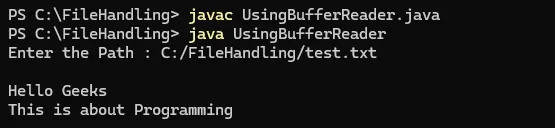
Lähtö
43
Aika monimutkaisuus: O(n^2 log(n^2))
Aputila: O(n^2 log(n^2))
Miksi dynaamista ohjelmointia ei voida käyttää?
Dynaaminen ohjelmointi epäonnistuu tässä, koska liikkeen salliminen kaikkiin neljään suuntaan luo syklejä, joissa soluja voidaan käydä uudelleen rikkoen optimaalisen alirakenteen oletuksen. Tämä tarkoittaa, että tietyn solun soluun pääsyn hinta ei ole kiinteä, vaan riippuu koko polusta.
Aiheeseen liittyviä artikkeleita:
Pienin kustannuspolku
Luo tietokilpailu