Aplanar una lista enlazada de varios niveles (en profundidad)
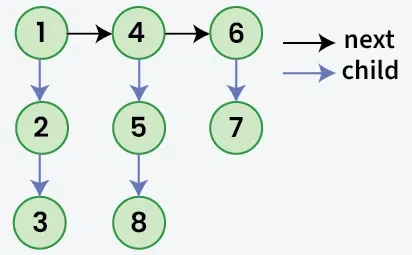
Dada una lista enlazada donde además de la próximo puntero cada nodo tiene un niño puntero que puede o no apuntar a una lista separada. Estas listas de niños pueden tener uno o más sus propios hijos para producir un multinivel lista enlazada. Dado que cabeza del primer nivel de la lista. La tarea es aplanar la lista para que todos los nodos aparezcan en un un solo nivel lista enlazada. Aplana la lista de manera que todos los nodos en el primer nivel debería venir primero luego nodos de la segundo nivel y así sucesivamente.
Ejemplos:
Aporte:

Producción: 1->4->6->2->5->7->3->8
Explicación: La lista enlazada de varios niveles está aplanada porque no tiene punteros secundarios.
hemos discutido aplanamiento de una lista enlazada de varios niveles donde los nodos tienen dos punteros hacia abajo y hacia abajo. En el post anterior nos aplanado la lista enlazada a nivel nivel. Cómo aplanar una lista enlazada cuando siempre necesitamos procesar la puntero hacia abajo antes del siguiente en cada nodo.
Tabla de contenido
- [Enfoque esperado] Uso de recursividad: tiempo O(n) y espacio O(n)
- [Enfoque alternativo] Uso de pila: tiempo O(n) y espacio O(n)
[Enfoque esperado] Uso de recursividad: tiempo O(n) y espacio O(n)
C++El enfoque es recursivamente aplanar un vinculado de varios niveles lista atravesando cada nodo y sus nodos secundarios. Primero aplanar la lista de niños usando recursividad. Una vez que la lista de niños esté aplanada, continúe con el siguiente nodo en la secuencia. Durante el recorrido mantenga una referencia hacia nodo visitado anteriormente y vincularlo al nodo actual. Este proceso garantiza que todos los nodos de diferentes niveles estén conectados en una lista lineal única preservando al mismo tiempo la orden en profundidad.
// A C++ program to flatten a multi- // linked list depth-wise #include using namespace std ; class Node { public : int data ; Node * next ; Node * down ; Node ( int x ) { data = x ; next = down = nullptr ; } }; void flattenList ( Node * curr Node *& prev ) { if ( curr == nullptr ) return ; // Add the current element to the list. if ( prev != nullptr ) prev -> next = curr ; prev = curr ; // Store the next pointer Node * next = curr -> next ; // Recursively add the bottom list flattenList ( curr -> down prev ); // Recursively add the next list flattenList ( next prev ); } void printList ( Node * head ) { Node * curr = head ; while ( curr != nullptr ) { cout < < curr -> data < < ' ' ; curr = curr -> next ; } cout < < endl ; } int main () { // Create a hard coded multi-linked list. // 5 -> 10 -> 19 -> 28 // | | // 7 22 // | | // 8 50 // | // 30 Node * head = new Node ( 5 ); head -> down = new Node ( 7 ); head -> down -> down = new Node ( 8 ); head -> down -> down -> down = new Node ( 30 ); head -> next = new Node ( 10 ); head -> next -> next = new Node ( 19 ); head -> next -> next -> down = new Node ( 22 ); head -> next -> next -> down -> down = new Node ( 50 ); head -> next -> next -> next = new Node ( 28 ); Node * prev = nullptr ; flattenList ( head prev ); printList ( head ); return 0 ; }
Java // A Java program to flatten a multi- // linked list depth-wise class Node { int data ; Node next down ; Node ( int x ) { data = x ; next = down = null ; } } class GfG { static void flattenList ( Node curr Node [] prev ) { if ( curr == null ) return ; // Add the current element to the list. if ( prev [ 0 ] != null ) prev [ 0 ] . next = curr ; prev [ 0 ] = curr ; // Store the next pointer Node next = curr . next ; // Recursively add the bottom list flattenList ( curr . down prev ); // Recursively add the next list flattenList ( next prev ); } static void printList ( Node head ) { Node curr = head ; while ( curr != null ) { System . out . print ( curr . data + ' ' ); curr = curr . next ; } System . out . println (); } public static void main ( String [] args ) { // Create a hard coded multi-linked list. // 5 -> 10 -> 19 -> 28 // | | // 7 22 // | | // 8 50 // | // 30 Node head = new Node ( 5 ); head . down = new Node ( 7 ); head . down . down = new Node ( 8 ); head . down . down . down = new Node ( 30 ); head . next = new Node ( 10 ); head . next . next = new Node ( 19 ); head . next . next . down = new Node ( 22 ); head . next . next . down . down = new Node ( 50 ); head . next . next . next = new Node ( 28 ); Node [] prev = new Node [ 1 ] ; flattenList ( head prev ); printList ( head ); } }
Python # A Python program to flatten a multi- # linked list depth-wise class Node : def __init__ ( self x ): self . data = x self . next = None self . down = None def flatten_list ( curr prev ): if curr is None : return # Add the current element to the list. if prev [ 0 ] is not None : prev [ 0 ] . next = curr prev [ 0 ] = curr # Store the next pointer next_node = curr . next # Recursively add the bottom list flatten_list ( curr . down prev ) # Recursively add the next list flatten_list ( next_node prev ) def print_list ( head ): curr = head while curr is not None : print ( curr . data end = ' ' ) curr = curr . next print () if __name__ == '__main__' : # Create a hard coded multi-linked list. # 5 -> 10 -> 19 -> 28 # | | # 7 22 # | | # 8 50 # | # 30 head = Node ( 5 ) head . down = Node ( 7 ) head . down . down = Node ( 8 ) head . down . down . down = Node ( 30 ) head . next = Node ( 10 ) head . next . next = Node ( 19 ) head . next . next . down = Node ( 22 ) head . next . next . down . down = Node ( 50 ) head . next . next . next = Node ( 28 ) prev = [ None ] flatten_list ( head prev ) print_list ( head )
C# // A C# program to flatten a multi- // linked list depth-wise using System ; class Node { public int data ; public Node next down ; public Node ( int x ) { data = x ; next = down = null ; } } class GfG { static void FlattenList ( Node curr ref Node prev ) { if ( curr == null ) return ; // Add the current element to the list. if ( prev != null ) prev . next = curr ; prev = curr ; // Store the next pointer Node next = curr . next ; // Recursively add the bottom list FlattenList ( curr . down ref prev ); // Recursively add the next list FlattenList ( next ref prev ); } static void PrintList ( Node head ) { Node curr = head ; while ( curr != null ) { Console . Write ( curr . data + ' ' ); curr = curr . next ; } Console . WriteLine (); } static void Main ( string [] args ) { // Create a hard coded multi-linked list. // 5 -> 10 -> 19 -> 28 // | | // 7 22 // | | // 8 50 // | // 30 Node head = new Node ( 5 ); head . down = new Node ( 7 ); head . down . down = new Node ( 8 ); head . down . down . down = new Node ( 30 ); head . next = new Node ( 10 ); head . next . next = new Node ( 19 ); head . next . next . down = new Node ( 22 ); head . next . next . down . down = new Node ( 50 ); head . next . next . next = new Node ( 28 ); Node prev = null ; FlattenList ( head ref prev ); PrintList ( head ); } }
JavaScript // A Javascript program to flatten a multi- // linked list depth-wise class Node { constructor ( x ) { this . data = x ; this . next = null ; this . down = null ; } } function flattenList ( curr prev ) { if ( curr === null ) return ; // Add the current element to the list. if ( prev [ 0 ] !== null ) prev [ 0 ]. next = curr ; prev [ 0 ] = curr ; // Store the next pointer let next = curr . next ; // Recursively add the bottom list flattenList ( curr . down prev ); // Recursively add the next list flattenList ( next prev ); } function printList ( head ) { let curr = head ; while ( curr !== null ) { console . log ( curr . data ); curr = curr . next ; } } // Create a hard coded multi-linked list. // 5 -> 10 -> 19 -> 28 // | | // 7 22 // | | // 8 50 // | // 30 let head = new Node ( 5 ); head . down = new Node ( 7 ); head . down . down = new Node ( 8 ); head . down . down . down = new Node ( 30 ); head . next = new Node ( 10 ); head . next . next = new Node ( 19 ); head . next . next . down = new Node ( 22 ); head . next . next . down . down = new Node ( 50 ); head . next . next . next = new Node ( 28 ); let prev = [ null ]; flattenList ( head prev ); printList ( head );
Producción
5 7 8 30 10 19 22 50 28
[Enfoque alternativo] Uso de pila: tiempo O(n) y espacio O(n)
C++El enfoque es atravesar el lista enlazada de varios niveles usando un pila . Empezar por emprendedor el nodo principal en la pila. Entonces mientras el la pila no está vacía estallido el nodo superior y procesarlo. Para cada nodo empujar es punteros siguiente y abajo (si existen) en la pila. Durante este proceso vincular el nodo actual al nodo anterior manteniendo la lista en forma aplanada. El recorrido garantiza que los nodos de todos los niveles estén conectados en una preservando el orden en profundidad.
// A C++ program to flatten a multi- // linked list depth-wise using stack #include using namespace std ; class Node { public : int data ; Node * next ; Node * down ; Node ( int x ) { data = x ; next = down = nullptr ; } }; void flattenList ( Node * head ) { if ( head == nullptr ) return ; stack < Node *> st ; st . push ( head ); Node * prev = nullptr ; while ( ! st . empty ()) { Node * curr = st . top (); st . pop (); // Push the next node first if ( curr -> next != nullptr ) st . push ( curr -> next ); // Push the bottom node into stack if ( curr -> down != nullptr ) st . push ( curr -> down ); // Add the current element to the list if ( prev != nullptr ) prev -> next = curr ; prev = curr ; } } void printList ( Node * head ) { Node * curr = head ; while ( curr != nullptr ) { cout < < curr -> data < < ' ' ; curr = curr -> next ; } cout < < endl ; } int main () { // Create a hard coded multi-linked list. // 5 -> 10 -> 19 -> 28 // | | // 7 22 // | | // 8 50 // | // 30 Node * head = new Node ( 5 ); head -> down = new Node ( 7 ); head -> down -> down = new Node ( 8 ); head -> down -> down -> down = new Node ( 30 ); head -> next = new Node ( 10 ); head -> next -> next = new Node ( 19 ); head -> next -> next -> down = new Node ( 22 ); head -> next -> next -> down -> down = new Node ( 50 ); head -> next -> next -> next = new Node ( 28 ); flattenList ( head ); printList ( head ); return 0 ; }
Java // A Java program to flatten a multi- // linked list depth-wise using stack import java.util.Stack ; class Node { int data ; Node next down ; Node ( int x ) { data = x ; next = down = null ; } } class GfG { static void flattenList ( Node head ) { if ( head == null ) return ; Stack < Node > stack = new Stack <> (); stack . push ( head ); Node prev = null ; while ( ! stack . isEmpty ()) { Node curr = stack . pop (); // Push the next node first if ( curr . next != null ) stack . push ( curr . next ); // Push the bottom node into stack if ( curr . down != null ) stack . push ( curr . down ); // Add the current element to the list if ( prev != null ) prev . next = curr ; prev = curr ; } } static void printList ( Node head ) { Node curr = head ; while ( curr != null ) { System . out . print ( curr . data + ' ' ); curr = curr . next ; } System . out . println (); } public static void main ( String [] args ) { // Create a hard coded multi-linked list. // 5 -> 10 -> 19 -> 28 // | | // 7 22 // | | // 8 50 // | // 30 Node head = new Node ( 5 ); head . down = new Node ( 7 ); head . down . down = new Node ( 8 ); head . down . down . down = new Node ( 30 ); head . next = new Node ( 10 ); head . next . next = new Node ( 19 ); head . next . next . down = new Node ( 22 ); head . next . next . down . down = new Node ( 50 ); head . next . next . next = new Node ( 28 ); flattenList ( head ); printList ( head ); } }
Python # A Python program to flatten a multi- # linked list depth-wise using stack class Node : def __init__ ( self x ): self . data = x self . next = None self . down = None def flatten_list ( head ): if head is None : return stack = [ head ] prev = None while stack : curr = stack . pop () # Push the next node first if curr . next : stack . append ( curr . next ) # Push the bottom node into stack if curr . down : stack . append ( curr . down ) # Add the current element to the list if prev : prev . next = curr prev = curr def print_list ( head ): curr = head while curr : print ( curr . data end = ' ' ) curr = curr . next print () if __name__ == '__main__' : # Create a hard coded multi-linked list. # 5 -> 10 -> 19 -> 28 # | | # 7 22 # | | # 8 50 # | # 30 head = Node ( 5 ) head . down = Node ( 7 ) head . down . down = Node ( 8 ) head . down . down . down = Node ( 30 ) head . next = Node ( 10 ) head . next . next = Node ( 19 ) head . next . next . down = Node ( 22 ) head . next . next . down . down = Node ( 50 ) head . next . next . next = Node ( 28 ) flatten_list ( head ) print_list ( head )
C# // A C# program to flatten a multi- // linked list depth-wise using stack using System ; using System.Collections.Generic ; class Node { public int data ; public Node next down ; public Node ( int x ) { data = x ; next = down = null ; } } class GfG { static void FlattenList ( Node head ) { if ( head == null ) return ; Stack < Node > stack = new Stack < Node > (); stack . Push ( head ); Node prev = null ; while ( stack . Count > 0 ) { Node curr = stack . Pop (); // Push the next node first if ( curr . next != null ) stack . Push ( curr . next ); // Push the bottom node into stack if ( curr . down != null ) stack . Push ( curr . down ); // Add the current element to the list if ( prev != null ) prev . next = curr ; prev = curr ; } } static void PrintList ( Node head ) { Node curr = head ; while ( curr != null ) { Console . Write ( curr . data + ' ' ); curr = curr . next ; } Console . WriteLine (); } static void Main ( string [] args ) { // Create a hard coded multi-linked list. // 5 -> 10 -> 19 -> 28 // | | // 7 22 // | | // 8 50 // | // 30 Node head = new Node ( 5 ); head . down = new Node ( 7 ); head . down . down = new Node ( 8 ); head . down . down . down = new Node ( 30 ); head . next = new Node ( 10 ); head . next . next = new Node ( 19 ); head . next . next . down = new Node ( 22 ); head . next . next . down . down = new Node ( 50 ); head . next . next . next = new Node ( 28 ); FlattenList ( head ); PrintList ( head ); } }
JavaScript // A Javascript program to flatten a multi- // linked list depth-wise using stack class Node { constructor ( x ) { this . data = x ; this . next = null ; this . down = null ; } } function flattenList ( head ) { if ( head === null ) return ; let stack = [ head ]; let prev = null ; while ( stack . length > 0 ) { let curr = stack . pop (); // Push the next node first if ( curr . next !== null ) stack . push ( curr . next ); // Push the bottom node into stack if ( curr . down !== null ) stack . push ( curr . down ); // Add the current element to the list if ( prev !== null ) prev . next = curr ; prev = curr ; } } function printList ( head ) { let curr = head ; while ( curr !== null ) { console . log ( curr . data ); curr = curr . next ; } } // Create a hard coded multi-linked list. // 5 -> 10 -> 19 -> 28 // | | // 7 22 // | | // 8 50 // | // 30 let head = new Node ( 5 ); head . down = new Node ( 7 ); head . down . down = new Node ( 8 ); head . down . down . down = new Node ( 30 ); head . next = new Node ( 10 ); head . next . next = new Node ( 19 ); head . next . next . down = new Node ( 22 ); head . next . next . down . down = new Node ( 50 ); head . next . next . next = new Node ( 28 ); flattenList ( head ); printList ( head );
Producción
5 7 8 30 10 19 22 50 28