Minimální kroky k dosažení konce pole pod omezeními
Vzhledem k tomu, že pole obsahující jednociferná čísla pouze za předpokladu, že stojíme na prvním indexu, potřebujeme dosáhnout na konec pole s minimálním počtem kroků, kde v jednom kroku můžeme skočit na sousední indexy nebo můžeme skočit na pozici se stejnou hodnotou.
Jinými slovy, pokud jsme na indexu i, pak v jednom kroku můžete dosáhnout arr[i-1] nebo arr[i+1] nebo arr[K] tak, že arr[K] = arr[i] (hodnota arr[K] je stejná jako arr[i])
Příklady:
Input : arr[] = {5 4 2 5 0} Output : 2 Explanation : Total 2 step required. We start from 5(0) in first step jump to next 5 and in second step we move to value 0 (End of arr[]). Input : arr[] = [0 1 2 3 4 5 6 7 5 4 3 6 0 1 2 3 4 5 7] Output : 5 Explanation : Total 5 step required. 0(0) -> 0(12) -> 6(11) -> 6(6) -> 7(7) -> (18) (inside parenthesis indices are shown) Tento problém lze vyřešit pomocí BFS . Dané pole můžeme považovat za nevážený graf, kde každý vrchol má dvě hrany k dalším a předchozím prvkům pole a více hran k prvkům pole se stejnými hodnotami. Nyní pro rychlé zpracování třetího typu hran ponecháme 10 vektory které ukládají všechny indexy s číslicemi 0 až 9. Ve výše uvedeném příkladu vektor odpovídající 0 uloží [0 12] 2 indexy, kde se v daném poli vyskytla 0.
Abychom nenavštívili stejný index více než jednou, používá se jiné booleovské pole. Protože používáme BFS a BFS postupuje úroveň po úrovni, jsou zaručeny optimální minimální kroky.
Implementace:
C++ // C++ program to find minimum jumps to reach end // of array #include using namespace std ; // Method returns minimum step to reach end of array int getMinStepToReachEnd ( int arr [] int N ) { // visit boolean array checks whether current index // is previously visited bool visit [ N ]; // distance array stores distance of current // index from starting index int distance [ N ]; // digit vector stores indices where a // particular number resides vector < int > digit [ 10 ]; // In starting all index are unvisited memset ( visit false sizeof ( visit )); // storing indices of each number in digit vector for ( int i = 1 ; i < N ; i ++ ) digit [ arr [ i ]]. push_back ( i ); // for starting index distance will be zero distance [ 0 ] = 0 ; visit [ 0 ] = true ; // Creating a queue and inserting index 0. queue < int > q ; q . push ( 0 ); // loop until queue in not empty while ( ! q . empty ()) { // Get an item from queue q. int idx = q . front (); q . pop (); // If we reached to last index break from loop if ( idx == N -1 ) break ; // Find value of dequeued index int d = arr [ idx ]; // looping for all indices with value as d. for ( int i = 0 ; i < digit [ d ]. size (); i ++ ) { int nextidx = digit [ d ][ i ]; if ( ! visit [ nextidx ]) { visit [ nextidx ] = true ; q . push ( nextidx ); // update the distance of this nextidx distance [ nextidx ] = distance [ idx ] + 1 ; } } // clear all indices for digit d because all // of them are processed digit [ d ]. clear (); // checking condition for previous index if ( idx -1 >= 0 && ! visit [ idx - 1 ]) { visit [ idx - 1 ] = true ; q . push ( idx - 1 ); distance [ idx - 1 ] = distance [ idx ] + 1 ; } // checking condition for next index if ( idx + 1 < N && ! visit [ idx + 1 ]) { visit [ idx + 1 ] = true ; q . push ( idx + 1 ); distance [ idx + 1 ] = distance [ idx ] + 1 ; } } // N-1th position has the final result return distance [ N - 1 ]; } // driver code to test above methods int main () { int arr [] = { 0 1 2 3 4 5 6 7 5 4 3 6 0 1 2 3 4 5 7 }; int N = sizeof ( arr ) / sizeof ( int ); cout < < getMinStepToReachEnd ( arr N ); return 0 ; }
Java // Java program to find minimum jumps // to reach end of array import java.util.* ; class GFG { // Method returns minimum step // to reach end of array static int getMinStepToReachEnd ( int arr [] int N ) { // visit boolean array checks whether // current index is previously visited boolean [] visit = new boolean [ N ] ; // distance array stores distance of // current index from starting index int [] distance = new int [ N ] ; // digit vector stores indices where a // particular number resides Vector < Integer > [] digit = new Vector [ 10 ] ; for ( int i = 0 ; i < 10 ; i ++ ) digit [ i ] = new Vector <> (); // In starting all index are unvisited for ( int i = 0 ; i < N ; i ++ ) visit [ i ] = false ; // storing indices of each number // in digit vector for ( int i = 1 ; i < N ; i ++ ) digit [ arr [ i ]] . add ( i ); // for starting index distance will be zero distance [ 0 ] = 0 ; visit [ 0 ] = true ; // Creating a queue and inserting index 0. Queue < Integer > q = new LinkedList <> (); q . add ( 0 ); // loop until queue in not empty while ( ! q . isEmpty ()) { // Get an item from queue q. int idx = q . peek (); q . remove (); // If we reached to last // index break from loop if ( idx == N - 1 ) break ; // Find value of dequeued index int d = arr [ idx ] ; // looping for all indices with value as d. for ( int i = 0 ; i < digit [ d ] . size (); i ++ ) { int nextidx = digit [ d ] . get ( i ); if ( ! visit [ nextidx ] ) { visit [ nextidx ] = true ; q . add ( nextidx ); // update the distance of this nextidx distance [ nextidx ] = distance [ idx ] + 1 ; } } // clear all indices for digit d // because all of them are processed digit [ d ] . clear (); // checking condition for previous index if ( idx - 1 >= 0 && ! visit [ idx - 1 ] ) { visit [ idx - 1 ] = true ; q . add ( idx - 1 ); distance [ idx - 1 ] = distance [ idx ] + 1 ; } // checking condition for next index if ( idx + 1 < N && ! visit [ idx + 1 ] ) { visit [ idx + 1 ] = true ; q . add ( idx + 1 ); distance [ idx + 1 ] = distance [ idx ] + 1 ; } } // N-1th position has the final result return distance [ N - 1 ] ; } // Driver Code public static void main ( String [] args ) { int arr [] = { 0 1 2 3 4 5 6 7 5 4 3 6 0 1 2 3 4 5 7 }; int N = arr . length ; System . out . println ( getMinStepToReachEnd ( arr N )); } } // This code is contributed by 29AjayKumar
Python3 # Python 3 program to find minimum jumps to reach end# of array # Method returns minimum step to reach end of array def getMinStepToReachEnd ( arr N ): # visit boolean array checks whether current index # is previously visited visit = [ False for i in range ( N )] # distance array stores distance of current # index from starting index distance = [ 0 for i in range ( N )] # digit vector stores indices where a # particular number resides digit = [[ 0 for i in range ( N )] for j in range ( 10 )] # storing indices of each number in digit vector for i in range ( 1 N ): digit [ arr [ i ]] . append ( i ) # for starting index distance will be zero distance [ 0 ] = 0 visit [ 0 ] = True # Creating a queue and inserting index 0. q = [] q . append ( 0 ) # loop until queue in not empty while ( len ( q ) > 0 ): # Get an item from queue q. idx = q [ 0 ] q . remove ( q [ 0 ]) # If we reached to last index break from loop if ( idx == N - 1 ): break # Find value of dequeued index d = arr [ idx ] # looping for all indices with value as d. for i in range ( len ( digit [ d ])): nextidx = digit [ d ][ i ] if ( visit [ nextidx ] == False ): visit [ nextidx ] = True q . append ( nextidx ) # update the distance of this nextidx distance [ nextidx ] = distance [ idx ] + 1 # clear all indices for digit d because all # of them are processed # checking condition for previous index if ( idx - 1 >= 0 and visit [ idx - 1 ] == False ): visit [ idx - 1 ] = True q . append ( idx - 1 ) distance [ idx - 1 ] = distance [ idx ] + 1 # checking condition for next index if ( idx + 1 < N and visit [ idx + 1 ] == False ): visit [ idx + 1 ] = True q . append ( idx + 1 ) distance [ idx + 1 ] = distance [ idx ] + 1 # N-1th position has the final result return distance [ N - 1 ] # driver code to test above methods if __name__ == '__main__' : arr = [ 0 1 2 3 4 5 6 7 5 4 3 6 0 1 2 3 4 5 7 ] N = len ( arr ) print ( getMinStepToReachEnd ( arr N )) # This code is contributed by # Surendra_Gangwar
C# // C# program to find minimum jumps // to reach end of array using System ; using System.Collections.Generic ; class GFG { // Method returns minimum step // to reach end of array static int getMinStepToReachEnd ( int [] arr int N ) { // visit boolean array checks whether // current index is previously visited bool [] visit = new bool [ N ]; // distance array stores distance of // current index from starting index int [] distance = new int [ N ]; // digit vector stores indices where a // particular number resides List < int > [] digit = new List < int > [ 10 ]; for ( int i = 0 ; i < 10 ; i ++ ) digit [ i ] = new List < int > (); // In starting all index are unvisited for ( int i = 0 ; i < N ; i ++ ) visit [ i ] = false ; // storing indices of each number // in digit vector for ( int i = 1 ; i < N ; i ++ ) digit [ arr [ i ]]. Add ( i ); // for starting index distance will be zero distance [ 0 ] = 0 ; visit [ 0 ] = true ; // Creating a queue and inserting index 0. Queue < int > q = new Queue < int > (); q . Enqueue ( 0 ); // loop until queue in not empty while ( q . Count != 0 ) { // Get an item from queue q. int idx = q . Peek (); q . Dequeue (); // If we reached to last // index break from loop if ( idx == N - 1 ) break ; // Find value of dequeued index int d = arr [ idx ]; // looping for all indices with value as d. for ( int i = 0 ; i < digit [ d ]. Count ; i ++ ) { int nextidx = digit [ d ][ i ]; if ( ! visit [ nextidx ]) { visit [ nextidx ] = true ; q . Enqueue ( nextidx ); // update the distance of this nextidx distance [ nextidx ] = distance [ idx ] + 1 ; } } // clear all indices for digit d // because all of them are processed digit [ d ]. Clear (); // checking condition for previous index if ( idx - 1 >= 0 && ! visit [ idx - 1 ]) { visit [ idx - 1 ] = true ; q . Enqueue ( idx - 1 ); distance [ idx - 1 ] = distance [ idx ] + 1 ; } // checking condition for next index if ( idx + 1 < N && ! visit [ idx + 1 ]) { visit [ idx + 1 ] = true ; q . Enqueue ( idx + 1 ); distance [ idx + 1 ] = distance [ idx ] + 1 ; } } // N-1th position has the final result return distance [ N - 1 ]; } // Driver Code public static void Main ( String [] args ) { int [] arr = { 0 1 2 3 4 5 6 7 5 4 3 6 0 1 2 3 4 5 7 }; int N = arr . Length ; Console . WriteLine ( getMinStepToReachEnd ( arr N )); } } // This code is contributed by PrinciRaj1992
JavaScript < script > // Javascript program to find minimum jumps // to reach end of array // Method returns minimum step // to reach end of array function getMinStepToReachEnd ( arr N ) { // visit boolean array checks whether // current index is previously visited let visit = new Array ( N ); // distance array stores distance of // current index from starting index let distance = new Array ( N ); // digit vector stores indices where a // particular number resides let digit = new Array ( 10 ); for ( let i = 0 ; i < 10 ; i ++ ) digit [ i ] = []; // In starting all index are unvisited for ( let i = 0 ; i < N ; i ++ ) visit [ i ] = false ; // storing indices of each number // in digit vector for ( let i = 1 ; i < N ; i ++ ) digit [ arr [ i ]]. push ( i ); // for starting index distance will be zero distance [ 0 ] = 0 ; visit [ 0 ] = true ; // Creating a queue and inserting index 0. let q = []; q . push ( 0 ); // loop until queue in not empty while ( q . length != 0 ) { // Get an item from queue q. let idx = q . shift (); // If we reached to last // index break from loop if ( idx == N - 1 ) break ; // Find value of dequeued index let d = arr [ idx ]; // looping for all indices with value as d. for ( let i = 0 ; i < digit [ d ]. length ; i ++ ) { let nextidx = digit [ d ][ i ]; if ( ! visit [ nextidx ]) { visit [ nextidx ] = true ; q . push ( nextidx ); // update the distance of this nextidx distance [ nextidx ] = distance [ idx ] + 1 ; } } // clear all indices for digit d // because all of them are processed digit [ d ] = []; // checking condition for previous index if ( idx - 1 >= 0 && ! visit [ idx - 1 ]) { visit [ idx - 1 ] = true ; q . push ( idx - 1 ); distance [ idx - 1 ] = distance [ idx ] + 1 ; } // checking condition for next index if ( idx + 1 < N && ! visit [ idx + 1 ]) { visit [ idx + 1 ] = true ; q . push ( idx + 1 ); distance [ idx + 1 ] = distance [ idx ] + 1 ; } } // N-1th position has the final result return distance [ N - 1 ]; } // Driver Code let arr = [ 0 1 2 3 4 5 6 7 5 4 3 6 0 1 2 3 4 5 7 ]; let N = arr . length ; document . write ( getMinStepToReachEnd ( arr N )); // This code is contributed by rag2127 < /script>
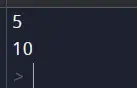
Výstup
5
Časová složitost: O(N) kde N je počet prvků v poli.
Vesmírná složitost: O(N) kde N je počet prvků v poli. K uložení indexů pole používáme pole vzdálenosti a návštěv o velikosti N a frontu o velikosti N.
Vytvořit kvíz